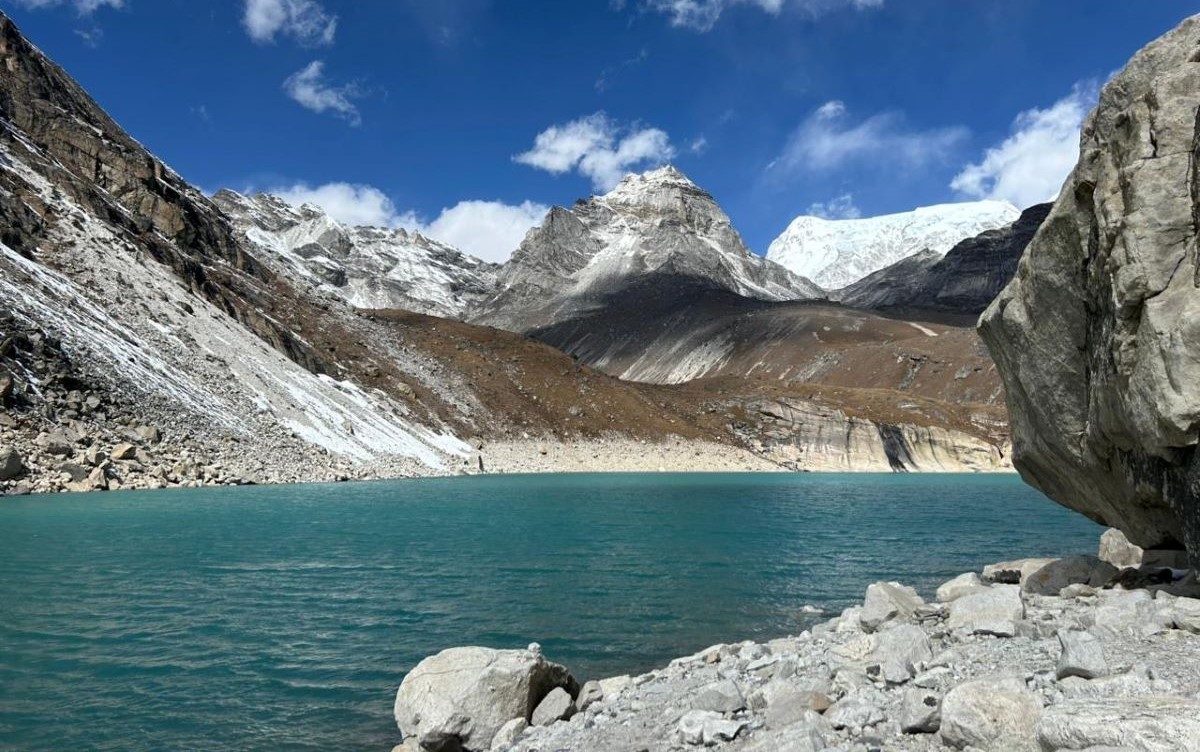
Oligotrophic lakes in Nepal's Sagarmatha National Park "Gokyo Lake"
Did you know that not every trek traversing the Everest region has to end at Everest Base Camp? This high-altitude region has so much more to offer.
For some hikers, the real draw is the journey into a quieter Himalayan valley, where the trail follows the Dudh Koshi, ascends through Sherpa settlements and rhododendron forests, and eventually opens into a landscape of blue-green glacial lakes, moraine, and snow-covered peaks. That is the experience that the Gokyo Lake Trek in Nepal provides.
Following Namche Bazaar, the trek's character changes noticeably. Instead of continuing on the main Everest Base Camp route, the trail heads toward the Gokyo Valley.
The landscape becomes more open as you travel further, with high pastures, glaciers, and the famous Gokyo Lakes serving as the journey's focal point. Gokyo is located within Sagarmatha National Park, and the valley is also closely associated with the culture and traditions of the Khumbu's Sherpa communities.
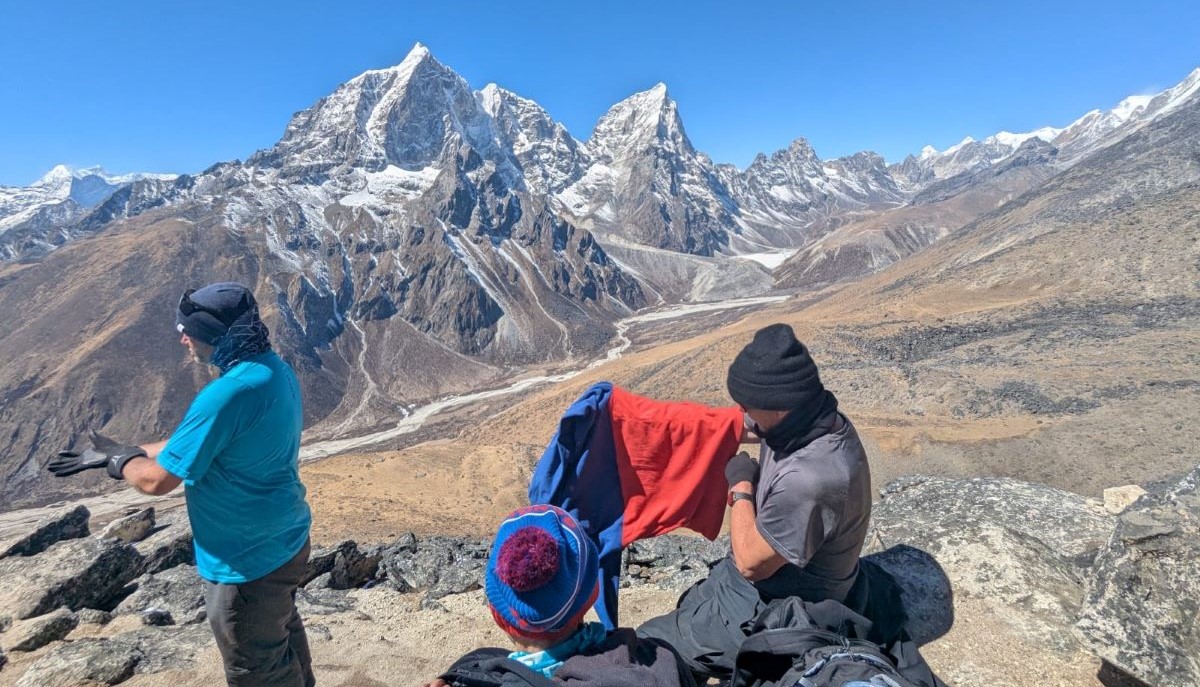
Next up is Gokyo Ri. The climb is difficult, especially in the early morning, but the reward is more than just a view of a famous mountain. The panorama from the viewpoint includes Everest, Lhotse, Makalu, and Cho Oyu, as well as the Gokyo Lakes and the surrounding Himalayan terrain.
That combination is why many trekkers prefer Gokyo over Everest Base Camp. You still see the Everest region, high-altitude villages, and breathtaking Himalayan scenery, but the destination has a different pace. It is less about standing at a well-known base camp and more about experiencing the valley, its lakes, glaciers, mountains, and people along the way.
If you're looking for a scenic Everest region trek with turquoise glacial lakes, panoramic mountain views, Sherpa culture, and a quieter trail, Gokyo should be high on your Nepal trekking itinerary.
In the sections below, we'll look at what truly distinguishes the Gokyo Lakes Trek, who it best suits, and why it may be a better option than the classic Everest Base Camp route for some types of trekkers.
If you are choosing a trek because you want something more than another mountain viewpoint, then the turquoise Gokyo Lake is a strong reason to take this route.
The valley is home to a series of clear glacial lakes, including those in the Gokyo wetland system, which are fed by the surrounding glaciers and waterways. The landscape becomes particularly striking as the trail approaches the Ngozumpa Glacier's terminal moraine, where the first of the Gokyo Lakes emerges.
What distinguishes the experience is the setting. You don't just arrive at a lake and turn around; the water, glacier, rocky slopes, yak pastures, and massive Himalayan peaks all coexist in the same high-altitude valley.
Furthermore, the lakes are also sacred to Hindus and Buddhists, giving Gokyo significance that extends beyond its natural beauty. They are not only a photographic highlight of the trek, but they also contribute to the Khumbu's spiritual landscape.
One of the most popular attractions on the Gokyo Valley Trek is for photographers and nature lovers. For trekkers looking for a destination that stands out from the typical Everest itinerary, the lakes provide a distinct identity.
Gokyo Ri Gives You a Different View of Everest
One of the most compelling reasons to choose the Gokyo Lake Trek is that the mountains are more than just sights along the way; they become a reward for ascending above the valley.
The climb to Gokyo Ri is steep and usually begins early, but reaching the viewpoint alters the perspective of the entire landscape. Below you are the Gokyo Lakes and the surrounding valley; beyond them, the Himalayan skyline opens up to Everest, Lhotse, Makalu, and Cho Oyu.
Moreover, the Nepal Tourism Board lists Gokyo Ri at 5,357 meters and describes it as a viewpoint with a panoramic view of the surrounding peaks and lakes.
This is especially appealing if you are more interested in seeing the mountains than in getting to a famous destination. Instead of seeing Everest from a single direction, the viewpoint provides a much broader view of the Khumbu landscape.
Gokyo Ri is undoubtedly one of the trek's highlights for photographers, sunrise trekkers, and anyone who enjoys standing somewhere and taking in the scale of the Himalayas. The climb requires effort, but the view explains why people are willing to begin walking before dawn.
A Quieter Way to Experience the Everest Region
The atmosphere changes once the trail departs from the main Everest Base Camp route, which is one of the reasons to choose the Gokyo Lake Trek in Nepal. After reaching the upper Khumbu, the path to Gokyo passes through Dole and Machhermo before opening into the quieter Gokyo valley. People often describe Gokyo as a serene alternative route in the Everest region.
That does not imply you will have the mountains to yourself. Gokyo is a well-known trekking destination, especially during the spring and autumn. However, when compared to the main Everest Base Camp trail, the route feels less crowded.
Along the trail and in the villages, the difference is evident. You'll have more time to enjoy the valley's tiny teahouses, yak pastures, waterfalls, and shifting scenery rather than feeling like you're just passing through important checkpoints. The route also allows you to see a different side of the Khumbu while still taking in the spectacular Himalayan scenery.
For trekkers who value peaceful mountain walks, photography, and a slower Himalayan experience, Gokyo's quieter nature can be one of the most compelling reasons to choose it over the classic Everest Base Camp trek.
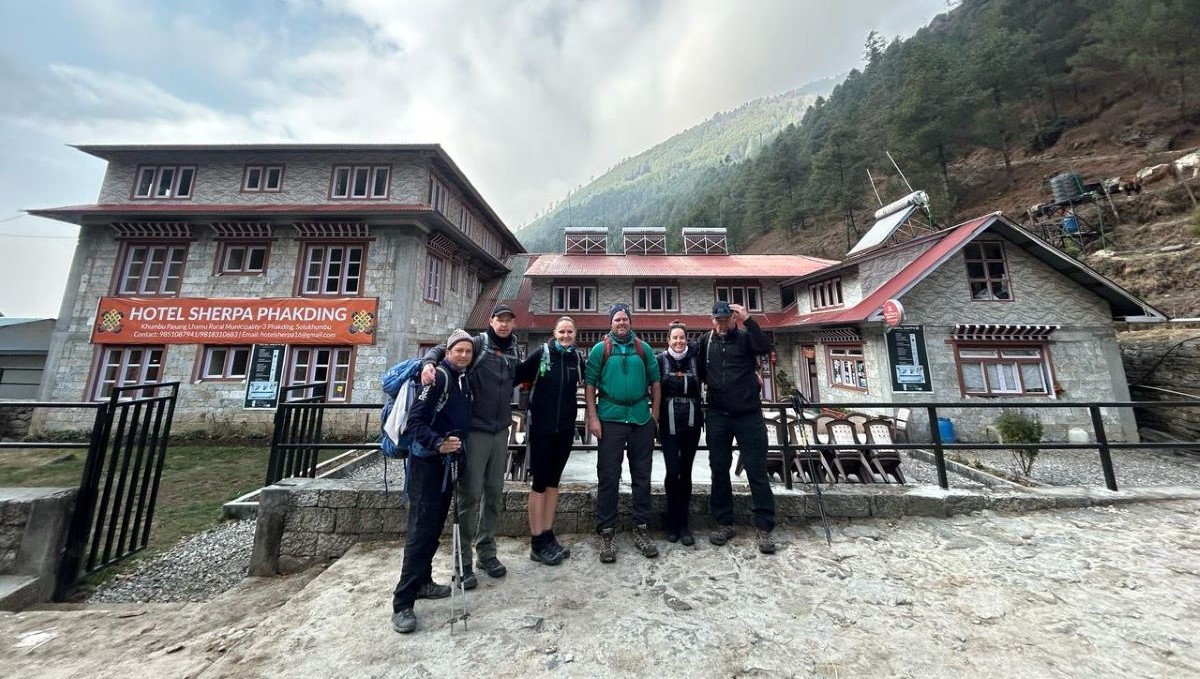
Our Experienced Seniour Guide Amy and Guest from Australia are at Phakding at Everest Gateway
Experience the Sherpa Culture Along the Way
Reaching a high-altitude lake is not the only goal of the Gokyo Lake Trek. The people and settlements you pass before reaching the upper valley contribute significantly to its character.
The trail passes through towns like Namche Bazaar, Dole, and Machhermo, where trekking, yak herding, and Tibetan Buddhist culture are strongly associated with traditional mountain life. As you proceed farther into the Khumbu, houses, mani walls, prayer flags, chortens, and small monasteries progressively blend into the landscape. Opportunities to learn about the customs and way of life of the Sherpa communities are another well-known feature of the Everest region.
This is worthwhile because the culture doesn't feel like a stand-alone tourist destination. It is integrated into the journey itself. You stroll through mountain villages, eat at neighborhood teahouses, and walk alongside people whose lives have been influenced by the high Himalayas for a long time.
For tourists interested in Sherpa culture, Himalayan villages, and local customs, this improves the Gokyo experience. You come back with more than just pictures of mountains; you also have a glimpse of how people live and work in one of the harshest environments on earth.
The Landscape Keeps Changing as You Climb
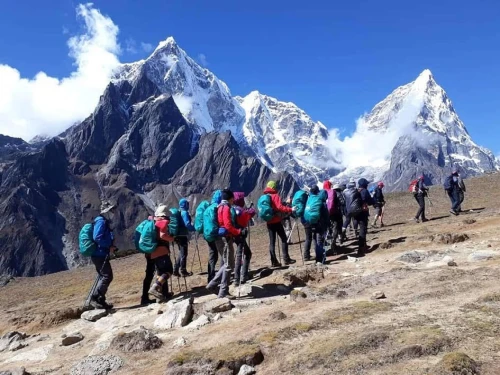
The scenery on the Gokyo Lake Trek is constantly changing, which is one of its best features. After starting with rivers, suspension bridges, and forested hills, the trek progressively transitions into an alpine setting that is far more open.
You stroll through forests of rhododendron, oak, and pine throughout the lower Khumbu. The trees become fewer, and the valley feels more exposed as the trail ascends past Dole and Machhermo.
High pastures, rocky slopes, glaciers, and the turquoise lakes themselves dominate the terrain close to Gokyo. The Ngozumpa Glacier's terminal moraine, Nepal's largest glacier, is also traversed on the route to Gokyo.
If you prefer scenic trekking over a single location, Gokyo is a great option because of its variety. During a single trip, you encounter a variety of Himalayan settings, and the scenery gradually explains why the upper Khumbu differs greatly from the lower valleys.
Additionally, it makes the journey especially fulfilling for photographers. As the route progresses, you see forests, waterfalls, villages, alpine meadows, glaciers, and high Himalayan peaks rather than taking pictures of the same mountain backdrop every day.
Great Choice for Nature and Wildlife Lovers
There is more to the Gokyo Lake Trek than high mountains and glaciers. The route travels through several ecological zones within Sagarmatha National Park, so as you ascend, the scenery noticeably shifts from juniper, alpine vegetation, and much more open terrain at lower elevations to pine, hemlock, and rhododendron forests at higher altitudes.
Himalayan tahr, musk deer, Himalayan monal, and other high-altitude species can be found in the park. Naturally, there is never a guarantee of seeing wildlife, but the prospect gives the walk a new dimension.
Gokyo itself is particularly interesting because its wetlands are internationally recognized under the Ramsar Convention, and the lakes provide habitat for migratory birds crossing the Himalayas.
For travelers who enjoy nature, photography, alpine landscapes, and quieter time outdoors, this makes Gokyo more than a mountain-view trek. You are moving through a living Himalayan ecosystem, with the landscape changing almost as dramatically as the altitude.
Extended Into a More Adventurous Himalayan Route
The fact that the adventure doesn't have to end in Gokyo is another benefit of selecting the Gokyo Lake Trek. The valley can be connected to some of the Khumbu's higher routes if you have the necessary time, expertise, and circumstances.
High passes such as Renjo La and Cho La are the most well-liked choices. Renjo La offers access to the Thame Valley, while Cho La links Gokyo with the Everest Base Camp side of the area. Both are recognized by the Nepal Tourism Board as the primary high passes that exit the Gokyo Valley.
This allows seasoned hikers to transform a simple Gokyo itinerary into a more challenging Everest high-pass journey. It is not something to add casually, though.
Before selecting an extended route, weather, acclimatization, fitness, and current trail conditions should be taken into account because both passes involve significantly more difficult terrain.
For those seeking a more sedate Gokyo experience, the standard route is more than sufficient. However, Gokyo can serve as the beginning point for a much broader Khumbu adventure for hikers seeking a more challenging Himalayan experience.
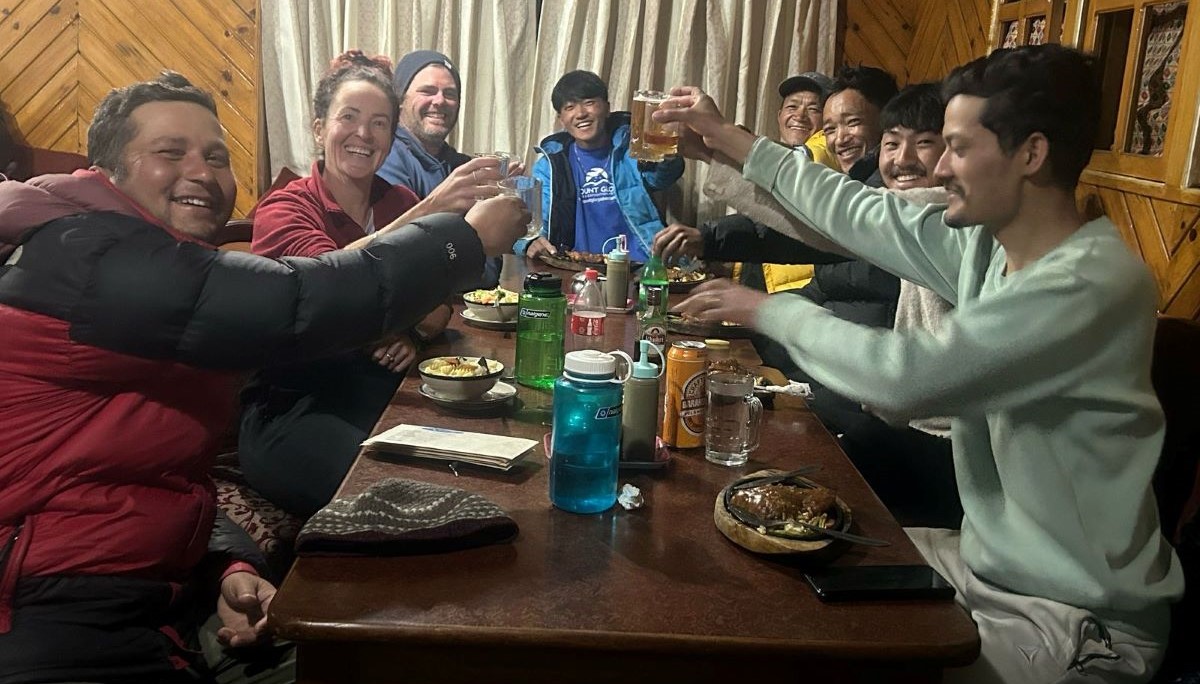
Our Guide,Porters and Guests are Enjoying at Lukla after Successful Everest Gokyo Trek
Who Should Choose the Gokyo Lake Trek?
For hikers who want a high-altitude Himalayan experience but don't want to base their entire trip around Everest Base Camp, the Gokyo Lake Trek in Nepal is an especially good option.
It suits travelers who:
Prefer lakes, glaciers, and panoramic viewpoints alongside mountain scenery.
Want to experience the Everest region through a somewhat different route.
Enjoy photography and changing landscapes rather than one single destination.
Are interested in Sherpa villages, Buddhist traditions, and mountain life.
Are comfortable with several days of walking and gradual altitude gain.
Want the option of extending the trek toward Cho La or Renjo La if their experience, itinerary, and conditions allow.
Gokyo should not be picked just because it sounds quieter or more picturesque; it is still a serious high-altitude trek. At Gokyo Ri, the route rises well above 5,000 meters, so adequate acclimatization is crucial.
The Gokyo Lakes Trek is one of the Everest-region routes where hikers are required by current regulations to carry an agency-issued permit and be accompanied by a licensed guide.
Furthermore, Gokyo is a great option for anyone looking for a beautiful, culturally fascinating, and truly high-altitude Nepal trek without making Everest Base Camp their sole goal.
Conclusion
If you want to see the Everest region from a different angle, the Gokyo Lake Trek in Nepal is a worthwhile option. Turquoise glacial lakes, the enormous Ngozumpa Glacier, Sherpa villages, high-altitude scenery, and the expansive mountain views from Gokyo Ri are what make it so appealing.
Additionally, it provides more than just the standard list of Himalayan sites. The trek has its own personality due to the gradual passage along the Khumbu, the shifting landscape, and the calmer atmosphere of Gokyo Valley.
If your priority is reaching Everest Base Camp itself, the classic EBC route may be the better choice. But if you are looking for Gokyo Lakes, spectacular Himalayan viewpoints, Sherpa culture, and a scenic high-altitude trekking experience, Gokyo deserves a place near the top of your Nepal trekking plans.
The trip to Gokyo can become more than just another trek with the correct season, a well-planned itinerary, and thoughtful preparation; it can become one of those Himalayan experiences you remember long after you've returned home.
Mount Glory Trekking team at Gokyo Ri 5357m during Gokyo Trek
Frequently Asked Questions
1: Why should I choose the Gokyo Lake Trek in Nepal? Choose the Gokyo Lake Trek if you want a combination of turquoise glacial lakes, high Himalayan scenery, Sherpa culture, and panoramic viewpoints without making Everest Base Camp the main objective. Travelers who prefer scenery and a more immersive mountain experience over just arriving at a single well-known landmark will find the route especially fulfilling.
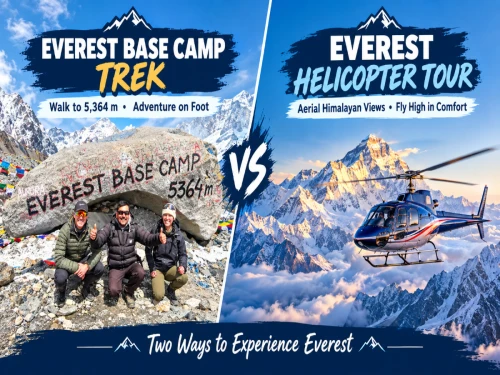
2: Is Gokyo Lake Trek better than Everest Base Camp? Neither is universally better; they offer different experiences. Everest Base Camp is the natural choice if standing at the base of the world's highest mountain is your main goal. Gokyo is more appealing if you prefer glacial lakes, Gokyo Ri, glaciers, and a different side of the Khumbu. If you have enough time and experience, the two can also be combined through Cho La.
3: What is special about Gokyo Lake? The Gokyo Lakes are a chain of high-altitude glacial lakes surrounded by dramatic Himalayan terrain. Their turquoise color, the surrounding mountains, and the nearby Ngozumpa Glacier make the valley visually distinctive. In addition to their cultural significance, the lakes have religious significance for Buddhist and Hindu communities.
4: Is Gokyo Lake Trek difficult? The trek is considered challenging mainly because of altitude, long walking days, and steep sections, rather than technical climbing. Proper acclimatization is particularly important as the route reaches high elevations and includes the climb to Gokyo Ri. Regular hiking preparation and a gradual itinerary can make the trek much more manageable.
5: Do I need previous trekking experience for Gokyo? While not necessary, prior Himalayan trekking experience is beneficial. A reasonably fit person who prepares for several hours of walking and follows a properly acclimatized itinerary can undertake the trek. It is more important to be comfortable with sustained uphill walking and to understand how your body responds to altitude.
6: Is Gokyo Lake Trek less crowded than Everest Base Camp? The Gokyo route generally has a quieter atmosphere than the main Everest Base Camp trail, particularly after the route separates toward Dole and Machhermo. It is still a popular trekking destination during peak seasons, so solitude should not be expected, but many trekkers appreciate its less busy character.
7: What can I see during the Gokyo Lake Trek? The journey includes Sherpa villages, Buddhist monuments, forests, suspension bridges, waterfalls, alpine pastures, glaciers, and glacial lakes. A stunning Himalayan panorama with Everest, Lhotse, Makalu, and Cho Oyu is also visible from Gokyo Ri.
8: Is Gokyo Ri worth climbing? For most trekkers, yes. The climb is steep and usually begins early, but the viewpoint provides one of the major panoramic highlights of the Gokyo Valley Trek. You can see the lakes and surrounding peaks from a much higher perspective, making the effort worthwhile for travelers who enjoy mountain views and photography.
9: What is the best season for the Gokyo Lake Trek? Spring and Autumn are generally the most favorable periods, particularly March to May and October to November. These months usually offer better visibility and more stable trekking conditions. Winter brings colder temperatures and possible snow, while monsoons can bring rain, clouds, and less predictable mountain views.
10: Can I combine Gokyo Lake with Everest Base Camp? Yes. Experienced trekkers with sufficient time can combine the two through Cho La Pass, creating a longer high-altitude itinerary. This is considerably more demanding than the standard Gokyo route, so acclimatization, fitness, weather, and current trail conditions should be considered carefully before choosing the combined trek.
11: Is the Gokyo Lake Trek suitable for beginners? It can be suitable for fit beginners who prepare properly, but it should not be treated as an easy beginner trek. The altitude is the main challenge, and reaching the Gokyo Valley requires several days of sustained walking. First-time trekkers should choose a well-paced itinerary, follow their guide's advice, and take acclimatization seriously.
12: How many days are needed for the Gokyo Lake Trek? Depending on the starting point, acclimatization days, route, and whether you include stops like Gokyo Ri, Cho La, or Everest Base Camp, a typical Gokyo itinerary takes between 10 and 14 days. Allowing adequate time for gradual altitude gain is preferable to selecting an excessively short itinerary just to cut down on the number of days.
Born and raised in the Mountainous village of Gorkha Nepal. Mr. Pandey is a successful tour leader and a very active social worker contributing a lot to the welfare of society. Mr, Pandey belongs to a very humble background and has started his career as a junior staff in a much-reputed company in Nepal. Mr. Pandey's family background is engaged in the tourism sector for an extended period. After spending many years in research and the drawbacks of tourism development.
Due to his great passion and enthusiasm for the trekking and tourism sector, he started his tour career with many expert teams. He intends to bring revolution to the tourism sector by offering luxurious services and accommodations to travelers at a minimum price. With the Motto of Travellers, satisfaction is my passion. He has been helping many travelers with traveling.

 based on 228 reviews