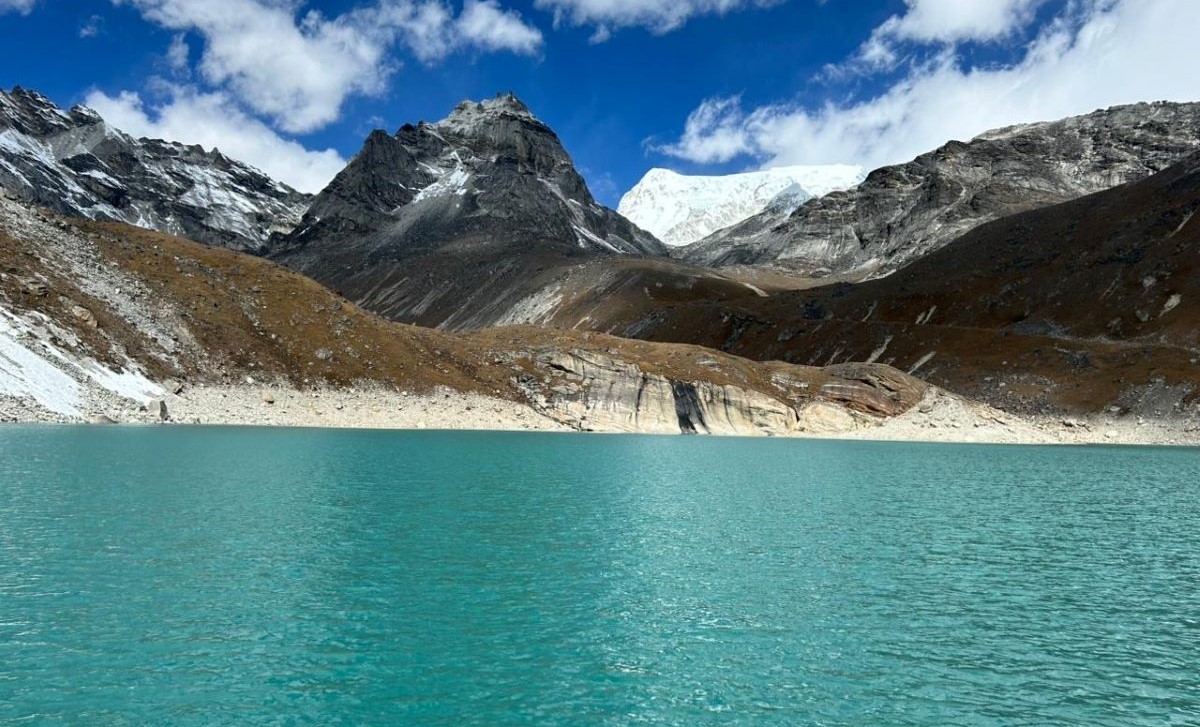
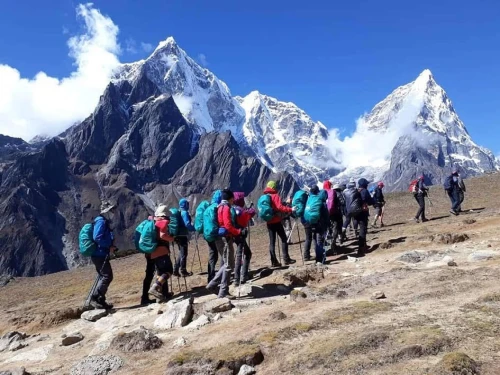
Oligotrophic lakes in Nepal's Sagarmatha National Park "Gokyo Lake" at 4700m - 5000m
One of the most stunning alternatives to the famous EBC Route is the Gokyo Ri Trek, which is peacefully situated in Nepal's Khumbu region.
Most Everest trekkers complain about the crowds on their trek, but Gokyo feels like a more tranquil version of the same Himalayan world. It offers majestic turquoise lakes, massive glaciers, and the iconic Gokyo Ri viewpoint at 5357 metres.
But here's the real question that most travellers have before booking: when is the best time to do the Gokyo Ri Trek?
As you are probably aware, the high-altitude Everest region can be very unpredictable, so the timing of your visit is critical. Gokyo Ri Trek itinerary, which typically includes an 11-day package, is not an easy hike that can be planned during any season.
During this high-altitude trek in Nepal, the same trails can feel completely different depending on the season, with crystal-clear mountain views one month and snow-covered paths and clouds the next.
If you're planning a Gokyo Lakes Trek or a Gokyo Ri Viewpoint hike, this guide, prepared with expert knowledge and experience from Mount Glory Treks, will help you choose the best season for the Gokyo Trek based on weather, visibility, crowd levels, and actual trekking conditions.
If you want a simple answer, the best time to do the Gokyo Ri Trek is from March to May in the spring and September to November in the autumn. Anyone who has completed a few treks in Nepal's Himalayas is aware that the spring and autumn seasons are typically the best times for most treks.
Offering consistently stable weather, clear skies, safe trekking conditions, and the best Himalayan visibility in the Everest region trek, these two times of the year are ideal for planning your Gokyo Ri Hike 5357m.
However, as a trekker, you must understand that the experience varies slightly with each season, and choosing the right one is heavily influenced by the type of trek and experience you truly desire, as well as the true purpose of your journey.
During these seasons, you can easily find organised Gokyo Ri Trek packages from reputable trekking companies such as Mount Glory Treks, which operate guided Everest region trekking routes.
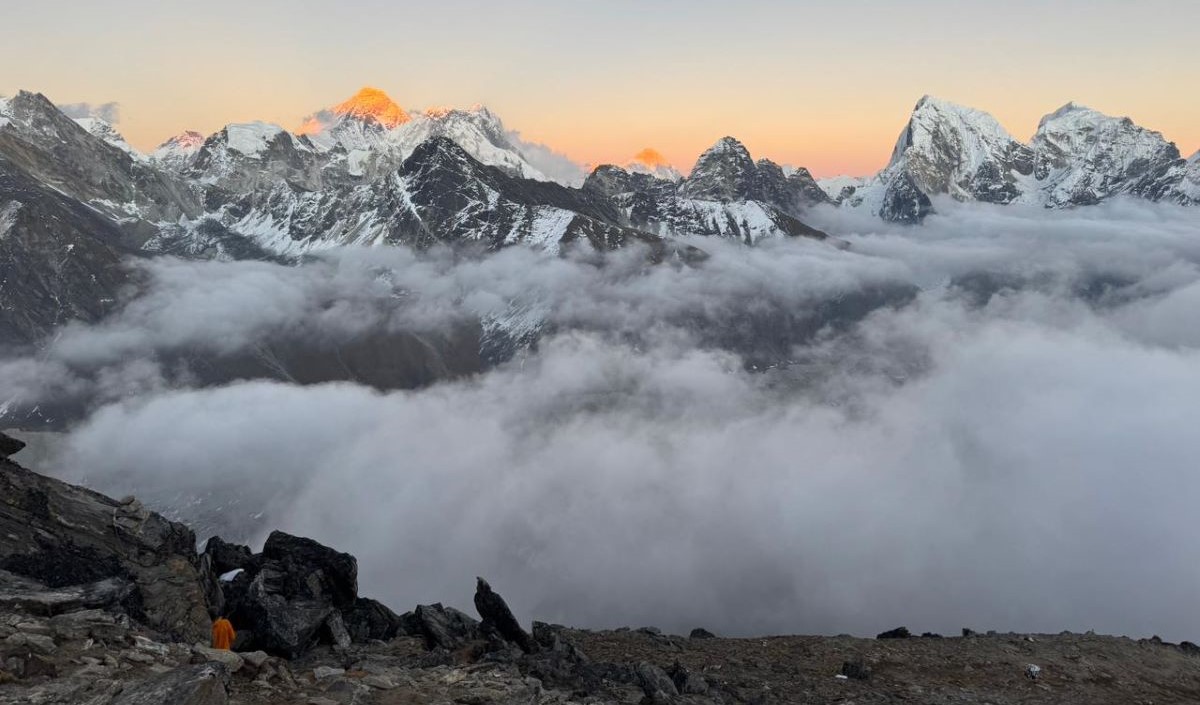
Stunning Everest Himalayan Range From Gokyo Ri 5357m During Gokyo Ri Trekking
Spring Season (March to May) – Best for Landscapes and Comfortable Trekking
Not going to lie, spring is one of the most rewarding times to visit the Gokyo Lakes.
This is the time when the Everest region gradually returns to life after a harsh winter. The true definition of spring in Nepal the forest trails near Namche, Dole and Machhermo bloom with rhododendrons, and the lower valleys feel fresh and colourful because of the different species of flowers.
When trekking to Gokyo in Spring, the air is clearer in early mornings, and the snow-capped mountains look sharp against the blue skies.
Similarly, the overall temperature in the Everest region is comfortable during the day, making long trekking hours easier, especially as you ascend towards the Gokyo valley.
Trekkers should also be aware that this season attracts the most trekkers because it is one of the most popular trekking periods in Nepal, so advance planning is required due to accommodation and flight availability during peak season.
Why choose spring for Gokyo Ri Trek
Best for rhododendron bloom and scenic photography
Comfortable trekking temperatures in higher altitudes
Great visibility of Everest, Cho Oyu, and surrounding peaks
Balanced weather for acclimatisation and steady hiking pace
Location
Day
Night
Lukla (2,860m)
10°C to 18°C
0°C to 5°C
Namche Bazar(3440m)
8°C to 15°C
-3°C to 3°C
Gokyo (4790m)
5°C to 12°C
-5°C to -10°C
Gokyo Ri (5357m)
0°C to 8°C
-8°C to -12°C
Autumn Season (September to November) – Best Weather and Clearest Mountain Views
Gokyo Ri Trek during spring is so beautiful with blooming flowers and lush greenery, but there is stiff competition from the autumn season, which runs from September to November and provides travellers with unique highlights.
The autumn season is considered the most reliable time for the Gokyo trek. Trekking after the monsoon has passed has several advantages.
While hiking, you will notice that the skies turn deep blue, visibility improves dramatically, and every mountain in the Everest region stands out clearly.
From the summit of Gokyo Ri, you can see Everest, Lhotse, Makalu, and Cho Oyu all in one panoramic view. This is why many trekkers describe autumn as the "perfect visibility season" in Nepal.
Trails are dry and stable, making them ideal for long treks. Even glacier sections feel safer than they did in previous seasons.
Why autumn is considered the best time for the Gokyo Ri Trek
Best overall trekking conditions in the Everest region
Crystal-clear views of Everest and surrounding peaks
Stable weather with low rainfall
Ideal for Gokyo Lakes photography and reflections
Safer trails across high altitude sections
Location
Day
Night
Lukla (2860m)
12°C to 18°C
5°C to 10°C
Namche Bazar(3440)
8°C to 14°C
0°C to 5°C
Gokyo(4790m)
4°C to 12°C
-5°C to -10°C
Gokyo Ri (5357m)
0°C to 8°C
-8°C to -12°C
Winter Season (December to February) – Quiet but Extremely Cold
In the winter months from December to February, the Gokyo Valley becomes an entirely different landscape. This time might be the best for solitude lovers as the Gokyo trails become very quiet and sometimes even almost empty.
You will see snow covering parts of the route, and the Gokyo Lakes also partially freeze, which creates a surreal Himalayan experience that is not in any other season.
But this winter beauty comes with a winter challenge: extreme cold and unpredictable snow conditions, which add to the difficulty and risk of the standard Gokyo Ri Trek.
Temperatures at higher elevations, such as Gokyo Ri, can easily drop below freezing, particularly at night and early in the morning.
Why some trekkers still choose winter
Very few crowds on the trail
Crystal-clear air on stable days
Frozen lake scenery around Gokyo
Peaceful and isolated trekking experience
Location
Day
Night
Lukla (2860m)
5°C to 12°C
-5°C to 0°C
Namche Bazar(3440m)
2°C to 10°C
-8°C to -3°C
Gokyo(4760m)
-5°C to 5°C
-15°C to -20°C
Gokyo Ri(5357m)
-8°C to 2°C
-20°C or lower
Monsoon Season (June to August) – Least Recommended
Among all the seasons for Gokyo Ri trekking in Nepal, the monsoon months from June to August are the least desirable.
Heavy rainfall during this time affects the lower trails, and visibility is often obscured by clouds, making for slippery trekking conditions.
Another issue with the monsoon trek to the Everest region is the high risk of flight delays to Lukla, the primary entry point.
Aside from the hazards and risks of the monsoon season, the landscape becomes extremely green, and waterfalls are active throughout the region, adding to the beauty. Gokyo monsoon trek needs good planning and preparation. It is suitable for experienced and adventure-loving trekkers.
Why most trekkers avoid the monsoon
Cloud-covered mountains
Slippery and muddy trails
Unpredictable weather patterns
Poor visibility for Gokyo Ri viewpoint
Location
Day
Night
Lukla(2860m)
15°C to 20°C
10°C to 15°C
Namche Bazar(3440m)
12°C to 18°C
5°C to 10°C
Gokyo(4760m)
8°C to 16°C
0°C to 5°C
Gokyo Ri(5357m)
3°C to 10°C
-2°C to 3°C
In Conclusion
Many trekkers, after completing the beautiful trek to Gokyo and back, realise the thing that the real experience is not just about the viewpoint; it is the journey through Lukla, Namche Bazaar, Dole, Machhermo and Gokyo Valley where the landscapes slowly change from forests to glaciers and lakes, and you are immersed in the local Himalayan lifestyle.
And choosing the right season on a remote and high-altitude journey like this matters so much because nature is something which shouldn't be taken lightly.
Many tourists prefer seasoned local companies like Mount Glory Treks for well-guided trekking, permits, lodging, and safe route planning when planning an all-inclusive Gokyo Ri Trek package or Gokyo Lake Trek.
A straightforward trip to the Himalayas can be transformed into one of Nepal's most memorable trekking experiences with the right timing.
We highly recommened to do Gokyo Ri Trek in Nepal during Spring (March to May) and Autumn(September to November). If you are planning outside those seasons, then you need to consult with your travel partner and prepare with the required checklist.
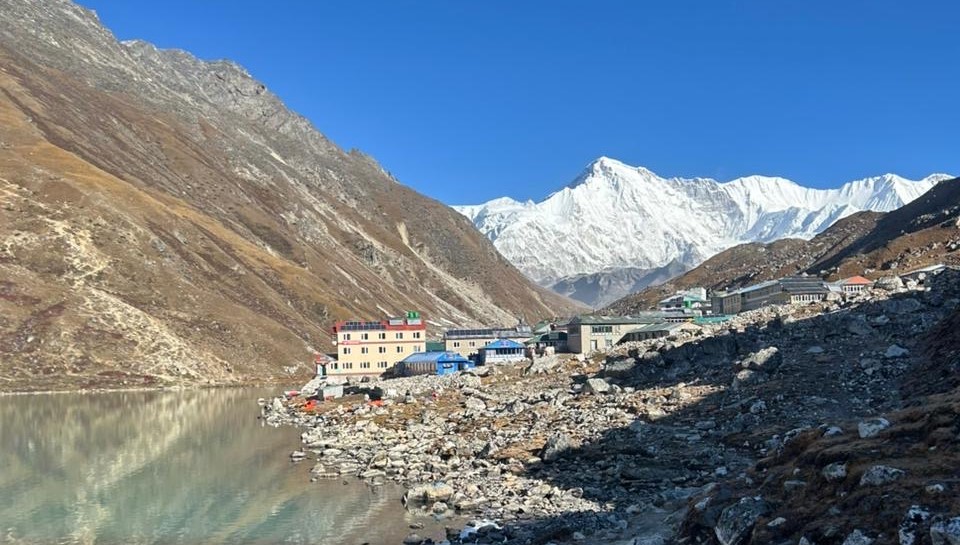
Last Stop Accommodation at Gokyo Lake 4760m during Gokyo Ri Trek
Frequently Asked Questions
1: What is the best time to do the Gokyo Ri Trek in Nepal?
The best seasons for the Gokyo Ri Trek are autumn (September to November) and spring (March to May). These seasons provide stable weather, clear Himalayan visibility, and better trekking conditions in the Everest region. If you're planning a Gokyo Lakes Trek or a Gokyo Ri viewpoint hike, these months provide the most consistent experience with breathtaking views of Everest, Cho Oyu, and the surrounding peaks.
2: Which month is best for clear views from Gokyo Ri?
The best months for crystal-clear mountain views are October and November. The air is clean, and the visibility is much better after the monsoon. This is the right time for trekking in the Everest region of Nepal, especially for photography from the Gokyo Ri summit.
3: Is spring good for Gokyo Trek?
Yes, the spring season (March to May) is one of the most scenic times to visit Gokyo Lake. The lower Everest region trails are in full bloom of rhododendrons, and the weather is stable for trekking. It is a great option for travellers looking for a combination of natural beauty and comfortable trekking conditions.
4: Can I do the Gokyo Ri Trek in winter?
Yes, but winter hiking (December through February) is more difficult. The region becomes extremely cold, and some areas are covered in snow. Gokyo Lakes may partially freeze, and lodges may be limited at higher elevations. It is appropriate for experienced trekkers seeking a quiet and snowy Himalayan experience.
5: Is monsoon season good for Gokyo Ri Trek?
Monsoon (June to August) is not generally advisable. Heavy rains affect trail conditions, mountain views are hidden by clouds, and flights into Lukla are often delayed. Although it’s lush and fresh, the visibility for Gokyo Ri viewpoint trekking is not usually good in this season.
6: How crowded is Gokyo Ri Trek during peak season?
Gokyo Ri Trek is less crowded than Everest Base Camp Trek even in peak seasons like autumn and spring. Most of the trekkers go to EBC, so Gokyo Valley is quite peaceful. This makes it a good choice for people looking for less crowded trekking routes in the Everest region.
7: What is the weather like during autumn in the Everest region?
Autumn weather is stable and dry, ideal for trekking. Days are mostly clear with good visibility, and nights are colder at higher elevations. This season is known for the best mountain views in Nepal Trekking, especially for the Gokyo Lakes and Gokyo Ri Sunrise Hikes.
8: Is it possible to do the Gokyo Ri Trek via Renjo La Pass?
9: Which is better for the Gokyo Ri Trek, spring or autumn?
They're both good, but they're different things. Best time to visit: autumn, for clear skies and visibility of mountains. Spring is more colourful with blooming flowers. Autumn is generally the best time to trek in the Everest region for first-time trekkers who are interested in safety and views.
10: Is the Gokyo Ri Trek suitable for beginners?
Yes, it’s moderately difficult but good for fit beginners. The trek has gradual elevation gain and established tea houses. However, proper acclimatisation is a must as Gokyo Ri is at a height of 5,357 metres, which is high-altitude trekking in Nepal.
11: What factors decide the best time for Gokyo Ri Trek?
Main things are stability of the weather, visibility of mountains, safety of trails, temperature and flight conditions to Lukla. The experience is far better when the skies are clear and the trails are dry, and this is the reason why spring and autumn are considered to be the best trekking seasons in Nepal for the Gokyo region.
12: Is Gokyo Ri better than Everest Base Camp for avoiding crowds?
Yes, the Gokyo Ri trek is a quieter alternative to Everest Base Camp and is preferred by many trekkers. The trails are less crowded, especially in the Gokyo Valley, and the viewpoint has unobstructed Himalayan vistas without the throng of tourists. It is often recommended as a less-crowded trek in Nepal’s Everest region.
13: Can Gokyo Lake Trek be combined with Everest Base Camp Trek?
Yes, the Gokyo Lakes Trek can be combined with the Everest Base Camp via Cho La Pass. This adds up to a longer, more demanding circuit trek featuring the iconic destinations. It requires good fitness, acclimatisation and favourable weather conditions in the Everest region.
Born and raised in the Mountainous village of Gorkha Nepal. Mr. Pandey is a successful tour leader and a very active social worker contributing a lot to the welfare of society. Mr, Pandey belongs to a very humble background and has started his career as a junior staff in a much-reputed company in Nepal. Mr. Pandey's family background is engaged in the tourism sector for an extended period. After spending many years in research and the drawbacks of tourism development.
Due to his great passion and enthusiasm for the trekking and tourism sector, he started his tour career with many expert teams. He intends to bring revolution to the tourism sector by offering luxurious services and accommodations to travelers at a minimum price. With the Motto of Travellers, satisfaction is my passion. He has been helping many travelers with traveling.

 based on 228 reviews