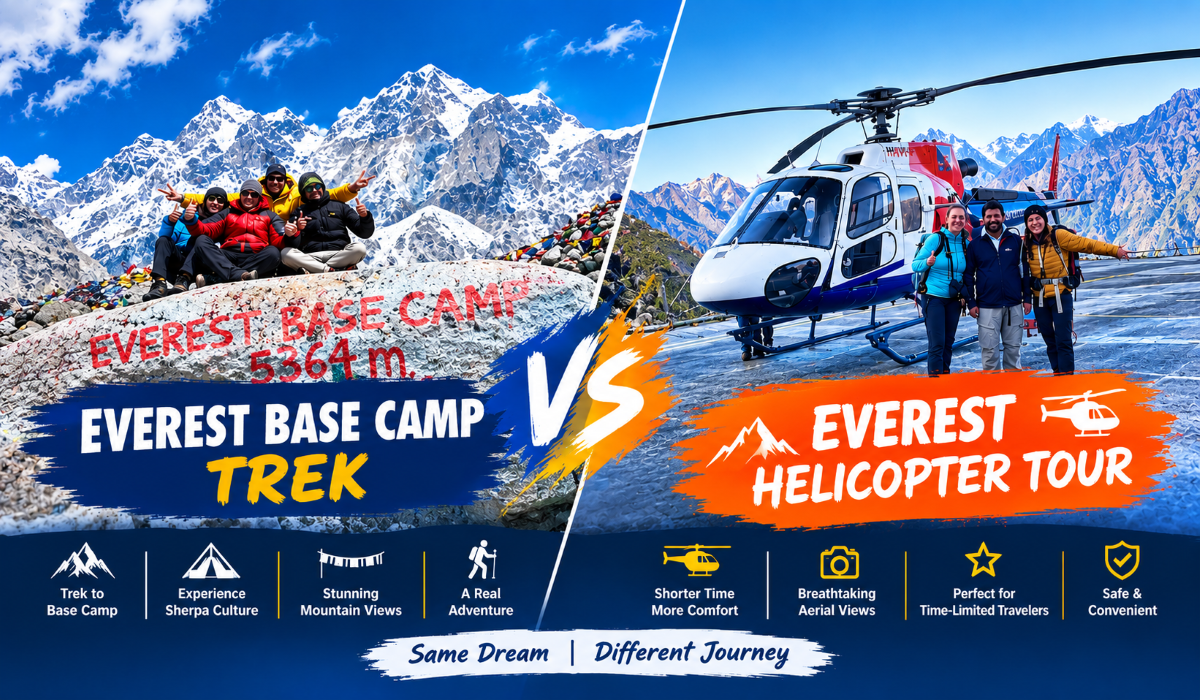
Everest Base Camp Helicopter Tour Vs Everest Base Camp Trek
For many travellers, the dream in Nepal is the same: seeing Mount Everest and experiencing the Khumbu region up close. The question is how you want to do it.
Some people choose the classic Everest Base Camp Trek, spending around two weeks walking through Sherpa villages, crossing suspension bridges, visiting monasteries, and gradually making their way toward Everest Base Camp. Whereas others prefer an Everest helicopter tour, reaching the Everest region in a matter of hours and enjoying aerial views of the world's highest peaks.
Neither option is automatically better than the other because they both simply offer different experiences.
Walking, acclimating to altitude, staying in mountain lodges, and witnessing Khumbu life are all part of the Everest Base Camp expedition. Convenience, time efficiency, and seeing Everest without committing to a lengthy hike are the main goals of an Everest helicopter trip.
Your decision will depend on several factors, including time, budget, fitness, comfort preferences, and the type of Himalayan experience you are looking for. This guide compares the two options in detail, helping you decide whether trekking to Everest Base Camp or flying by helicopter is the better choice for your trip to Nepal.
Everest Base Camp Trek or Helicopter Tour: A Quick Comparison
The easiest way to understand the difference is to look at what each option actually asks of you. A trek takes time and physical effort but gives you the full experience of travelling through the Khumbu on foot. A helicopter tour sacrifices that gradual journey in exchange for speed and convenience.
Factor
Everest Base Camp Trek
Everest Helicopter Tour
Time Required
Usually around 12-16 days, depending on the itinerary
Usually around 4-5 hours
Main Experience
Walking through the Khumbu region, crossing villages and reaching Base Camp
Aerial sightseeing with landings
Physical Demand
High, including several days of walking at high altitude
Low in terms of strenuous hiking, but altitude still matters
Altitude Exposure
Gradual ascent over several days
Rapid exposure to very high elevations
Cost
Generally lower for the core trip, but varies by package
Significantly higher per person
Accomodation
Teahouses and mountain lodges
Usually no overnight stay on a standard tour
Sherpa Villages and Culture
Experienced throughout the route
Seen from the air and during short stops
Everest Base Camp
You walk to Base Camp
Usually viewed from the air; landing arrangements vary
Kala Patthar
Reached on foot as part of many itineraries
Can be viewed from the air; landing depends on the package
Best Suited to
Travellers who enjoy trekking and want the complete journey
Travellers with limited time or who prefer convenience
Thus, the primary distinction is not just between a helicopter and a hike. It's access versus journey. Reaching Everest is a part of the journey. The goal of using a helicopter is to see the Everest region without having to spend many days on the trail.
When deciding between a helicopter trip and an Everest Base Camp Trek, this disparity becomes crucial. While a short-term visitor to Nepal could benefit considerably more from a helicopter ride, someone with plenty of time who enjoys hiking might find the walk far more fulfilling.
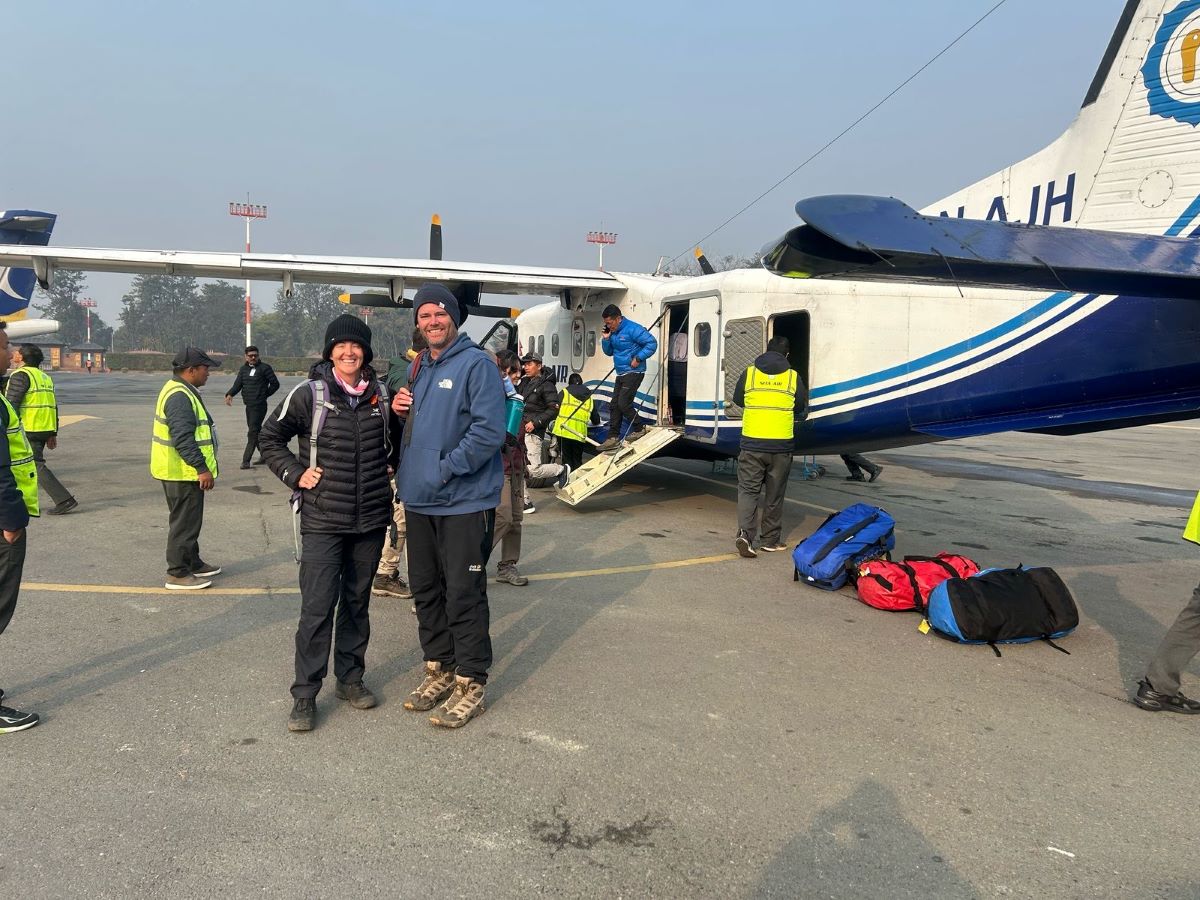
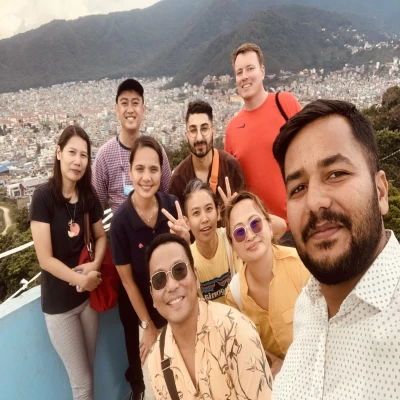
Our Happy Traevelers are ready to Fly lukla from Kathmandu for Everest Base Camp Trek
How Much Time Do You Need?
One of the main distinctions between a helicopter trip and an Everest Base Camp Trek is time. While a typical Everest helicopter tour from Kathmandu may be finished in about 4-5 hours, a traditional EBC walk often takes 12-16 days, including travel and acclimatization.
Before arriving at Everest Base Camp, the journey progressively passes through locations like Namche Bazaar, Tengboche, Dingboche, Lobuche, and Gorak Shep.
This slower pace is necessary for acclimatization, but it also means that the travel will take up a significant portion of your trip to Nepal.
It is much simpler to fit a helicopter trip into a brief vacation. Depending on the weather and the itinerary you choose, you can depart Kathmandu in the morning, visit Everest, the Khumbu Glacier, Kala Patthar, and the surrounding peaks, make the planned landing or sightseeing stops, and return the same day.
The lengthier walk is part of the appeal if you have plenty of time and wish to experience hiking in the Everest region. The helicopter option is much more convenient if you are pressed for time and your primary goal is to view Everest.
Which Is More Physically Challenging: EBC Heli Tour or EBC Trek?
It is obvious that the Everest Base Camp Trek requires more physical exertion. You walk over uneven mountain trails for several days in a row, frequently for five to eight hours each day, with severe rises and descents along the way. Moving above Namche Bazaar and toward the upper Khumbu requires more effort due to the altitude.
In contrast, an Everest Base Camp Helicopter Tour with Landing involves relatively little walking, which makes it a sensible choice for tourists who are unable to go on a lengthy, high-altitude hike. But it's crucial to remember that traveling to the Everest region does not eliminate altitude concerns. The body has far less time to adapt while traveling by helicopter from Kathmandu to elevations above 5,000 meters in a few hours.
The answer to a fitness-based comparison between an Everest Base Camp trek vs. a helicopter tour depends on the type of challenge you're looking for. While the helicopter eliminates the majority of the physical labor yet requires quick exposure to high altitude, the hike challenges endurance over several days.
Regular uphill walking and aerobic activity will help you prepare for the climb if you have no prior trekking expertise. The more crucial factor to take into account for a helicopter trip is whether or not you are a good fit for quick, high-altitude travel.
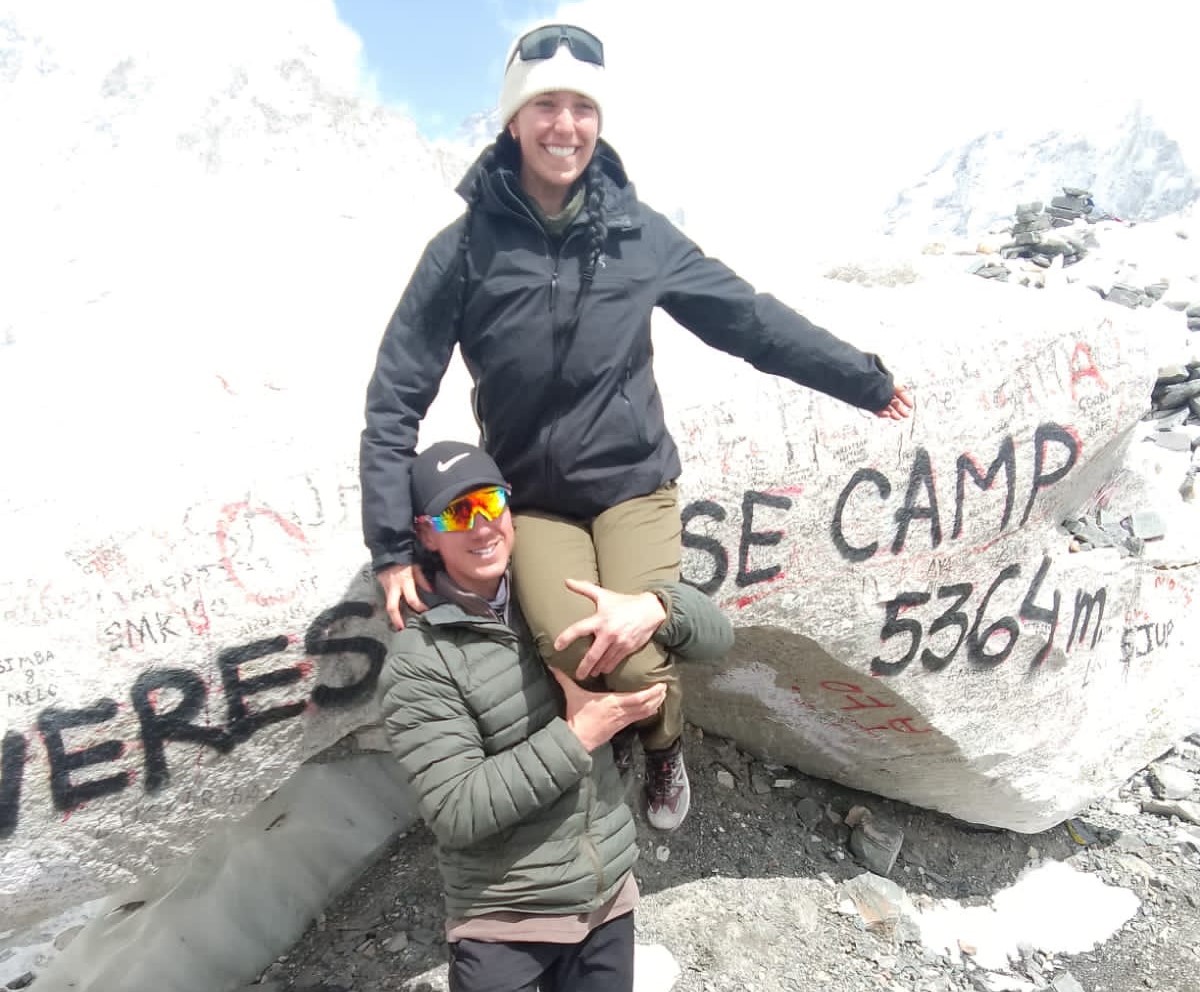
Happy Couple at Base Camp of Mount Everest 5364m
Which Option Gives You a Better Everest Experience?
There is no simple winner between trekking to Everest and a heli ride here because the two experiences are built around completely different ideas of travel. With the Everest Base Camp Trek, Everest is only one part of a much longer story. You begin in the lower Khumbu and gradually work your way upward, watching the landscape become drier and more rugged as the altitude increases.
Furthermore, the days have a rhythm of walking, resting, eating, and adjusting to the elevation. You sleep in mountain villages, spend time around other trekkers and guides, and experience the changing atmosphere of the Khumbu rather than simply passing over it.
That gradual approach also changes how reaching Base Camp feels. When you finally stand beside the Khumbu Glacier at 5,364 meters, you know you have covered the distance on foot. The achievement comes not only from the destination but also from everything that happened between Lukla and Base Camp.
A helicopter tour creates a completely different impression. Instead of watching the mountains grow larger over days, you see the Everest region from above, with deep valleys, glaciers, and enormous peaks laid out beneath you. Places that take trekkers days to reach can be connected within a single flight. For photographers and travelers with limited time, that aerial perspective can be one of the strongest reasons to choose a helicopter.
There is also a practical difference in how much time you spend in the region. A trek gives you repeated exposure to the landscape and local communities, while a helicopter tour offers only brief stops before returning to Kathmandu. You may see Everest more quickly, but you will not have the same opportunity to experience the daily life of the trail.
If your idea of the perfect Himalayan trip is walking through Sherpa villages, acclimatizing in the mountains, and earning your arrival at Base Camp, the trek offers the richer experience. If you want to see Everest and the surrounding Himalayas without committing to a long trek, the helicopter provides an efficient and visually impressive alternative.
Cost: Everest Base Camp Trek vs Helicopter Tour
The Everest Base Camp trek is generally the more budget-friendly choice, especially when you have enough time to complete the full journey. In 2026, a standard guided EBC trek typically costs around US$1,200–$2,500 per person, while budget trips can be lower and luxury or private itineraries can exceed US$3,500.
Depending on the operator, group size, and landing arrangements, a shared helicopter trip to Everest Base Camp typically costs between $1,000 and $1,500 per person. Private helicopter rentals are far more costly; each helicopter typically costs between $3,500 and $6,000 or more.
The fact that the prices may overlap is an intriguing aspect. While the helicopter costs more because you are paying for a few hours of aircraft, personnel, and high-altitude operations, the journey is less expensive for the length of days involved.
Trekking is therefore a better option if money and time spent in the mountains are your top priorities. The helicopter can make up for its extra price if you're short on time and want to see Everest without spending two weeks on the path.
Before choosing between the two, always compare what is included, including flights, permits, meals, lodging, transfers, and landing fees.
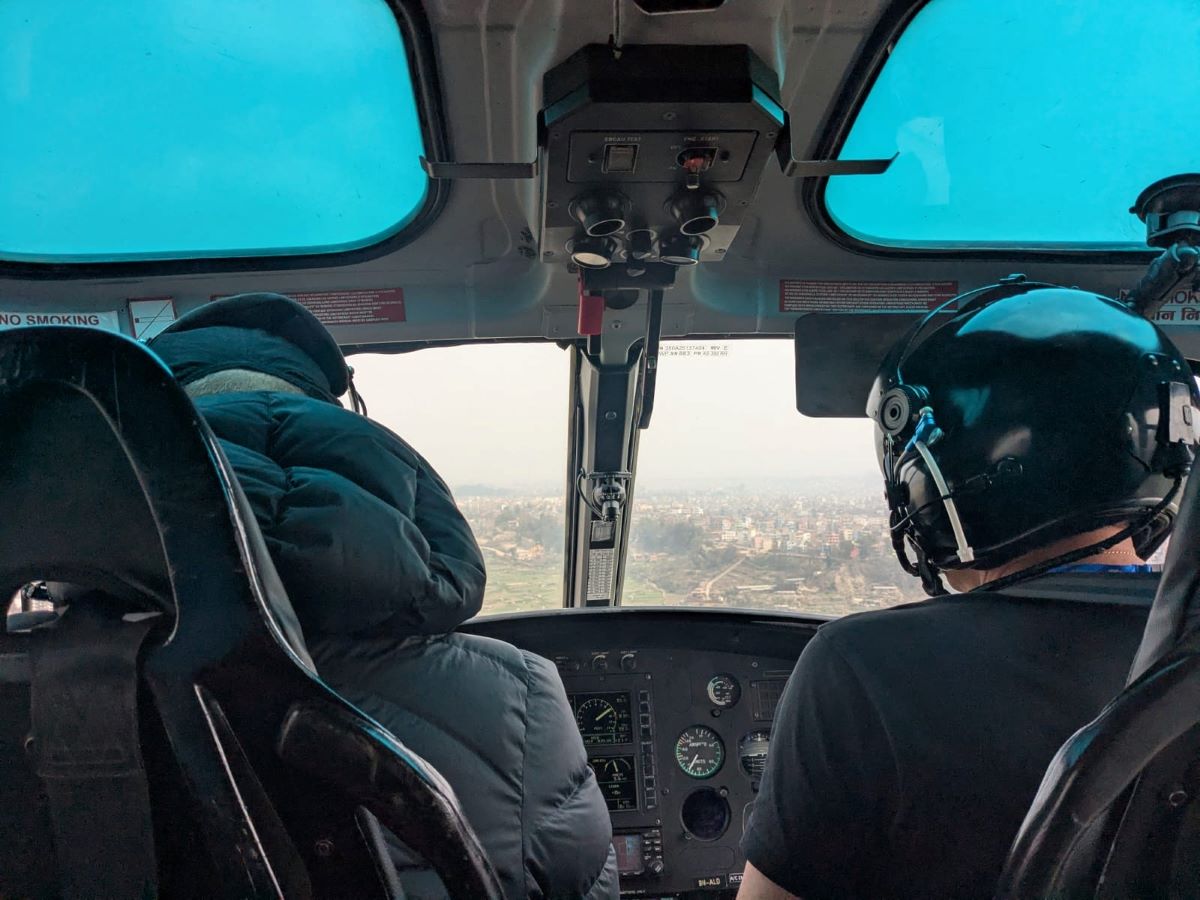
Helicopter Take off from Kathmandu for Everest Helicopter One Day Tour
Which One Should You Choose?
The better choice depends less on which option is “best” and more on what you want from your time in the Everest region. Furthermore, it also largely depends upon your health, fitness, time, and budget.
If you have about two weeks, like to walk, and want to explore the entire Khumbu, go for the Everest Base Camp Trek. As you progressively become used to the altitude, you have time to explore Sherpa communities, monasteries, mountain lodges, and the shifting environment. A greater sense of accomplishment is also felt upon arriving at Base Camp after several days of hiking.
The Everest Helicopter Tour makes more sense if you just have a short amount of time in Nepal, don't want to hike for several days, or just want to see the amazing Himalayan views. You can see Everest, the Khumbu Glacier, Lhotse, Nuptse, Ama Dablam, and other significant peaks by traveling from Kathmandu into the Everest region in a few hours.
Another practical factor is that you shouldn't disregard altitude just because you're flying. While a helicopter transports you quickly to elevations above 5,000 meters, a hike allows your body many days to adjust as you ascend. When choosing between the two, take your worries about exposure to high altitudes into account.
For a traveler who values the journey and cultural experience, trekking is usually the more rewarding option. For someone who values time, comfort, and access to the mountains, a helicopter tour is difficult to beat.
Can You Combine an Everest Trek With a Helicopter Tour?
Trekking and flying are not always mutually exclusive. A combined Everest hiking and helicopter trip can be beneficial for travelers who wish to walk across a portion of the Khumbu but do not want to spend the entire day walking back and forth.
Trekking to Everest Base Camp and taking a helicopter back is one alternative. By doing this, you can avoid spending several days retracing your steps and instead enjoy the trail, communities, and gradual approach to Base Camp.
Another possibility is to use helicopter transportation for a particular section of the journey when time is limited. The exact arrangement depends on the itinerary, weather, aircraft availability, and landing permissions, so it should be confirmed with the operator beforehand.
This approach can be especially appealing if you want the experience of trekking to Everest Base Camp but have limited holiday time. You still get the satisfaction of walking through the Khumbu, while the helicopter gives you a completely different aerial perspective on the return.
It does cost more than a conventional trek, but for some travellers the combination offers a useful middle ground between a full EBC trek and a short sightseeing flight.
In Conclusion
Depending on your desired experience, you can choose between an Everest Base Camp Helicopter Tour and an Everest Base Camp Trek. Walking through Sherpa villages, resting in mountain lodges, acclimating to the altitude, and ultimately arriving at Everest Base Camp at 5,364 meters are all part of the more time-consuming and physically demanding Khumbu adventure.
An entirely different benefit is provided by a helicopter trip. Without committing to a two-week trekking schedule, you may travel from Kathmandu to the Everest region in a matter of hours and take in breathtaking views of Everest, the Khumbu Glacier, and neighboring peaks. If you are pressed for time or would rather have convenience than a lengthy mountain trek, it is very alluring.
Moreover, trekking is a better option if you value the journey itself. A helicopter tour makes more sense if your goal is to see Everest with less time and physical exertion. Combining trekking with helicopter transportation can be a great compromise for people who desire some of both.
Before making a reservation, take into account your time, finances, level of fitness, and comfort level at high altitudes. In the end, the finest Everest experience is the one that suits your personal travel preferences.
Frequently Asked Questions
1: Is it better to trek to Everest Base Camp or take a helicopter? Neither option is better for everyone. The Everest Base Camp trek is the better fit if you want the full Himalayan journey, local culture, and the satisfaction of reaching Base Camp on foot. An Everest helicopter tour is more suitable when time is limited, or you prefer a shorter, more comfortable way to see the Everest region.
2: Is an Everest Base Camp helicopter tour cheaper than trekking? Usually, a shared helicopter tour costs more for the amount of time involved, although prices can overlap with higher-end trekking packages. A shared Everest Base Camp helicopter tour from Kathmandu commonly costs around US$1,000–$1,500 per person, while a standard guided trek can range roughly from US$1,200–$2,500 depending on services and itinerary. Always compare inclusions rather than the advertised starting price alone.
3: How many days does the Everest Base Camp trek take compared with a helicopter tour? A typical EBC trekking itinerary takes around 12–16 days, including acclimatization and travel arrangements. A helicopter sightseeing trip generally takes about 4–5 hours. The huge difference makes a helicopter particularly attractive for visitors with only a few days in Nepal, while trekking is better suited to travellers who want to spend considerable time in the mountains.
4: Can you see Everest Base Camp from a helicopter? Yes, an Everest helicopter flight can provide aerial views of Base Camp, the Khumbu Glacier and the surrounding peaks. However, seeing Base Camp from the air does not necessarily mean the helicopter will land there. Landing arrangements vary, so confirm whether your package includes a landing at Kala Patthar, Everest View Hotel, or another designated location.
5: Is the Everest heli tour safe compared with trekking? Both involve different considerations. Trekking exposes you to prolonged physical exertion and gradual altitude gain, while a helicopter tour involves rapid travel to very high elevations. Weather, visibility, aircraft limitations, and high-altitude landing conditions can affect helicopter operations. Choose an experienced operator and take the altitude seriously even if you are doing very little walking.
6: Which option is better for people who are not experienced trekkers? A helicopter tour is generally more accessible because it removes the long days of hiking, steep climbs, and repeated high-altitude walking involved in the EBC trek. However, it does not remove altitude exposure. If you are inexperienced with high elevations, understand how rapidly the helicopter reaches the Everest region and consider your personal suitability before booking a high-altitude landing.
7: Which gives better views: Everest Base Camp trek or helicopter tour? They offer different perspectives. The trek gives you changing views as you walk through the Khumbu, with close encounters with villages, glaciers, and mountain landscapes. A helicopter tour over Everest gives you a much broader aerial view, allowing you to appreciate the scale of Everest, Lhotse, Nuptse, Ama Dablam, and the surrounding valleys in a short period.
8: Can I trek to Everest Base Camp and return by helicopter? Yes, depending on the itinerary and current operating conditions. A helicopter return from Everest Base Camp or the Everest region can save several days of walking back toward Lukla. It can be a useful option if you want the experience of trekking into the Khumbu but have less time or do not want to repeat the full trail on the return journey.
9: What is the biggest difference between an EBC trek and an Everest helicopter tour? The journey there is the main distinction. Trekking allows you to stroll, acclimate, and experience the Khumbu for days, making the journey an integral part of the destination. Access, time-saving, and aerial scenery are the main goals of a helicopter trip. It is more beneficial to comprehend this distinction than to only inquire as to which option is quicker or less expensive.
10: Should I choose an Everest Base Camp trek or helicopter tour for a short Nepal trip? A Mount Everest helicopter tour from Kathmandu is typically the more sensible choice if your trip to Nepal is only a few days long because you won't have to spend nearly two weeks trekking. The EBC journey offers a far more comprehensive view of the Everest region if you have adequate time and truly enjoy trekking. One of the first things you should think about while making the choice is how much time you have available.
Born and raised in the Mountainous village of Gorkha Nepal. Mr. Pandey is a successful tour leader and a very active social worker contributing a lot to the welfare of society. Mr, Pandey belongs to a very humble background and has started his career as a junior staff in a much-reputed company in Nepal. Mr. Pandey's family background is engaged in the tourism sector for an extended period. After spending many years in research and the drawbacks of tourism development.
Due to his great passion and enthusiasm for the trekking and tourism sector, he started his tour career with many expert teams. He intends to bring revolution to the tourism sector by offering luxurious services and accommodations to travelers at a minimum price. With the Motto of Travellers, satisfaction is my passion. He has been helping many travelers with traveling.

 based on 228 reviews


.webp)
.webp)