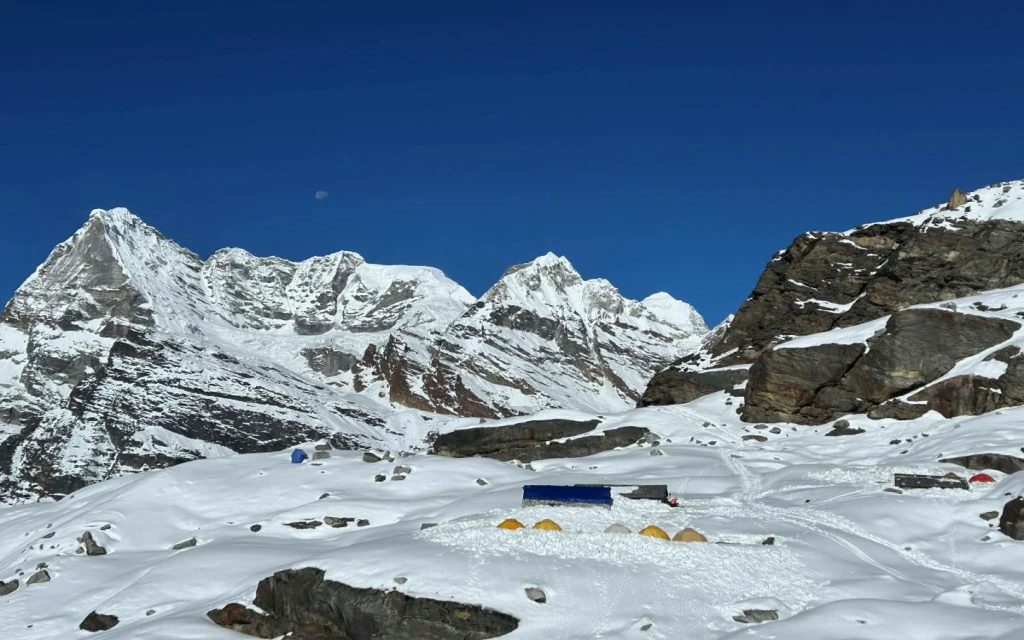
Everest Base Camp Trek with Island Peak Climbing

Everest Base Camp Trek with Island Peak Climbing
At a Glance
  • Duration18 Days
  • DestinationNepal
  • Difficulty Level Technical Challenging
  • Maximum Altitude6189m
  • ActivityPeak Climbing
  • Group Size1-20
  • StartsKathmandu
  • EndsKathmandu
  • Best SeasonMarch,April,May & September,October,November

What if reaching Everest Base Camp was only half of your Himalayan adventure? Sounds unreal, right? But it is true in this EBC Trek with Island Peak.

The Everest Base Camp Trek with Island Peak Climbing takes the classic journey to the foot of Everest and pushes it a step further. You trek through the heart of the Khumbu, spend time acclimatizing in Namche Bazaar and Dingboche, reach Everest Base Camp at 5,364 meters, and climb Kala Patthar for one of the best sunrise views of Everest.

Moreover, the trail then veers toward Chhukung and Island Peak, also known as Imja Tse, the climbing goal, at 6,189 meters, rather than just returning to Lukla.

This journey is so fulfilling because of that change of trails. Trekking days are more than simply a way to move from one village to another; they help you be ready for the higher and more difficult terrain that lies ahead. By the time you arrive at Chhukung, you have already spent a significant amount of time at high altitude and have become familiar with the Himalayan walking cadence. 

Then comes the highlight of this 18-day package: the Island Peak section. The scenery changes, the pace becomes more focused, and the trail eventually gives way to snow, ice, and steeper climbing terrain. With climbing preparation and guidance from experienced Sherpas and mountain guides, you work toward the summit of one of Nepal's most popular trekking peaks.

And what do you get at the end? The satisfaction of combining a high-altitude Everest trek with a genuine Himalayan peak-climbing experience, which might be the beginning of your glorious mountaineering career.

From Kathmandu to Lukla, through Namche, Tengboche, Dingboche, Lobuche, Gorakshep, and Everest Base Camp, and finally across the Island Peak climbing route, this itinerary brings together some of the most memorable stages of an Everest region adventure.

Everest Base Camp Trek with Island Peak Expedition Major Highlights

  • Trek to Mount Everest Base Camp at 5,364 m and experience the legendary Khumbu region from the trail.
  • Stand above the clouds at Kala Patthar (5,545 m) for an unforgettable Everest sunrise.
  • Build your altitude fitness with acclimatization days in Namche Bazaar, Dingboche, and Chhukung.
  • Follow the classic trail through Tengboche, Lobuche, and Gorakshep, surrounded by some of the Himalayas' most dramatic scenery.
  • Turn your EBC adventure into a true climbing challenge with Island Peak (6,189 m).
  • Reach Island Peak Base Camp and prepare for an exciting high-altitude summit attempt.
  • Take on the Island Peak summit climb, tackling snow, ice, and steep mountain terrain with experienced climbing support.
  • Enjoy remarkable views of Everest, Lhotse, Nuptse, Ama Dablam, Pumori, and the surrounding peaks throughout the journey.
  • Experience the warmth of Sherpa villages, Buddhist culture, and Himalayan mountain life along the way.
  • Complete the adventure by descending through Tengboche and Namche to Lukla, followed by a scenic flight back to Kathmandu.

Why Choose the Everest Base Camp Trek with Island Peak Climbing?

If reaching Everest Base Camp feels like the beginning of your adventure rather than the finish line, the Everest Trek with Island Peak Expedition gives you a chance to go further. This carefully designed journey combines the classic EBC trekking experience with the excitement of climbing a 6,189-meter Himalayan peak.

You get to explore the legendary Everest trail, experience Sherpa culture, acclimatize in the Khumbu, stand at Everest Base Camp, and then take on a completely different challenge on beginner-friendly Island Peak. It is an ideal choice for active travelers looking for a longer, more adventurous Everest Trekking experience with both trekking and peak climbing in one journey.

Here are some reasons to choose this adventure:

  • Two Adventures, One Journey: Experience the iconic Everest Base Camp Trek and add the achievement of climbing Island Peak rather than returning after EBC.
  • A Gradual Build-Up: The itinerary gives you time to trek, acclimatize, and become comfortable at altitude before moving into the more demanding Island Peak climbing section.
  • Reach a 6,189-Meter Summit: Island Peak gives you a genuine Himalayan climbing experience, adding snow, ice, and technical sections to the adventure.
  • Proper Acclimatization: Dedicated acclimatization days in Namche Bazaar, Dingboche, and Chhukung help you prepare for the increasing altitude.
  • Experience the Khumbu More Deeply: From Lukla and Namche to Tengboche, Gorakshep, and Chhukung, you have time to experience the villages, trails, monasteries, and mountain culture along the way.
  • For Trekkers Who Want More: This is a strong choice if a traditional EBC trek sounds exciting but you are looking for an additional challenge and a greater sense of achievement.
  • Guided From Trail to Summit: Trek with experienced local support throughout the journey, from the Everest Base Camp route to the Island Peak summit attempt.

Why Choose Mount Glory Treks for the Everest Base Camp Trek with Island Peak Climbing?

Combining an EBC trek with a 6,189-meter Imja Tse climb requires more than a good itinerary. You need experienced guides, careful acclimatization, and reliable logistics.

Local businesses with years of experience, such as Mount Glory Treks, take care of the necessary logistics so you can focus on the path and the ascent. 

Here are a few reasons trekkers choose us:

  • Experienced Local Guides: Trek and climb with knowledgeable Sherpa guides familiar with the Everest and Island Peak routes.
  • Carefully Planned Itinerary: Acclimatization days and gradual altitude gain are built into the journey for a safer, better-paced experience.
  • Complete Trekking Logistics: We arrange permits, Lukla flights, accommodation, transportation, and day-to-day coordination.
  • Safety-Focused Support: Our team monitors your progress at altitude and is prepared to respond to changing conditions when necessary.
  • Licensed Local Operator: Registered with the Nepal Tourism Board (NTB) and affiliated with TAAN and NMA for professional trekking and climbing services.
  • Clear, Reliable Service: Transparent communication and dedicated support from trip planning through the Island Peak summit attempt.
  • Flexible Private Trips: Trek solo, with friends, or as a private group with arrangements suited to your plans.

Everest Base Camp Trek With Island Peak Climbing Cost for 2026/2027

We at Mount Glory Treks offer the EBC Trek with Island Peak Climbing Price Range from USD 2750 - USD 2050 based on the number of climbers in a group. In this price, we offer full board service from arrival in Kathmandu to departure, for 18 Days in total. Please check the cost breakdown for 2026/2027 below for more details.

No of ClimbersCost Per Person
1-1USD 2750
2-3USD 2550
4-6USD 2390
7-9USD 2230
10-20USD 2050

Note: For more details about the price, please contact our operations team.

Itinerary

Arrive in Kathmandu, where our team will pick you up from the airport and transfer you to your hotel. Take the day to rest, settle in, and recover from your long flight. In the evening, meet your guide for a brief trek and climbing orientation, including the upcoming route, equipment, and preparations for Island Peak.

    Take an early morning flight from Kathmandu to Lukla (2,860 m), with the short flight offering spectacular views of the Himalayan landscape. After landing, meet the trekking crew and begin walking toward Phakding.

    The trail follows the Dudh Koshi Valley through small mountain settlements, pine forests, and suspension bridges. After around 3-4 hours of trekking, reach Phakding (2,610 m) and settle into your lodge for the night.

      After breakfast you will follow the Dudh Koshi Valley toward Namche Bazaar (3,440 m). The trail winds through pine and rhododendron forests, crosses several suspension bridges, and passes through Monjo and the Sagarmatha National Park entrance.

      The final section is a steady uphill climb toward Namche. After around 5–6 hours of trekking, arrive at the lively Sherpa town and settle in for the night.

        Today is for acclimatization rather than covering a long distance. Take a short hike around Namche Bazaar, with options such as the Everest View Hotel or nearby viewpoints, before returning to Namche.

        The day helps your body adjust to the increasing altitude while giving you time to explore the town, enjoy the mountain scenery, and prepare for the higher stages of the trek.

          After exiting the Namche Bazaar, proceed along the picturesque path to Tengboche (3,860 m). Before descending toward the Dudh Koshi and climbing once again through rhododendron and pine forests, the route winds around the slope with breathtaking views of Ama Dablam, Everest, and Lhotse. 

          After around 5–6 hours of continuous trekking, reach Tengboche and visit the famous Tengboche Monastery, an important spiritual center of the Khumbu. Spend the night at a local lodge surrounded by spectacular mountain scenery.

            Continue from Tengboche toward Dingboche (4,410 m), following the Imja Khola through beautiful alpine scenery. The trail passes through Pangboche, with increasingly open landscapes and impressive views of Ama Dablam and the surrounding peaks.

            After around 5–6 hours of trekking, you arrive in Dingboche and settle into your lodge. The higher altitude makes this a steady day, so take the evening to rest and prepare for tomorrow’s acclimatization.

              Spend another day in Dingboche to let your body adjust to the altitude. A short hike to a nearby viewpoint or higher ground keeps you active without overexertion. Return to the village for rest and final preparation for the higher trail.

                Leave Dingboche and enter the increasingly rugged upper Khumbu. The trail climbs gradually toward Lobuche (4,910 m), passing through alpine terrain and the memorials dedicated to climbers who lost their lives on Everest. The day takes around 4–5 hours of steady trekking.

                  Today is one of the major milestones of the journey. Trek from Lobuche to Gorakshep (5,164 m), leave your belongings at the lodge, and continue toward Everest Base Camp (5,364 m). After spending time at the base camp area, return to Gorakshep for the night.

                    Start early for the climb to Kala Patthar (5,545 m), where the morning light reveals an exceptional panorama of Everest and the surrounding peaks. Descend to Gorakshep for breakfast, then continue back toward the lower Khumbu and onward to Chhukung (4,730 m).

                      Take a quieter day in Chhukung before the climbing section begins. Use the time to rest, check your climbing gear, and familiarize yourself with the conditions ahead. Your guide can also go over the Island Peak summit plan and climbing techniques.

                        From Chhukung, the trail descends farther into the Imja Valley in the direction of Island Peak Base Camp. As you go closer to the peak, the surroundings get more isolated and untamed. After arriving at base camp, make yourself comfortable, get your gear ready, and prepare for the summit attempt.

                          The biggest day of the trip begins before dawn. With your climbing team, ascend Island Peak (6,189 m) across increasingly steep and glaciated terrain toward the summit. After taking in the high-mountain panorama from the top, descend carefully and return to Chhukung for a well-earned rest.

                            After the summit, begin the descent through the Khumbu. Follow the trail back toward Tengboche (3,860 m), enjoying the noticeably easier breathing and warmer landscape as you lose altitude. Rest overnight near the monastery.

                              Continue downhill through forests and familiar mountain trails toward Namche Bazaar (3,440 m). The return feels different after the Island Peak climb, with the major physical challenge behind you and more time to enjoy the villages and scenery.

                                Make your final day on the trail, walking from Namche to Lukla (2,860 m). Follow the Dudh Koshi Valley through the forests and settlements before reaching Lukla, where you can relax with the trekking team and prepare for tomorrow's flight.

                                  Take a morning flight from Lukla back to Kathmandu, weather and flight conditions permitting. After landing, transfer to your hotel and enjoy the rest of the day at your own pace after completing the trek and Island Peak climb.

                                    Your Himalayan adventure comes to an end today. Depending on your flight schedule, transfer to the airport for your onward journey, taking home the memories of Everest Base Camp, Kala Patthar, and the Island Peak summit.

                                      What's Included
                                      • Airport / Hotel / Airport pickup & drop-off by private tourist vehicle.
                                      • 02 Nights Twin Sharing 3-Star Accommodation in Kathmandu; Breakfast Included. (A single room can be arranged upon payment of an extra price of USD 40 per night).
                                      • All your standard meals during the trek (breakfast, lunch, and dinner).
                                      • Standard guest house accommodation while trekking on a twin-sharing basis.
                                      • Airfare from Kathmandu to Lukla and back to Kathmandu, including airport departure tax in Kathmandu and Lukla airport.
                                      • Well, an English-speaking, government-licensed holder and experienced trek leader/guide.
                                      • Porters to carry your bags (1 porter for 2 guests).
                                      • Food, accommodation, salary, insurance, and types of equipment for all staff.
                                      • Free Mount Glory Duffle and T-shirt.
                                      • All the climbing equipment.
                                      • All necessary paperwork: trekking permits and Island Peak climbing permit.
                                      • Good quality tents and kitchen utensils for camping.
                                      • All government, hotel, and other applicable taxes.
                                      • Farewell dinner in a typical Nepali restaurant.
                                      • Trip Completion Certificate.
                                      • Official expenses.
                                      What's not Included
                                      • International airfare and taxes.
                                      • Personal Travel Insurance.
                                      • Nepal Entry Visa Fee.
                                      • Lunch and Dinner in Kathmandu.
                                      • All items of personal expenses.
                                      • Tipping for a guide, porters, and drivers (tipping is expected).
                                      • Any other expense that is not mentioned in the price includes a section.

                                      Dates & Availability

                                      Select a Departure Month
                                      Starts: SaturdayOct 03, 2026
                                      Ends: TuesdayOct 20, 2026
                                      PriceUS$2050
                                      StatusAvailable
                                      Starts: WednesdayOct 07, 2026
                                      Ends: SaturdayOct 24, 2026
                                      PriceUS$2050
                                      StatusAvailable
                                      Starts: SundayOct 11, 2026
                                      Ends: WednesdayOct 28, 2026
                                      PriceUS$2050
                                      StatusAvailable
                                      Starts: ThursdayOct 15, 2026
                                      Ends: SundayNov 01, 2026
                                      PriceUS$2050
                                      StatusAvailable
                                      Starts: MondayOct 19, 2026
                                      Ends: ThursdayNov 05, 2026
                                      PriceUS$2050
                                      StatusAvailable
                                      Starts: FridayOct 23, 2026
                                      Ends: MondayNov 09, 2026
                                      PriceUS$2050
                                      StatusAvailable
                                      Starts: TuesdayOct 27, 2026
                                      Ends: FridayNov 13, 2026
                                      PriceUS$2050
                                      StatusAvailable
                                      Starts: SaturdayOct 31, 2026
                                      Ends: TuesdayNov 17, 2026
                                      PriceUS$2050
                                      StatusAvailable

                                      Useful Information

                                      Packing List for Everest Base Camp Trek with Island Peak Climbing

                                      Packing for this high-altitude peak climbing means preparing for both high-altitude trekking and technical climbing. Keep your trekking gear practical and make sure every piece of summit equipment fits properly before you leave Kathmandu.

                                      Trekking & Bags

                                      • 35–45 L daypack with rain cover
                                      • Duffel bag for porter-supported gear
                                      • Waterproof pack liners or dry bags
                                      • Adjustable trekking poles
                                      • Headlamp with spare batteries
                                      • Water bottles or hydration system
                                      • Sleeping bag rated for sub-zero conditions
                                      • Trekking towel and basic toiletries

                                      Clothing & Footwear

                                      • Moisture-wicking base layers and thermal underwear
                                      • Fleece or warm mid-layer
                                      • Insulated down jacket
                                      • Waterproof and windproof outer shell
                                      • Waterproof trekking trousers
                                      • Warm trekking and summit socks
                                      • Liner gloves and insulated climbing gloves or mittens
                                      • Warm hat, sun hat, and balaclava/buff
                                      • Waterproof, broken-in trekking boots
                                      • Insulated, crampon-compatible mountaineering boots
                                      • Gaiters

                                      Island Peak Climbing Gear

                                      • Climbing harness
                                      • 12-point crampons compatible with your mountaineering boots
                                      • Mountaineering ice axe
                                      • Climbing helmet
                                      • Jumar/ascender
                                      • Belay or rappel device
                                      • Locking and non-locking carabiners
                                      • Climbing slings
                                      • Prusik/accessory cord
                                      • Glacier or ski goggles for summit conditions

                                      Personal & Health Essentials

                                      • Passport, permits, and travel documents
                                      • Travel insurance covering high-altitude trekking and peak climbing
                                      • Personal medications and a small first-aid kit
                                      • Sunscreen and high-SPF lip balm
                                      • UV-protection sunglasses
                                      • Water purification tablets or a suitable filter
                                      • Electrolyte packets
                                      • Personal snacks or energy bars
                                      • Hand sanitizer and wet wipes

                                      Useful Extras

                                      • Power bank and charging cables
                                      • Camera or phone with spare battery
                                      • Small repair or multi-tool
                                      • Earplugs
                                      • Cash for personal expenses and tips
                                      • Small notebook or waterproof pouch for important documents

                                      A practical tip: Don't buy every technical item before arriving in Nepal. Several pieces of Island Peak climbing equipment can be rented in Kathmandu, but make sure rented gear is in good condition and fits you properly. Most importantly, never compromise on the fit of your mountaineering boots, crampons, harness, or helmet.

                                      Accommodation During the Everest Base Camp Trek with Island Peak Climbing

                                      The package includes three-star hotel accommodation in Kathmandu before and after the trek. During the Everest Base Camp trekking route, you will stay in comfortable teahouses and lodges, usually in twin-sharing rooms with basic facilities and dining areas.

                                      At Island Peak Base Camp, accommodation is provided in a personal tent, with a separate dining tent and toilet tent at the campsite. As you gain altitude, facilities become more basic, but accommodations are selected for comfort and convenience wherever possible.

                                      Upgraded luxury accommodation in Everest can be arranged where available at an additional cost.

                                      Food During EBC Trek with Island Peak Climbing

                                      Food plays an important role on a high-altitude journey, so the package includes three meals a day throughout the trek and climbing period. Meals are prepared to be filling, nutritious, and suitable for the energy demands of long trekking and climbing days.

                                      Along the Everest Base Camp and Island Peak route, you can expect a mix of Nepali, Tibetan, and international dishes, with options such as

                                      • Dal Bhat, Tarkari, and rice
                                      • Momo and Thukpa
                                      • Tibetan bread and pancakes
                                      • Pasta and noodles
                                      • Pizza and burgers
                                      • Toast with butter and jam
                                      • Tea, coffee, soft drinks, and juices

                                      Food choices become more limited at higher elevations due to the remote conditions, but meals are arranged according to what is available at each stop and camp. We also recommend carrying energy bars, nuts, dried fruit, or other personal snacks for extra energy between meals.

                                      If you have vegetarian, vegan, gluten-free, or other dietary requirements, inform us in advance so suitable arrangements can be made.

                                      Is the Everest Base Camp Trek with Island Peak Climbing Difficult?

                                      The Everest Base Camp Trek with Island Peak Climbing is considerably more demanding than a regular EBC trek because it combines high-altitude trekking with a 6,189-meter peak climb. You will spend several days trekking above 4,000 meters before moving into steeper, colder, and more technical terrain on Island Peak.

                                      Moreover, the biggest challenges are altitude, long trekking days, changing weather, and the physical demands of the summit climb. You don’t have to worry because the EBC section follows established mountain trails and does not require technical climbing skills, but Island Peak involves snow and ice, crampons, an ice axe, a harness, and basic climbing techniques. Good cardiovascular fitness, stamina, and previous trekking or hiking experience are strongly recommended.

                                      Proper acclimatization in Namche Bazaar, Dingboche, and Chhukung; a steady pace; good hydration; and following your guide's instructions are essential. With experienced climbing guides, suitable preparation, and the right equipment, fit trekkers can take on this challenging but rewarding Himalayan adventure with confidence.

                                      How to Prepare for the Everest Base Camp Trek with Island Peak Climbing?

                                      Preparing for the 18-day Everest Base Camp Trek with Island Peak Climbing means getting ready for two different challenges: several days of high-altitude trekking followed by a demanding peak climb.

                                      You do not need to be an expert mountaineer, but you should arrive with enough endurance, strength, and confidence to handle long high-altitude trekking days on your feet.

                                      A few things are worth working on before you arrive in Nepal for your Imja Tse expedition:

                                      • Train for long days: Combine regular hiking with stair climbing, uphill walking, running, or cycling. Include longer hikes occasionally to get used to sustained effort.
                                      • Strengthen your legs and core: Squats, lunges, step-ups, and core exercises can help with steep ascents, descents, and carrying a daypack.
                                      • Get comfortable with your gear: Break in your trekking boots and practice using your trekking poles. If you have climbing equipment, learn the basics before the expedition.
                                      • Prepare for altitude: You cannot fully train for thin air at home, so the best approach is to arrive fit and allow enough time for proper acclimatization during the trek.
                                      • Pack for both trekking and climbing: Bring practical layered clothing and make sure your mountaineering boots, crampons, harness, and other climbing gear fit properly.
                                      • Build your endurance, not just speed: The goal is to walk steadily for several hours while conserving energy. Avoid training only for short, intense workouts.
                                      • Know when to slow down: During the trek, follow your guide's pace and report any unusual symptoms rather than trying to push through them.

                                      Good preparation will not make the climb to Island Peak easy, but it can make the difference between spending your energy fighting the trail and actually enjoying the journey.

                                      Altitude Sickness and Remedies on Everest Base Camp with Island Peak Climbing

                                      At elevations above 4,000 meters, altitude sickness is one of the main concerns during EBC trekking with Island Peak climbing. It can affect anyone, regardless of fitness, so recognizing the early signs and responding quickly is important.

                                      A few simple precautions can make a significant difference:

                                      • Ascend gradually and give your body enough time to acclimatize.
                                      • Stay well hydrated and limit alcohol, which can worsen dehydration and sleep problems.
                                      • Eat regular, energy-rich meals, particularly carbohydrates, to support your body at altitude.
                                      • Watch for symptoms such as headache, nausea, dizziness, unusual fatigue, or shortness of breath.
                                      • Do not push through worsening symptoms. Inform your guide immediately if you feel unwell.
                                      • If symptoms become severe or continue to worsen, descend to a lower altitude and seek medical attention.
                                      • Follow the planned acclimatization days and maintain a slow, steady pace throughout the ascent.
                                      • Your climbing guide will monitor your condition during the trek and summit attempt, but listening to your body and communicating any symptoms early is equally important.

                                      Guide & Porter Service

                                      Your EBC Trek with Island Peak is supported by experienced, licensed Sherpa guides and porters throughout the journey. Our guides manage the route, daily logistics, acclimatization, and Island Peak climbing preparations while monitoring your condition at high altitude.

                                      Furthermore, our porter service is also included in the package, allowing you to trek with only a light daypack while your main luggage is carried between the lodges and camps.

                                      The package covers the guide and porter meals, accommodation, transportation, insurance, equipment, and wages throughout the trek and climbing expedition.

                                      Everest Base Camp Trek with Island Peak Climbing Permits

                                      The 18 Day Everest Base Camp Trek with Island Peak requires both a trekking permit and a separate climbing permit for Imja Tse (Island Peak). Mount Glory Treks arranges the required permits on your behalf before the trek.

                                      • Sagarmatha National Park Entry Permit: NPR 3,000 per foreign visitor. This is required for entering Sagarmatha National Park, where the Everest Base Camp and Island Peak routes lie.
                                      • Khumbu Pasang Lhamu Rural Municipality Tourism/Trek Card: NPR 3,000 for visitors from countries outside SAARC and China; SAARC and Chinese citizens pay NPR 2,000. The card is issued through the municipality's tourist information system in Lukla.
                                      • Island Peak (Imja Tse) Climbing Permit: For foreign climbers, the current NMA fee is USD 350 in spring (March–May) and USD 175 in autumn (September–November), winter (December–February), and summer/monsoon (June–August).

                                      What You Need for the Permits: A valid passport and the required personal and travel details are needed for permit processing. Your trekking agency handles the application and collection of the permits, so you do not need to arrange them individually.

                                      Please note: Permit fees are subject to change according to government and NMA regulations. The applicable fees at the time of your trek will be confirmed by Mount Glory Treks. All required trekking and climbing permits included in your package will be arranged by our team.

                                      Do I Need Travel Insurance for the Trek to Everest Base Camp with Island Peak Climbing?

                                      Yes. For this high-altitude hike and peak-climbing excursion, comprehensive travel insurance is a must. High-altitude trekking and mountaineering, emergency helicopter evacuation, medical care, and trip cancelation or interruption should all be specifically covered by your policy. 

                                      Appropriate insurance offers crucial financial protection in the event of an emergency because the trip takes you into isolated locations with few medical facilities and reaches 6,189 meters on Island Peak.

                                      We highly advise getting insurance before traveling to Nepal and bringing a copy of your policy with you. Always make sure that the altitude and climbing activities on your agenda are specifically covered. 

                                      Best Time for the Everest Base Camp Trek with Island Peak Climbing

                                      The best time for the Everest Trekking with Island Peak Expedition is generally spring (March to May) and autumn (September to November). These seasons bring more stable weather, clearer mountain views, and better conditions for both trekking and the Island Peak summit attempt.

                                      Spring offers mild daytime conditions and excellent visibility, while autumn is known for crisp skies and outstanding Himalayan panoramas after the monsoon. Both seasons are popular, so the trails and teahouses can be busier.

                                      Winter brings colder temperatures, snow, and more challenging summit conditions, while the monsoon season (June to August) can bring rain, cloud, wet trails, and flight disruptions around Lukla.

                                      Regardless of when you travel, mountain weather can change quickly. Always check the latest forecast and follow your climbing guide's advice before heading toward Island Peak.

                                      Booking and Payment Process

                                      Booking your trek to Everest Base Camp with Island Peak Climbing is simple. Follow these steps to confirm your trip with Mount Glory Treks:

                                      • Step 1: Make an Inquiry: Contact our team through the website, WhatsApp, WeChat, or email to discuss your preferred dates, group size, itinerary, and any specific requirements.
                                      • Step 2: Confirm Your Trip: Once the details are finalized, confirm your booking by paying 20% of the total package cost in advance.
                                      • Step 3: Send Your Travel Details: Provide your passport copy, flight details, and travel insurance information so we can prepare the necessary trekking and climbing arrangements.
                                      • Step 4: Pay the Remaining Balance: The remaining 80% of the package cost is payable upon arrival in Nepal, before the trip begins.
                                      • Step 5: Prepare for the Adventure: Our team will assist you with the final preparations, including permits, accommodation, transportation, trekking logistics, and Island Peak climbing arrangements.

                                      Now that your reservation has been confirmed, all you need to do is prepare to go from Everest Base Camp to the top of Island Peak (6,189 m).

                                      Everest Base Camp Trek with Island Peak Climbing FAQs

                                      • It can be, provided you are physically prepared and comfortable with long days of walking at altitude. You do not need to be an experienced mountaineer, but previous hiking experience is helpful. If you are new to high-altitude trekking, building your endurance well before the trip and choosing a properly guided expedition is especially important.

                                      • A good level of cardiovascular fitness, leg strength, and endurance will make the climb considerably more manageable. Training with uphill hikes, stairs, running, cycling, and strength exercises for several weeks or months before the trek is a good approach. The ability to walk for several hours on consecutive days is more useful than simply being able to run long distances.

                                      • The EBC section follows established trekking trails, while Island Peak climbing introduces steeper snow and ice terrain, colder conditions, and the use of technical climbing equipment. The summit day can also be long and physically demanding. Proper acclimatization, suitable equipment, and guidance from an experienced climbing team become particularly important at this stage.

                                      • Start by improving your endurance rather than trying to train at maximum intensity. Include regular uphill walks and longer hikes, and practice using the boots and trekking equipment you plan to bring. It is also worth learning about altitude sickness beforehand so you can recognize symptoms early and communicate with your guide during the trek.

                                      • March to May and September to November are generally preferred for this expedition because weather and visibility are usually more favorable. Spring is particularly popular for climbing, while autumn often brings crisp mountain views after the monsoon. Winter and monsoon are possible but require greater tolerance for cold, snow, rain, or changing mountain conditions.

                                      • The itinerary includes acclimatization days in Namche Bazaar, Dingboche, and Chhukung, which give your body time to adjust before reaching greater elevations. Walk slowly, stay hydrated, eat properly, and tell your guide immediately if you develop symptoms such as headache, nausea, dizziness, or unusual fatigue. Worsening symptoms should never be ignored simply to stay on schedule.

                                      • The summit attempt normally begins very early, often before dawn, to make the most of the available climbing window. Expect cold temperatures, steep sections, and a demanding descent after reaching the summit. Getting enough rest beforehand, keeping your gear organized, and following your climbing guide's pace can make the day much more manageable.

                                      • You will need proper mountaineering equipment such as crampons, a climbing harness, helmet, an ice axe, an ascender, carabiners, and suitable mountaineering boots. Make sure boots and crampons are compatible and properly fitted before the summit attempt. Some group equipment may be arranged by the climbing team, so confirm what your package provides before purchasing or renting gear.

                                      • Mountain weather can change quickly, particularly at high altitude, so the summit schedule may need to change for safety. Your climbing guide will assess the conditions and decide whether it is appropriate to proceed. A summit should never be attempted simply to maintain the planned itinerary when weather or route conditions are unsafe.

                                      • Look beyond the advertised price and check what is actually included. A reliable package should clearly explain acclimatization, experienced climbing guides, permits, accommodation, meals, porter support, climbing equipment, insurance requirements, and emergency arrangements. Understanding these details before booking helps avoid unexpected costs and gives you a clearer idea of the support available throughout the expedition.

                                      SimilarTrips
                                      You may also like