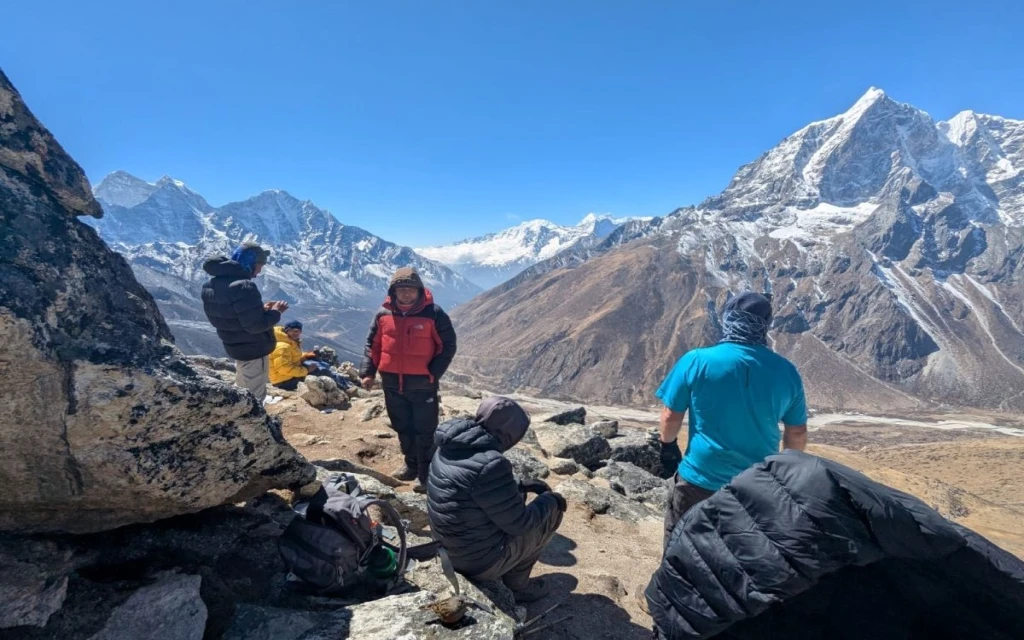
Cho La pass Trek

Cho La pass Trek
At a Glance
  • Duration16 Days
  • DestinationNepal
  • Difficulty Level Moderate
  • Maximum Altitude5555m
  • ActivityTrek & Hike
  • Group Size1-20
  • StartsKathmandu
  • EndsKathmandu
  • Best SeasonMarch,April,May & September,October,November

Cho La Pass Trek is a challenging but rewarding trek to the Everest region that covers the majority of the highlights, including the turquoise Gokyo Lakes and the legendary Everest Base Camp, in 16 days. 

16 Days Cho La Pass Trek with EBC and Gokyo Lake Major Highlights

  • A complete Himalayan circuit that connects the Gokyo Lakes and Everest Base Camp routes via the adventurous Cho La Pass (5,320m), making it one of the most scenic and difficult treks in the Everest region.
  • Trekking through traditional Sherpa settlements like Phakding, Namche Bazaar, and Tengboche, which offer the ideal blend of nature and culture, follows a picturesque 35-minute flight to Lukla Airport (2,827m).
  • Stand at Everest Base Camp (5,364m) and see the famous route taken by climbers. Then, get up early and climb to Kala Patthar (5,545m) for the best close-up view of Mount Everest.
  • Cross the technical Cho La Pass, which has icy trails, rocky climbs, and glacier sections, to get from the EBC side to the peaceful Gokyo Valley.
  • See the stunning Gokyo Lakes (4,760m) and, if you want, climb to Gokyo Ri (5,450m) for one of the best views in the Himalayas, with views of several 8,000m peaks.
  • Safer altitude gain and improved trekking performance are ensured by a proper acclimatisation schedule that includes rest and hike days at Namche Bazaar and Dingboche.
  • Hike through a variety of terrains, such as rhododendron forests, suspension bridges, alpine valleys, and high-altitude glacier areas like the Ngozumpa Glacier region near Gokyo.
  • On the way back, take quieter trails through Dole and Khumjung. This will give you a more peaceful descent and a better look at Sherpa life and Himalayan mountain villages.
  • A complete 16-day Everest region adventure that includes trekking, glacier crossings, high passes, cultural immersion, and multiple views of Mount Everest and the surrounding Himalayan giants.

Travellers and mountaineers are well aware of the epic Everest Base Camp, but few are aware of the rewarding yet challenging Cho La Pass trek, which is an Everest high-pass trek that directly connects the turquoise Gokyo Lake with the legendary EBC trails.

The Cho La Pass Trek with EBC is a high-altitude trekking route in Nepal's Solukhumbu district, designed for trekkers seeking a complete Himalayan experience by combining the Everest region's highlights, the EBC trail, and the Gokyo Valley route.

This high-altitude trek is perfect for experienced trekkers who want a tough but rewarding Himalayan adventure with glacier crossings, high passes, and various landscapes that range in altitude from 2,600m to over 5,500m.

The Cho La Pass crossing route is designed for experienced trekkers and those looking for a challenge. It is also a popular Nepal trekking package for 2026, as it combines adventure, altitude challenge, Sherpa culture, and iconic Himalayan views in a single continuous trekking route.

Mount Glory Treks, with a team of experienced guides, has meticulously planned this Immersive 16-Day Cho La Pass Trek itinerary. Furthermore, we can customise the package based on your budget, trekking ability, and desired duration. 

A true Himalayan trekking adventure, booking for the Cho La Pass 16-day trek package has begun for 2026 and 2027, and you can book through our website. If you are looking for quiet trails in the Everest region, this trip is ideal for the spring and autumn seasons.

Cho La Pass Trek Route Overview

Starting with a beautiful flight from Kathmandu to Lukla (2,827 m) and then a walk through the Dudh Koshi Valley to the peaceful village of Phakding (2,610 m), where you can see the first river valleys and Sherpa settlements.

Thereafter, you hike to Namche Bazaar (3,443 m), which is the main Sherpa town in the Khumbu region. Along the way, you pass through other towns, such as Tengboche (3,860 m) and Dingboche (4,230 m), where you spend acclimatisation days.

Then the trails to EBC get rougher as trekkers go from Lobuche (4,910m) to Gorak Shep (5,164m), the last settlement before reaching Everest Base Camp 5364m.

Reaching Everest Base Camp (5,364m), which is at the foot of the world's highest peak, is one of the best parts of the trek. After that, an early morning walk to Kala Patthar (5,545m) is the best way to see Mount Everest up close.

The 16-day Cho La Pass Trek gets harder after the EBC section because trekkers have to cross the Cho La Pass, which is 5,320 metres high. You have to walk on glaciers, climb rocks, and go up steep, icy parts that connect the EBC side to the Gokyo Valley.

On the western side, the high pass trail descends into the beautiful Thangnak (4,700m) region before ascending again to the stunning Gokyo Lakes (4,760m) region, which is known for its turquoise glacial lakes and peaceful environment, as well as one of the main highlights of the Cho La Pass Trek in Nepal.

You can also take an optional early morning hike to Gokyo Ri (5,357m), which offers one of the most expansive Himalayan views, including Everest, Cho Oyu, Makalu, and the massive Ngozumpa Glacier.

After completing the Cho La Pass trekking route's destinations, you will begin your return journey through quieter Sherpa villages such as Dole (4,038 m) and Khumjung (3,790 m), which provides a more peaceful descent than the main EBC Trails.

The return trek then goes back to Phakding (2,610m) along the usual route and then back to Lukla Airport (2,827m), completing the full circular journey in the Everest region.

Why Should You Choose the Cho La Pass Trek?

The High Altitude Cho La Pass Trek with Gokyo Lakes via Everest Base Camp is already one of Nepal's most complete trekking routes. If you're still undecided, here are some compelling, practical reasons why this long Everest region trek itinerary stands out:

  • If you want to fully experience the Everest region without doing separate treks, the 16-day Cho La Pass trek combines Everest Base Camp, Gokyo Lakes, and a high pass crossing in one efficient itinerary.
  • Unlike the standard EBC route, this trek takes a loop (circuit-style) trail, which means you won't have to retrace the same path the entire way, making it more interesting and diverse.
  • This is one of the best options for trekkers looking for a less crowded Everest Base Camp trek, particularly on the Gokyo side, where the trails are quieter and more peaceful.
  • The itinerary is ideal for those seeking a challenging but manageable high-altitude trek in Nepal that does not require technical climbing skills or mountaineering equipment.
  • You get multiple viewpoints above 5,000m (rather than just one), which increases your chances of seeing clear mountain views and having a more complete Himalayan experience.
  • The route provides a better altitude acclimatisation profile than shorter EBC treks, lowering the risk of altitude sickness while still reaching high elevations.
  • Ideal for those looking for a photography-focused Himalayan trek with diverse landscapes such as glaciers, high passes, lakes, and classic Everest panoramas.
  • The inclusion of Gokyo Valley makes this trek one of the best for seeing high-altitude glacial lakes in Nepal, which are not included in the standard Everest Base Camp itinerary.
  • Crossing the Cho La Pass makes trekking in the Everest region feel like a real adventure, turning the trip into more than just a walk.
  • This route is great for people who want to compare the Everest Base Camp trek and the Gokyo Lakes trek because it lets you do both without having to choose one.
  • The trek has a good mix of well-known and less-travelled areas, so it's good for people who want both social and quiet trail experiences.
  • There are plenty of places to stay and eat along the route, making it a reliable tea house trek in the Nepal Himalayas, even in the most remote high-altitude areas.

Why Choose Mount Glory Treks for the Cho La Pass Trekking Package?

To go on a high-altitude trip like the Cho La Pass Trek through Gokyo Lakes and Everest Base Camp, you need more than just a regular trekking package. There are glacier crossings, a pass over 5,000 metres, and changing mountain conditions, so it's very important to pick a trekking company that is safe and has a lot of experience.

Mount Glory Treks is a reliable local company in Nepal that has been running treks in the Everest region for years. They know how to handle tough routes that go through Everest Base Camp, Gokyo Valley, and Cho La Pass. Our team focuses on making sure that everything goes smoothly, that you get used to your new surroundings, and that you have support all the time.

We are a trekking company in Nepal that is registered with the government and is a member of the Nepal Tourism Board, the Trekking Agencies' Association of Nepal (TAAN), and the Nepal Mountaineering Association (NMA). This means that a professional team will run your trek and ensure it meets all safety and operational standards.

Here's why people who walk choose Mount Glory Treks for the Cho La Pass Trek:

  • Our Cho La Pass Trek 16 Days itinerary is well-planned, with time to adjust to the altitude at important points, realistic walking hours, and a balanced route that goes through both EBC and Gokyo without rushing.
  • Strong operational experience on the trekking routes in the Everest region, including high passes like Cho La, which helps with route management and decision-making when the weather changes.
  • Focus on safe high-altitude trekking in Nepal with trained and licensed guides who monitor health, pace, and altitude adaptation throughout the journey.
  • Reliable logistical coordination along the route, from Lukla flights to lodge reservations during busy times, so you don't have to worry about availability at the last minute.
  • The Cho La Pass trek cost is clear and fair, with no hidden fees. This makes it easy for you to plan your trek in the Everest region.
  • People who want to change the Gokyo Lakes and Everest Base Camp itinerary can do so by changing the pace, adding rest days, or upgrading services.
  • Local guides who know a lot about the culture, terrain, and weather patterns of the Khumbu region make the trek safer and more enjoyable overall.
  • A strong support system for emergencies in high-altitude trekking, including planning for evacuation if necessary.
  • We prepare all the necessary permits for the Everest region, which makes it straightforward and stress-free for trekkers.
  • Communication that is quick and clear before and during the trek makes it easy to plan your Cho La Pass Trek in Nepal 2026 with confidence.

Cho La Pass Trek Cost for 2026 & 2027

The Cho La Pass Trek (16 Days) with Gokyo Lakes and Everest Base Camp is priced at Mount Glory Treks to give you the best balance of quality service, safety, and overall trekking value in the Everest region.

The cost of a standard private booking (for at least two trekkers) starts at USD 1,790 per person. This includes a fully guided and well-supported trek through the Khumbu region.

And if you're trekking with a larger group, we offer flexible group pricing, making this one of the most affordable options for a Cho La Pass trek package in Nepal, with prices as low as USD 1490 if you have more than 10 people in your group.

Itinerary

Your trip starts with an early morning flight from Kathmandu to Lukla (2,827 m), which is one of the most beautiful and exciting mountain flights in Nepal. You can see the Himalayas from the plane.

When you land, you meet your porters and start a short, slow walk to Phakding (2,610 m). The path goes through small Sherpa villages, suspension bridges, and pine forests along the Dudh Koshi River.

This is a simple and calm first day that lets your body get used to the higher altitude. Spend the night at a teahouse in Phakding.

    Today's walk follows the Dudh Koshi River and crosses several suspension bridges, including the well-known Hillary Bridge. The trail slowly rises through small settlements and pine forests before steadily climbing up to Namche Bazaar (3,443 m).

    This is one of the more physically demanding days, but the first clear views of Mount Everest and the peaks around it make it worth it. Namche is the main trading centre in the Khumbu region, and you can spend the night in a teahouse there.

      Today is a very important day for getting used to the high altitude. Instead of sitting around, you go on a short walk to higher places like the Everest View Hotel, which has clear views of Mount Everest, Ama Dablam, and other nearby peaks.

      You will go back to Namche Bazaar to rest after the hike. This "climb high, sleep low" method helps you get used to the altitude and get ready for higher elevations. Stay the night at a teahouse.

        The trail starts with a slow walk up the hill, where you can see Mount Everest, Ama Dablam, and other nearby peaks. You cross a suspension bridge over the Dudh Koshi River and then start a steady climb through forests to Tengboche (3,860 m).

        Tengboche is famous for its monastery, the largest in the Khumbu region, which is set against a stunning mountain backdrop. Overnight stay in a teahouse.


          Today's trail descends through rhododendron forests to Pangboche before gradually entering a more open alpine basin. As you ascend through the Imja Valley, the landscape becomes drier and wider.

          The route continues steadily uphill to Dingboche (4,410 m), a popular acclimatisation village surrounded by towering peaks such as Ama Dablam.


            This day is designated for your body to adjust to the increasing altitude before venturing deeper into the high Himalayas. Rather than remaining idle, you take a short uphill walk to the surrounding ridges above Dingboche, where the views of Ama Dablam, Lhotse, and the Imja Valley are spectacular.

            The rest of the day is kept light, with slow movement, drinking water, and resting, so your body can get used to the thinner air. This break is very important for making the next parts of the hike safer and more comfortable.


              Leaving the sheltered valley of Dingboche, the trail gradually ascends into a harsher alpine environment with thinner air and rocky terrain. The trail passes through Dughla, where hikers frequently rest before the steep ascent ahead.

              From here, the path becomes more difficult as you ascend to Lobuche (4,940 m), surrounded by dramatic glacier views and memorials to Everest climbers who died. As you climb higher, the landscape becomes quieter and more remote.

                After breakfast, the day begins with a steady walk over rocky glacial terrain to Gorakshep (5,164 m), the final settlement before Everest Base Camp. Following a brief rest and lunch, you will proceed to the journey's highlight, Everest Base Camp (5,364 m).

                The trail runs along the edge of the Khumbu Glacier, with dramatic ice formations and rugged mountain scenery all around. Reaching Base Camp marks a significant milestone, providing a close-up view of the world's highest peak region before returning to Gorakshep for the night.

                  Early in the morning, you begin a steep hike to Kala Patthar (5,545 m), one of the best viewpoints in the Everest region. From the summit, you can see Mount Everest, Nuptse, and the surrounding peaks in full glory at sunrise.

                  After returning to Gorakshep, the trail descends towards Lobuche before deviating towards Dzongla (4,830 m), a peaceful settlement below Chola Pass. As you get further away from the main Everest Base Camp route, the trail becomes more peaceful.

                    Today is one of the most difficult and rewarding sections of the trek. You start early from Dzongla and gradually climb over rocky terrain and glacial sections to Cho La Pass (5,420 m).

                    Depending on the season, the trail can be steep and icy, necessitating caution and a steady pace.

                    After crossing the pass, the trail carefully descends through glacier and moraine terrain before entering the Gokyo Valley. As you approach Thangnak (4,700 m), the scenery changes dramatically, opening up to wide mountain basins.

                      Today's trail climbs gradually along the edge of Nepal's largest glacier, the Ngozumpa. The route is beautiful, but it requires careful walking over rocky and icy moraine sections.

                      As you approach Gokyo (4,790 m), the landscape opens up to reveal a breathtaking high-altitude lake system surrounded by towering peaks such as Cho Oyu. The tranquil setting of Gokyo provides an ideal place to unwind after the strenuous crossing of Cho La Pass.

                        Early in the morning, you ascend Gokyo Ri (5,357 m), one of the best viewpoints in the Everest region. The top offers a panoramic view of Everest, Lhotse, Makalu, and Cho Oyu, as well as the turquoise Gokyo Lakes.

                        After returning to Gokyo, the trek continues downhill through the Gokyo Valley, gradually returning to lower altitudes. Before arriving at Dole (4,200 m), you will travel through small settlements and alpine terrain.

                          Today's trail gradually descends through rhododendron and juniper forests, providing a more gentle walking experience after the higher alpine sections. Along the way, you will pass through traditional Sherpa settlements and have a clear view of the surrounding valleys and peaks.

                          The route continues steadily to Khumjung (3,790 m), one of the Khumbu region's most culturally rich villages, famous for its monastery and traditional way of life.

                            The day starts with a slow descent from the peaceful village of Khumjung, which is in the high Himalayas. The trail goes back through Namche Bazaar, where the familiar stone streets lead you back to the main Khumbu route.

                            From here, the path goes down steadily next to the Dudh Koshi River. It crosses suspension bridges and goes through pine forests and small towns. The air gets warmer, and the landscape gets greener as the altitude goes down. You finally get to Phakding (2,610 m), where you can relax and spend the night at a teahouse.

                              On the last day of your trek, you follow a gentle path along the Dudh Koshi River through thick forests and small villages until you reach Lukla (2,827 m). The ground is mostly downhill, which makes it easier to go at a slower pace while you think about the trip.

                              You can relax at a teahouse when you get to Lukla, which is the end of the hard, high-altitude part. This is your last night in the Khumbu before you fly back to Kathmandu.


                                You take a scenic mountain flight from Lukla back to Kathmandu in the early morning, just like you did when you first came to the gateway of Everest. The short trip gives you one last chance to see the Himalayas, glaciers, and deep valleys from the air.

                                The trek officially ends when you get to Kathmandu. You can rest, shop, or explore the city at your own pace for the rest of the day.


                                  What's Included
                                  • Airport / Hotel / Airport pickup& drop-off by private tourist vehicle.
                                  • All your standard meals during the trek (breakfast, lunch, and dinner).
                                  • Standard guest house accommodation while trekking on a twin-sharing basis.
                                  • Airfare from Kathmandu-Lukla-Kathmandu includes airport departure tax in Kathmandu and Lukla.
                                  • Well, an English-speaking government-licensed holder and experienced trek leader/guide.
                                  • All required local transfers.
                                  • Food, accommodation, salary, insurance, and equipment are provided for all staff.
                                  • Everest National Park permits and TIMS for trekking.
                                  • All government, hotel, and other applicable taxes.
                                  • Official expenses.

                                  Complementary From Mount Glory Treks:

                                  • Mount Glory Duffle (Return After Trek)
                                  • Mount Glory Treks Company T-shirt.
                                  • Sleeping Bag (Return After Trek) 
                                  • First Aid Kit Box, which was carried by our trek leader.
                                  • Oximeter for monitoring Oxygen levels during the trek
                                  • Water Purification Tablets.
                                  • Seasonal Fruits and Snacks.
                                  • Everest Cho La Pass Trek Map.
                                  • Trip Completion Certificate.
                                  • Farewell dinner in a typical Nepali restaurant.
                                  • Rescue Service Based on Your Travel Insurance: Only in an Emergency
                                  What's not Included
                                  • International airfare and taxes.
                                  • Personal Travel Insurance.
                                  • Nepal Entry Visa Fee.
                                  • Lunch and dinner in Kathmandu.
                                  • All items of personal expenses.
                                  • Tipping for guides, porters, and drivers (tipping is expected).
                                  • Any other expense that is not mentioned in the price includes section.

                                  Useful Information

                                  Packing List for the Gokyo Cho La Pass Trek via EBC

                                  The Combined Cho La Pass Trek with Gokyo and EBC is a strenuous high-altitude trek in the Everest region, with elevations exceeding 5,000 metres, including the crossing of Cho La Pass (5,320 metres).

                                  The weather can change quickly, going from mild in lower areas like Phakding to freezing and windy around Everest Base Camp and Gokyo Valley. Because of this, it's important to plan your packing carefully and in layers.

                                  During the pre-trek briefing in Kathmandu, we give you a duffel bag and a sleeping bag at Mount Glory Treks. People who go on treks are in charge of their own clothes, gear, and other things they need. If you need more trekking gear, you can easily rent or buy it in Thamel.

                                  Here is a useful and field-tested packing list for the Cho La Pass trek:

                                  Clothing

                                  • Moisture-wicking trekking T-shirts 
                                  • Thermal base layers (top & bottom) for cold nights
                                  • Fleece jacket or mid-layer for insulation
                                  • Insulated down jacket 
                                  • Waterproof & windproof shell jacket
                                  • Trekking pants
                                  • Thermal leggings for colder sections
                                  • Warm hat/beanie
                                  • Sun hat or cap
                                  • Insulated gloves + inner liner gloves
                                  • Wool or synthetic trekking socks
                                  • Sturdy, broken-in trekking boots
                                  • Camp shoes / lightweight sandals for lodges

                                  Trekking Gear & Equipment

                                  • Comfortable backpack (30–45L)
                                  • Duffel bag
                                  • Trekking poles
                                  • Sleeping bag
                                  • Headlamp with spare batteries
                                  • Reusable water bottles or hydration bladders
                                  • UV-protection sunglasses
                                  • Backpack rain cover / dry bags

                                  Personal Items & Toiletries

                                  • Sunscreen (SPF 30–50+) for high UV exposure
                                  • Lip balm with SPF
                                  • Quick-dry towel
                                  • Wet wipes and tissues (limited facilities at higher altitudes)
                                  • Hand sanitizer
                                  • Basic soap, shampoo, and personal hygiene items
                                  • Toothbrush and toothpaste

                                  Health & First Aid

                                  • Personal prescription medications
                                  • Basic first aid kit (band-aids, antiseptic, blister care)
                                  • Pain relief 
                                  • Cold and flu medication
                                  • Electrolyte powder/hydration salts
                                  • Altitude sickness medication

                                  Electronics & Extras

                                  • Camera / GoPro for Himalayan photography
                                  • Power bank 
                                  • Charging cables and universal adapter
                                  • Lightweight snacks (energy bars, nuts, chocolates)

                                  How to Prepare for the Cho La Pass Trek 16 Days?

                                  The Cho La Pass Trek, which goes through the Gokyo Lakes and the Everest Base Camp, is a hard trek at a high altitude. The Everest region has better facilities than more remote areas, but you still need to prepare well for safety, comfort, and a successful trek.

                                  Here are the most important things to do before you leave:

                                  • Do cardio activities like hiking, running, cycling, and climbing stairs for at least 4 to 6 weeks before the event to get in shape. To get through long days of hiking and steep parts, work on your leg strength and endurance.
                                  • To get used to carrying weight, practise hiking with a rucksack, especially on days when you have to cross the Cho La Pass and walk on glaciers.
                                  • Find out the full itinerary, how much altitude you'll gain, and how many hours you'll be walking each day. Knowing the way from Lukla Airport to Everest Base Camp and Gokyo can help you get ready mentally.
                                  • To avoid blisters, break in your trekking boots before the trip. If you're going to be on rocky trails, steep climbs, or uneven ground, you need the right shoes.
                                  • When packing for high-altitude conditions, make sure to include layered clothing, a warm down jacket, waterproof gear, and a good sleeping bag for cold nights.
                                  • After talking to a doctor, you should bring basic medical supplies like your own medicine, a first aid kit, water purification tablets, ORS, and medicine for altitude sickness.
                                  • Get your mind ready for long days of hiking, cold weather, and simple amenities at higher altitudes like Lobuche and Gokyo.
                                  • Bring enough cash (Nepali Rupees) because there are only ATMs in Namche Bazaar, and digital payments aren't always safe along the way.
                                  • You can safely finish the Cho La Pass trek in Nepal and have a great time on this difficult but rewarding adventure in the Everest region if you train your body properly, wear the right gear, and set realistic goals.

                                  Best Time to do the Everest Cho La Pass Trek

                                  The Cho La Pass Trek is a high-altitude adventure in the Everest region, where the weather is very important for the safety, visibility, and overall conditions of the trek. Because the route goes over the hard Cho La Pass (5,320m) and up to heights over 5,500 metres, it's important to pick the right time of year for a smooth and enjoyable trip.

                                  Autumn (September to November)

                                  Autumn is considered the best time for the Cho La Pass Trek. During this season, the weather is stable, the skies are clear, and visibility is at its peak. The air after the monsoon is clear, and you can see Everest and other peaks from places like Kala Patthar and Gokyo Ri. Because the trails are usually dry, crossing Cho La Pass is safer and easier than at other times of the year. Temperatures are mild during the day and cold at night, making it great for both experienced and well-prepared beginners to go trekking.

                                  Spring (March to May)

                                  The Cho La Pass trek in Nepal is also a great thing to do in the spring. The weather is pretty stable, and the temperatures start to rise, especially in lower places like Namche Bazaar. The blooming rhododendron forests along the trail make the journey more beautiful. Visibility is usually good, but later in the season, there may be some light haze. During this time of year, Cho La Pass is usually open, and the weather is not as bad as it is in the winter. This makes it a great alternative to autumn for hikers who want good weather and fewer people.

                                  Winter (December to February)

                                  It is possible to walk the Cho La Pass route in the winter, but it is much harder. Temperatures drop well below freezing, especially at higher altitudes, and snow can build up and make the It is often very difficult or even impossible to access for a short time. Winter does have its benefits, though. For example, on stable days, there are quiet trails, fewer trekkers, and clear mountain views. This time of year is best for experienced hikers who are okay with the cold and can change their plans.

                                  Monsoon (June to Early September)

                                  People usually don't recommend the Cho La Pass Trek during the monsoon season. When it rains a lot in lower areas, the trails become slippery, and visibility is poor. Cloud cover also often blocks views of the mountains. Also, flights to and from Lukla Airport are more likely to be delayed or cancelled during this time. The Cho La Pass also becomes more dangerous because of snow, ice, and weather that is hard to predict. The overall trekking experience is less reliable, even though the landscape gets lush and green.

                                  Food During the 16 Days Cho La Pass Trek

                                  Your body needs healthy, energy-rich meals to get through long days of hiking, steep climbs, and high-altitude conditions above 5,000 metres on the way to Cho La Pass and Gokyo Lake.

                                  There are more food options in the Everest region than on remote treks, but they get simpler as you get closer to places like Everest Base Camp and Cho La Pass.

                                  This 16-day trek package for the Cho La Pass usually includes breakfast, lunch, and dinner at local teahouses and lodges along the way. The meals are freshly made, filling, and meant to give you the energy you need to hike at high altitudes.

                                  Breakfast

                                  • Porridge with honey or dried fruits
                                  • Tibetan bread, chapati, or toast with jam and butter
                                  • Eggs (boiled, fried, scrambled, or omelette)
                                  • Pancakes (plain, apple, or chocolate)
                                  • Muesli or cornflakes with milk
                                  • Hot drinks such as tea, coffee, hot lemon, or ginger honey tea

                                  Lunch

                                  • Dal Bhat (rice, lentils, vegetables)
                                  • Fried rice with vegetables or egg
                                  • Noodles or noodle soup (veg/egg)
                                  • Pasta or macaroni dishes
                                  • Vegetable curry with rice or chapati
                                  • Light soups such as garlic soup

                                  Dinner

                                  • Dal Bhat with refillable servings 
                                  • Potato-based dishes (boiled, fried, or curry)
                                  • Noodles, pasta, or soup-based meals
                                  • Vegetable or egg curry with rice or chapati
                                  • Occasional bakery items or simple desserts in lower villages like Namche Bazaar

                                  As you get higher towards Gokyo Valley and cross the high sections near Cho La, it becomes harder to find food because the area is so far away and difficult to reach. However, meals are still high in carbohydrates and essential nutrients, which is perfect for keeping your energy up in cold and demanding conditions.

                                  It's important to remember that the standard cost of the Cho La Pass via EBC trek package doesn't usually include drinks like tea, coffee, bottled water, soft drinks, and snacks. You can buy these things separately at teahouses.

                                  Cho La Pass Trek  Accommodation

                                  The well-developed tea house system in the Everest region makes the Cho La Pass Trek with Gokyo Lakes via Everest Base Camp more comfortable than other remote treks, like the Makalu. You will stay in local lodges and teahouses along the way for the whole 16-day trek. These are available in almost every settlement along the way.

                                  In lower areas like Phakding and Namche Bazaar, the places to stay are fairly comfortable. Most of the time, the rooms have two beds, mattresses, pillows, and blankets. Namche Bazaar is the main hub of the Khumbu region, and trekkers can find better lodges there that have things like attached bathrooms, hot showers, bakeries, cafes, and Wi-Fi.

                                  The higher you go, to places like Tengboche, Dingboche, and Lobuche, the more basic the places to stay become. Rooms are still mostly shared by two people, but they are smaller and have simple wooden beds and not much insulation. There are blankets available, but it is highly recommended that you bring a warm sleeping bag because it gets very cold at night.

                                  There aren't as many facilities at higher altitudes like Gorak Shep and in the Gokyo area near Gokyo Lakes, because the weather is so bad and getting there is so hard. Rooms are simple, bathrooms are shared, and there may not always be running water. Hot showers are rare and usually cost extra. They are often given in buckets.

                                  Bedrooms are not heated anywhere along the trail. However, almost all lodges have a central dining hall with a stove (usually fuelled by yak dung), which provides warmth in the evenings and serves as the primary gathering place for relaxation and eating.

                                  Electricity is available in most villages, but charging phones and devices usually incurs an additional fee, particularly above Namche. Wi-Fi and mobile networks are available in lower areas such as Namche Bazaar, but they become weak or unavailable as you approach Cho La Pass and the Gokyo Valley.

                                  Overall, the accommodations on the Cho La Pass trek in Nepal are simple, functional, and appropriate for high-altitude trekking. The Everest region has one of the best lodge infrastructures in the Himalayas, ensuring a comfortable stay while also providing an authentic mountain trekking experience.

                                  Altitude Sickness on the Cho La Pass Trek and How to Prevent It?

                                  On this challenging high altitude trek, altitude is not something to take lightly. The path quickly climbs above 3,000 metres and eventually surpasses 5,000 metres, passing by significant landmarks such as Everest Base Camp (5,364 metres), Kala Patthar (5,545 metres), and Cho La Pass (5,320 metres). At these heights, the amount of oxygen drops dramatically, and your body requires time and care to adjust.

                                  The higher you go after Namche Bazaar, particularly after Dingboche, the more likely you are to encounter altitude issues. Even strong and fit trekkers can feel the effects of inadequate acclimatisation.

                                  Common Symptoms of Altitude Sickness

                                  • Persistent headache
                                  • Dizziness or feeling light-headed
                                  • Nausea or loss of appetite
                                  • Fatigue and low energy
                                  • Difficulty sleeping
                                  • Shortness of breath, even while resting

                                  These symptoms typically appear gradually but can worsen quickly if ignored, particularly near higher elevations such as Lobuche, Gorak Shep, and the Cho La Pass crossing.

                                  How to Prevent Altitude Sickness?

                                  The Cho La Pass trek itinerary is designed with proper acclimatisation in mind, but your habits during the trek are just as important.

                                  • The itinerary includes necessary acclimatisation days at Namche Bazaar (3,443m) and Dingboche (4,230m), which allow your body to adjust before ascending to higher elevations.
                                  • Whenever possible, take the "climb high, sleep low" approach. Short hikes to higher elevations during acclimatisation days aid in adaptation.
                                  • Drink at least 3 to 4 litres of water per day. Proper hydration is one of the simplest and most effective ways to reduce the risk of altitude sickness.
                                  • Eat on a regular basis, even if your appetite has decreased. High-carbohydrate meals such as dal bhat, rice, and noodles help to maintain energy and aid in acclimatisation.
                                  • Maintain a slow and steady pace throughout the trek. The Everest region is not for speed; rushing increases the risk of AMS.
                                  • Avoid alcohol and limit caffeine consumption, especially as you increase.
                                  • Consult a doctor before embarking on the trek about preventive medication such as Diamox (Acetazolamide), especially if you have no prior experience at high altitude.
                                  • Keep warm and avoid overexertion. Cold and fatigue can exacerbate symptoms.
                                  • Most importantly, don't ignore early warning signs. If symptoms worsen, the only reliable option is to rest or descend to a lower elevation.
                                  • Always follow your guide. Experienced guides in the Everest region monitor altitude symptoms and make timely decisions to ensure your safety.

                                  Visa for Nepal

                                  Foreign tourists travelling to Nepal for a trek, tour, or other adventure must obtain a tourist visa. However, getting a tourist visa in Nepal is easier than in other countries. Most foreign visitors can apply for a visa at Kathmandu's Tribhuvan International Airport, and completing the online application can help speed up the process.

                                  Before you can apply for a visa on arrival, you must complete the application and have a passport that is valid for at least six months.

                                  The following are the fees for getting a Nepali visa:

                                  • 15‑day visa: US $30
                                  • 30‑day visa: US $50
                                  • 90‑day visa: US $125

                                  Trekking Permits for the Cho La Pass Trek

                                  Trekkers planning the High Altitude Cho La Pass Trek must obtain the necessary entry permits before entering the Everest (Khumbu) region. Compared to Nepal's remote and restricted regions, the permit application process here is simple and straightforward.

                                  Sagarmatha National Park Entry Permit

                                  This permit is required to enter Sagarmatha National Park, a protected UNESCO World Heritage Site that encompasses the entire Everest region, including popular trekking destinations such as Namche Bazaar, Tengboche, Everest Base Camp, and Gokyo Valley.

                                  • Cost: NPR 3,000 per person (approx).

                                  Khumbu Pasang Lhamu Rural Municipality Permit (Local Permit)

                                  This is a mandatory local permit for trekking in the Khumbu region. It is issued by the local municipality and usually checked at entry points like Lukla or Monjo.

                                  • Cost: NPR 2,000-3,000 per person (approx).

                                  Note: The trekking agency typically arranges all permits required for the Himalayan Journey in Nepal and frequently includes them in the package price. This allows trekkers to avoid administrative hassles and focus solely on their trekking experience.

                                  Travel Insurance for the Cho La Pass Trekking

                                  Due to the high altitude and remote terrain, proper travel insurance is required prior to beginning the trek to Cho La Pass. The trek climbs above 5,000 metres, including Cho La Pass (5,320m) and Kala Patthar (5,545m), where medical care is scarce.

                                  Your insurance policy must cover high-altitude trekking up to at least 5,500-6,000 metres. It should contain:

                                  • Emergency helicopter evacuation (particularly important in the Everest region)
                                  • Medical care and hospitalisation, including altitude sickness.
                                  • Trip delays or cancellations (common for flights from Lukla Airport).
                                  • Accidents and injuries while trekking.

                                  Rescue operations in the Everest region can cost USD 3,000-10,000 or more, so insurance is critical. Most agencies require proof of insurance prior to the trek.

                                  Travel insurance is not included in trek packages; therefore, arrange it before arriving in Nepal and carry a copy with you during the trek.

                                  Guide and Porter Service

                                  The Cho La Pass Trek from Gokyo Lakes to Everest Base Camp is a high-altitude and physically demanding route, particularly when crossing Cho La Pass. Hiring a licenced guide is highly recommended for safety, navigation, and dealing with altitude-related issues.

                                  Guides take care of the route, the lodging, and all the other details, and they are trained to handle emergencies in the Everest region. You can also set up an assistant guide for groups to help them work together better.

                                  You can hire a porter to carry your main luggage, which will make the trip more comfortable. Two trekkers usually share one porter, who carries 20 to 25 kg in total.

                                  The trekking package usually takes care of everything for the guides and porters, such as their meals, lodging, transportation, and insurance.

                                  Tipping Culture

                                  You don't have to, but it's a good idea to tip your porters and guides for helping you hike to Everest. In general, you should leave a tip of at least 10% of the total amount you spend while on vacation. If you really liked the service, you can give more than the minimum tip.

                                  Farewell Dinner and Trip Completion Certificate

                                  After you finish the hard trekking route, we will hold a special farewell dinner in Kathmandu to celebrate the end of your journey in the Himalayas. This is a great chance to relax, talk about your trekking experiences, and think about how great it was to cross Cho La Pass and get to Everest Base Camp.

                                  You can also tell us what you thought about the trek, the guides, and the service in the evening. This will help us make our trekking experiences in Nepal even better.

                                  You will also get an official Trip Completion Certificate that shows you finished one of the most rewarding and difficult treks in the Everest region. It will always remind you of your trip, hard work, and success in the Himalayas.

                                  Optional Extensions for the Cho La Pass Trek

                                  The Cho La trek through EBC and Gokyo is a tough trip in the Everest area that takes place at a high altitude. You can add a few optional activities to the trek to make it more engaging without changing the schedule. This situation is because trekkers often spend extra days in Kathmandu or the Khumbu region before or after the trek.

                                  Kathmandu Valley Cultural Sightseeing

                                  You can learn about the cultural heritage of Kathmandu Valley, a UNESCO World Heritage Site, before or after the trek. The Swayambhunath Stupa, the Boudhanath Stupa, and Patan Durbar Square are important places to visit because they show you Nepal's history, art, and religious traditions.

                                  Everest Viewpoint Hikes in Namche Bazaar

                                  While getting used to the weather in Namche Bazaar, you can take short hikes to nearby viewpoints like the Everest View Hotel area. These short hikes help you get used to the area and give you great views of Mount Everest, Ama Dablam, and other nearby peaks.

                                  Local Village Exploration in the Khumbu Region

                                  You can also spend time in traditional Sherpa villages like Namche Bazaar and Tengboche. There, you can learn more about life in the Himalayas through monasteries, prayer ceremonies, and local culture.

                                  These optional activities are light, flexible, and meant to go along with the Cho La Pass Trek in Nepal without making it harder on your body. They are perfect for trekkers who want to mix adventure with cultural experiences and get used to the new environment.

                                  Also want to witness the challenging Mount Everest Region with three Popular High Passes, then 17 Days Everest Three Passes Trek might be the best optional trip for adventure lovers.

                                  Cho La Pass Trek Altitude

                                  The 16-day Cho La Pass Trek, which includes Gokyo Lakes and Everest Base Camp, has a dynamic altitude profile with several ascents and descents rather than a single continuous climb. Elevation gain is steady but challenging. Because your body must constantly adapt to shifting elevations while travelling between valleys, high ridges, and glacier sections, it is more physically demanding than typical treks.

                                  Starting in the lower Khumbu valley, the trail gradually ascends through established villages before entering thinner air beyond Namche Bazaar. From this point forward, altitude is a constant factor, particularly as you approach Everest Base Camp, cross Cho La Pass, and explore the Gokyo region. Proper acclimatisation is required because the route includes several nights spent above 4,000 metres.

                                  The elevation chart for the Cho La Pass Trek route is presented below:

                                  LocationElevations (meters)
                                  Kathmandu1400m
                                  Lukla Airport2827m
                                  Phakding2610m
                                  Namche Bazar3443m
                                  Tengboche3860m
                                  Dingboche4230m
                                  Lobuche4910m
                                  Gorekshep5164m
                                  Everest Base Camp5364m
                                  Kalapatthar5555m
                                  Zhongla4960m
                                  Cho La Pass5320m
                                  Thangnak4700m
                                  Gokyo Lake4760m
                                  Gokyo Ri5357m
                                  Dole4038m
                                  Khumjung3790m

                                  How to Book the Cho La Pass Trek 16 Days Package?

                                  Mount Glory Treks makes it easy, flexible, and well-organised to book the Cho La Pass Trek with Gokyo Lakes via Everest Base Camp. This way, your adventure in the Everest region will start off without a hitch.

                                  First, go to our website and find the booking section for the 16-day Cho La Pass Trek package. Choose the dates you want to travel and send a request. Our team will get back to you with more information about availability, your itinerary, what's included, and the best time of year for your trek in the Everest region.

                                  You can also email or WhatsApp us directly for faster communication. Our trekking experts will help you plan your trip based on your schedule, fitness level, and travel preferences. They will also answer any questions you have.

                                  After you confirm your reservation, you will need to send a copy of your passport and some basic travel information so that we can make arrangements for your permit and other logistics. To hold your reservation, you need to pay 20% of the total cost up front. The rest of the money can be paid when you get to Kathmandu, before the trek starts.

                                  We also have customisable trekking options that let you change the itinerary, add extra days to help you get used to the altitude, or upgrade services to fit your needs. This flexibility makes sure that your Cho La Pass trek in Nepal is well-planned, safe, and meets your needs from beginning to end.

                                  Cho La pass Trek FAQs

                                  • The Cho La Pass Trek isn't the easiest way to get to Everest, but beginners who are in good shape and ready can still do it. If you've never been trekking before, it's a good idea to train ahead of time and choose a guided package that lets you get used to the area. The trip will be a lot easier if you set realistic goals and keep a steady pace.


                                  • Crossing Cho La Pass is the hardest part of the trek. The trail can be steep, rocky, and icy at times, especially in the winter. Trekkers don't need to know how to climb, but they should be mentally and physically ready for a long day. Following your guide's instructions and using the right gear can make the crossing safer and more comfortable.

                                  • The best times are in the spring (March to May) and autumn (September to November). These times of year have stable weather, better visibility, and safer trail conditions, which are all very important for crossing high passes. If you want to see the mountains clearly and have a more reliable hiking experience, you should plan your trip during these months.

                                  • You don't have to have done any trekking before, but it can make a big difference in how comfortable you are on the trek. Your body will adjust more easily if you've hiked for more than one day before. If you're going on your first trek, focusing on your health, picking a slow itinerary, and going with a guide will make your trip much better.

                                  • People who go trekking usually walk for 5 to 7 hours a day, depending on the route and how high they are. Some days, especially around Everest Base Camp and the Cho La Pass crossing, can be longer and harder. Walking at your own pace and taking breaks often will help you save energy.

                                  • Yes, one of the biggest problems with this trek is altitude sickness because you will be hiking above 5,000 metres. It is important to follow the itinerary closely, drink plenty of water, and give yourself enough time to get used to the new environment. It's always better to rest or go down if you notice symptoms than to keep going.

                                  • The trek follows the tea house system, which means you'll have simple but comfortable places to stay and meals that are made fresh. The lower areas have better facilities, while the higher areas are more basic. If you choose a good trekking package, you can be sure that your food and lodging will be taken care of during the trip.

                                  • It is highly recommended that you get travel insurance for this trip. It should cover high-altitude trekking and being airlifted out of an emergency, since rescue operations in the Everest area can be costly. Getting the right insurance gives you peace of mind and makes sure you're ready for anything that comes up.

                                  • The price of the Cho La Pass Trek changes based on the level of service, the size of the group, and the time of year. Usually, a standard package comes with flights, accommodations, meals, permits, and guide services. Picking a well-organised package can save you time and make your trek go more smoothly.

                                  • Yes, most trekking companies offer plans that can be changed. You can add more acclimatisation days, change the pace, or improve services based on what you want. If you want a more comfortable and unique experience in the Everest region, customising the trek is a good idea.

                                  SimilarTrips
                                  You may also like