The Everest Helicopter Tour is the quickest way to reach the EBC and doesn't require any physical requirements or lengthy, exhausting trekking days. For this reason, many tourists who are pressed for time or do not wish to undertake the strenuous walk in the high-altitude area have chosen to take the heli ride to EBC.
Even though the Everest Helicopter Tour in Nepal is the fastest, a lot of people are unsure about how safe the ride is. Additionally, we have brought this article about safety during the EBC Fly Tour to address a common question that you might also have if you are interested in any package related to the Everest Heli Tour.
Many people believe that flying to the fabled Everest Base Camp (5,364 m) is one of the safest and most practical ways to see the world's tallest mountain, Mount Everest (8,849 m), which provides you with stunning Himalayan views without the physical strain of a multi-day trek.
Travellers of different fitness levels can benefit from the helicopter tour because it drastically lowers the duration of exposure to extreme altitude, frigid temperatures, and trekking-related risks compared to the traditional Everest Base Camp trek.
Families, senior citizens, photographers, luxury adventurers seeking a safe Everest experience, and tourists with limited time in Nepal are particularly fond of the tour.
Nepal's national aviation authority enforces stringent safety regulations for helicopter flights in the Everest region, guaranteeing expert flight operations and frequent aircraft inspections.
In order to manage the distinct topography and meteorological conditions of the Himalayas, modern high-altitude helicopters, skilled mountain pilots, and meticulously planned flight routes are required.
Strong winds, cloud cover, or abrupt mountain weather changes are less likely to cause problems because flights are mainly scheduled during stable morning weather windows.
The helicopter tour offers close views of Everest and the surrounding peaks while reducing the risks of altitude sickness, exhaustion, trail accidents, and unpredictable mountain exposure when compared to trekking.
Pre-flight briefings, passenger weight balance checks, controlled landing zones, and constant communication between pilots and aviation control teams are all examples of safety protocols.
Travellers can choose the Everest helicopter experience with confidence as a dependable and safe way to see the highest mountain in the world if they are aware of these safety precautions. If you're prepared to book a heli ride to Everest, you can select from a variety of options, including a quick 1-day helicopter Everest tour and an EBC trek with helicopter return.
Why Helicopter Tours Are Considered the Safest Everest Experience
For visitors who wish to see the Himalayas without taking on the physical risks of a multi-day high-altitude trek, the Everest Base Camp Helicopter Tour in Nepal is the safest way to experience the Everest region.
Helicopter tours minimise exposure to altitude, fatigue, and unpredictable trail conditions while still providing close-up views of Mount Everest and surrounding peaks, in contrast to traditional trekking journeys that necessitate nearly two weeks of nonstop walking through difficult terrain.
This aerial adventure is a dependable and safe choice for Himalayan adventures because of meticulously planned flight operations, regulated landing sites, and skilled mountain pilots.
Prevents trekking-related risks: Avoids long-distance hiking hazards like fatigue, falls, slips, and trail injuries that are common on lengthy Everest Base Camp treks.
Reduced altitude exposure: Compared to 12–14 day trekking itineraries, passengers only spend a brief, regulated amount of time at high elevation, reducing the risk of altitude sickness.
Professional landing zones: Helicopter landings take place at predetermined, closely watched sites with appropriate safety protocols and coordination.
Flights designed for High altitudes: Himalayan weather patterns and terrain safety are taken into consideration when planning the routes, timing, and altitude profiles of flights intended for mountain aviation.
Ideal for a broader range of travellers: Including elderly visitors, families, photographers, and luxury travellers looking for a safe Everest experience without extreme physical exertion.
Fast access with the highest level of safety control: the trip is finished in a matter of hours rather than days, enabling operators to continue more stringent weather assessment and operational monitoring.
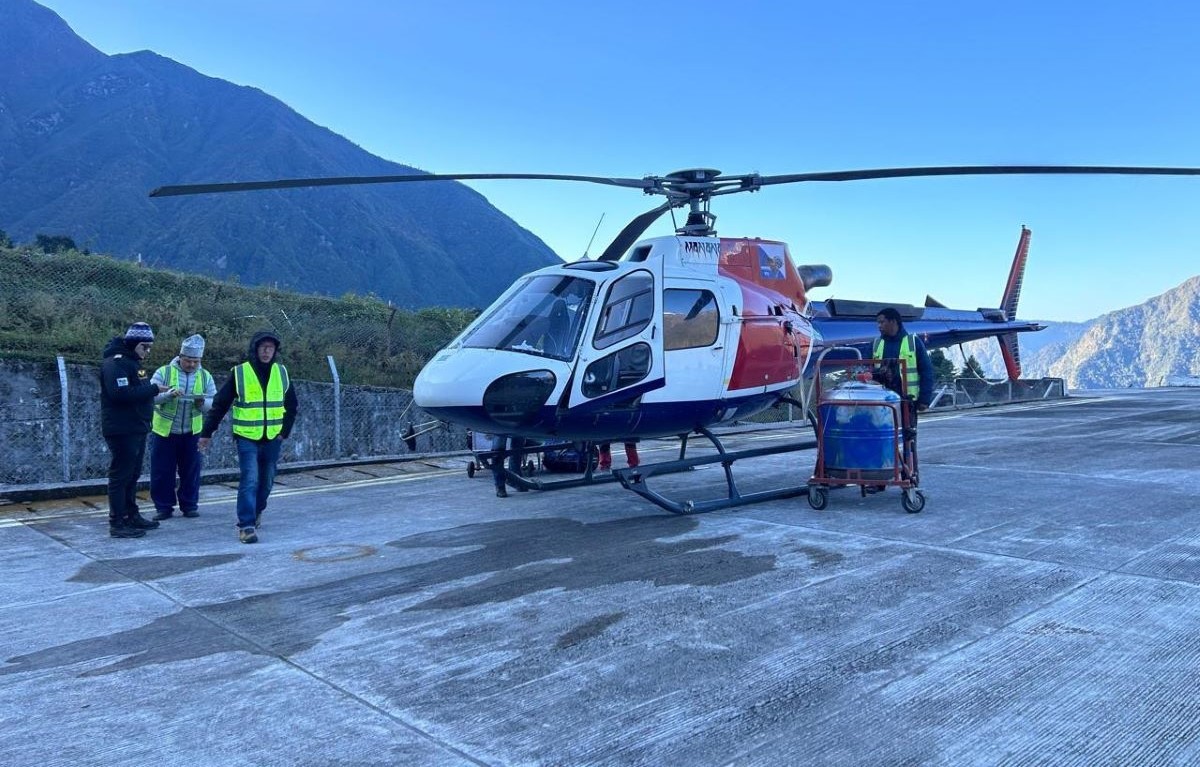
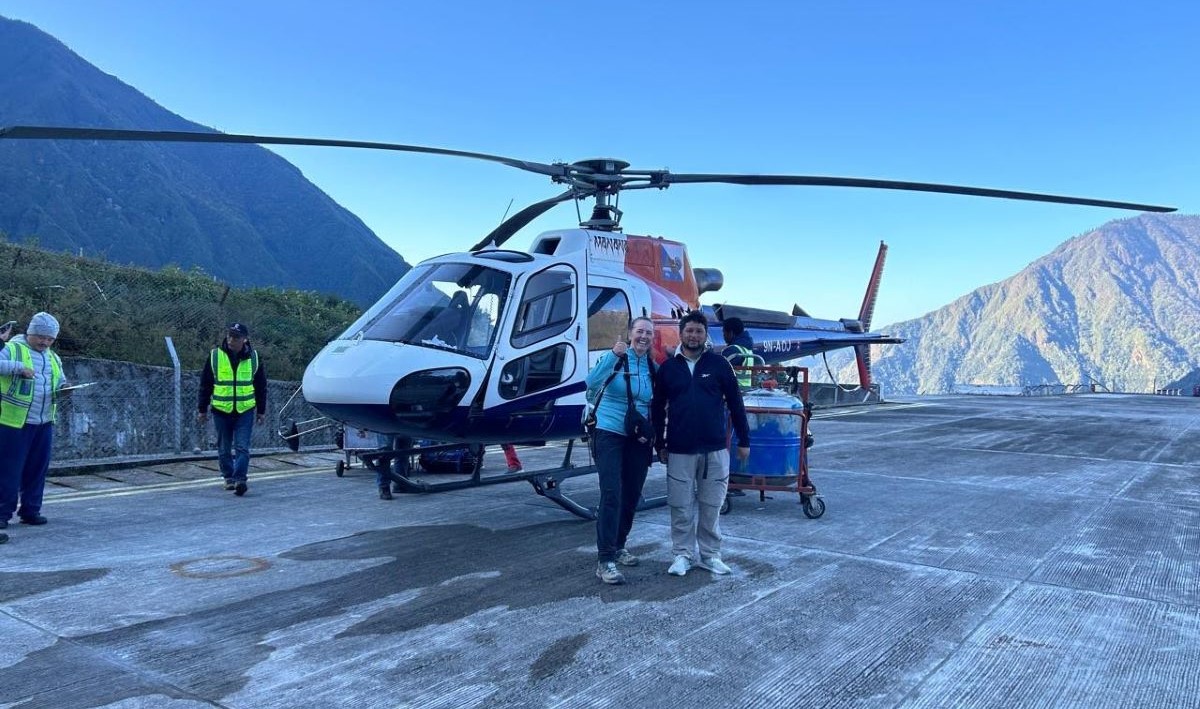
Helicopter Ready at Lukla After Refueling during Everest Base Camp Helicopter Tour
Safety During the Everest Helicopter Tour in Nepal
Professional Aviation Standards in Nepal
All Everest helicopter tours are guaranteed to adhere to Nepal's stringent aviation safety regulations since they are licensed and governed by CAAN.
Pilots with high-altitude training who are experts in emergency protocols, mountain flying, and glacier landing.
Strict weight and passenger restrictions preserve aircraft stability at very high altitudes.
Operations are dependent on the weather; flights only take off when visibility is permitted and the mountain is safe.
Technical inspections and required maintenance are necessary to ensure that helicopters operate at their best at high altitudes.
Weather Monitoring & Flight Scheduling
Flights are scheduled to depart early in the morning, when the weather in the Himalayas is usually most stable.
Real-time weather tracking enables operators to continuously monitor mountain conditions prior to takeoff.
Strong winds, clouds, or poor visibility cause automatic delays for safety, which reschedule flights.
Flexible scheduling prioritises safety over fixed itineraries.
Seasonal weather planning involves operators using knowledge of monsoon, spring, and autumn patterns to reduce risk.
Altitude Safety Compared to Trekking
The helicopter tour limits time above 4,000-5,000 m, reducing the risk of acute mountain sickness (AMS).
The landings at Everest View Hotel and Kala Patthar are brief and controlled.
Onboard oxygen support is available for passengers if necessary.
The flight ascent profile, which uses a helicopter to gradually increase altitude, lessens the body's sudden strain.
Avoids the high-altitude difficulties and extended physical strain of traditional EBC treks, making it safer than multi-day trekking.
Modern Helicopter Safety Features
Helicopters with turbine engines built for thin-air operation can operate at high altitudes.
Accurate flight paths and constant communication are guaranteed by dual navigation and communication systems.
Passengers can use the onboard emergency oxygen if necessary.
GPS and advanced terrain awareness improve safety when flying over mountains.
Regular pre-flight inspections are mechanical examinations carried out prior to each departure.
Landing Safety in Everest Region
Only designated high-altitude helipads are used for landings; authorised sites, like the Everest View Hotel or adjacent safe zones, are used.
Passenger movement is crew-guided, with strict instructions followed during boarding and landing to ensure safety.
In order to guarantee a safe takeoff in thin air, weight management at altitude involves adjusting passenger distribution.
When necessary, shuttle rotations are performed, which are several quick flights meant to preserve the aircraft's performance and balance.
Protocols Followed During the Tour
Before taking off, passengers are given clear instructions during the pre-flight safety briefing.
In-flight safety and communication are ensured by mandatory seatbelt and headset use.
Crews supervised the organised boarding and disembarking processes at each landing location.
Before every flight segment, weather clearance is obtained; pilots constantly verify that the conditions are safe.
Crew members keep an eye on passengers' health during high-altitude stops to ensure their comfort and safety.
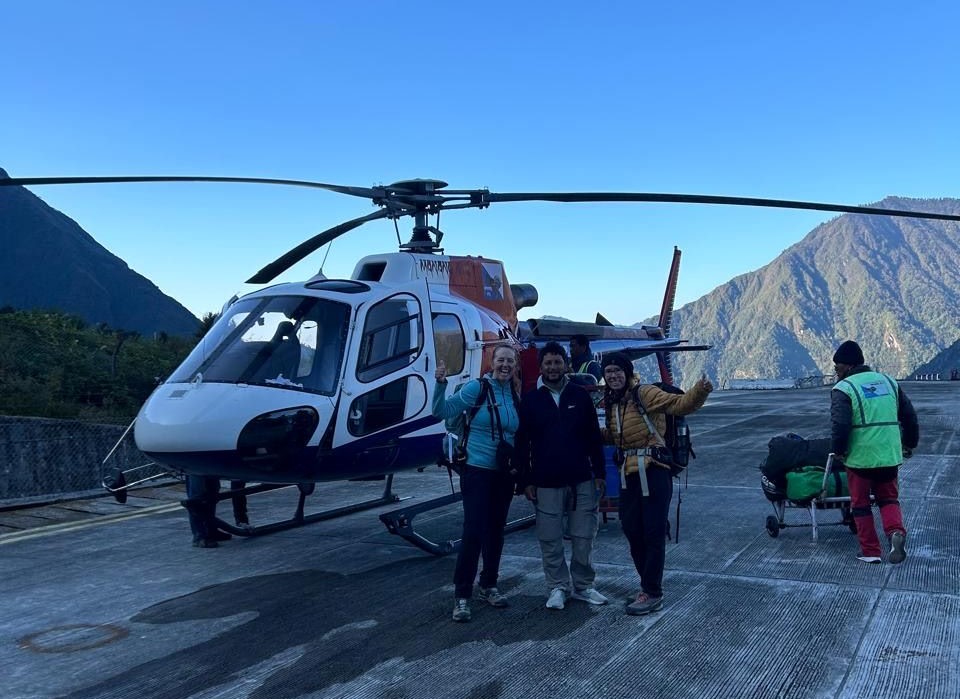
Guide Amy and the guests are all set for their scenic flight from Lukla to Kathmandu
When Flights May Be Delayed or Cancelled
During an Everest Base Camp helicopter tour, it may be necessary to delay or cancel flights due to the swift changes in weather in the Everest region. Mountain flyers must strictly avoid operating in hazardous conditions due to strong winds, abrupt cloud buildup, poor visibility, and seasonal factors like monsoon instability.
The timing of departures may also be impacted by temporary air traffic restrictions or aviation advisories. Since passenger safety is the primary consideration in every decision, the pilot's professional judgement ultimately matters most.
Although schedule modifications may seem inconvenient, they serve as a protective measure by guaranteeing that flights only take place when visibility and Himalayan weather conditions meet stringent aviation requirements for a comfortable and safe Everest helicopter ride.
Who Should Still Take Extra Precautions during the Everest Helicopter Tour
Even though the Everest Base Camp helicopter tour is considered one of the safest ways to see the Himalayas, some tourists should exercise extra caution because of the high altitude. The flight reaches altitudes above 4,000–5,000 metres, where oxygen levels are much lower than at sea level, even though the exposure to extreme elevation is shorter than the Everest Base Camp Trek for 14 Days.
Reduced oxygen levels can put additional strain on the respiratory and cardiovascular systems, so travellers with pre-existing heart, lung, or respiratory conditions should speak with their doctor before the trip.
People who have experienced altitude sickness in the past or who are sensitive to altitude should also consult a doctor and think about taking precautions. A pre-trip health examination is highly advised to ensure safe participation, but elderly passengers can typically complete the helicopter tour without any problems.
Travellers who are pregnant should get professional medical clearance because, depending on their individual health conditions and pregnancy stage, high-altitude exposure may not be appropriate.
It is also advised that travellers notify the tour operator in advance of any health issues. This enables flight crews and guides to monitor passengers' well-being during high-altitude stops, offer the proper support, and make the necessary arrangements if additional care is needed.
Everyone on board can have a safer, more seamless, and more pleasurable Everest helicopter experience with adequate planning and truthful health disclosure.
Best Time for the Everest Base Camp Helicopter Tour
The Best time to do the Everest Helicopter Tour can be enjoyed throughout most of the year, but the finest mountain views are typically experienced during spring (March to May), autumn (September to November), and increasingly during winter (December to February). These seasons offer stable weather, excellent visibility, and spectacular panoramic views of the world's highest peaks.
At Mount Glory Treks, we recommend booking your Everest Base Camp Helicopter Tour during Spring(March to May), Autumn(September to November), or Winter(December to February) for the safest flights, clearest mountain panoramas, and an unforgettable Himalayan experience above Everest and the stunning Khumbu region. If you are planning during Winter(June to August ), which is also a possible time but with slight chances of flight cancellation because of rainy days, please contact our team for more details.
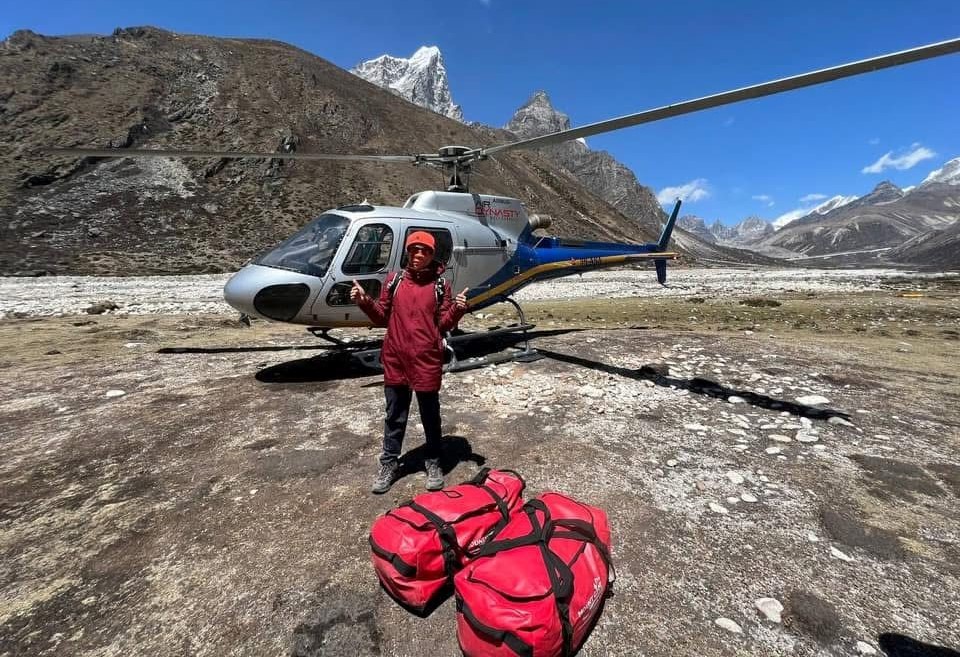
Ready to fly from kalapatthar 5555m During Everest Helicopter Tour in Nepal
In Conclusion
There is a question why Travelers Choose EBC Helicopter Tour then; the answer is the fastest, safest, and most comfortable way to see Mount Everest and the surrounding Himalayan giants in a day tour from Kathmandu.
Modern helicopters, skilled mountain pilots, and meticulously monitored safety procedures enable flights to operate under stringent aviation regulations.
The short time spent at high altitude reduces the likelihood of altitude-related problems compared to multi-day trekking, and ongoing weather monitoring, controlled landing procedures, and flexible scheduling further lower operational risks.
This helicopter experience offers the perfect balance of adventure, safety, and comfort for tourists looking for breathtaking views of Everest without the tiring physical demands of a lengthy expedition.
Mount Glory Treks offers expertly planned departures for travellers planning an amazing Everest aerial adventure. Skilled teams manage flight arrangements, safety coordination, and logistics, enabling you to enjoy the Himalayas with ease, confidence, and peace of mind.
Frequently Asked Questions
1: Is the Everest Base Camp helicopter tour safe for first-time visitors to Nepal? Yes, the helicopter tour is specifically designed for travellers who have no prior trekking experience or exposure to high altitude. Experience Everest in a controlled and comfortable manner thanks to professional pilots, controlled flight operations, and brief landing times. To guarantee a smooth trip, first-time passengers are still advised to drink plenty of water, get plenty of sleep before the flight, and heed crew instructions.
2: Do you get altitude sickness during an Everest helicopter tour? Compared to trekking, the risk of altitude sickness is much lower because passengers are only at high altitudes for brief periods of time. But since everyone reacts differently to altitude, visitors should avoid overdoing it, move slowly during landings, and notify guides right away if they experience any discomfort, such as headaches or lightheadedness.
3: How experienced are the pilots flying in the Everest region? High-altitude mountain flying is a speciality of helicopter pilots operating in the Everest region. Their vast experience in negotiating the Himalayan landscape, shifting weather patterns, and difficult landing zones is crucial to ensuring tour safety.
4: What happens if the weather suddenly changes during the flight? We keep a careful eye on the mountain weather both before and during each flight. Pilots may postpone departure, change their route, or make an early return if the situation becomes dangerous. Flexibility is regarded as a typical and advantageous aspect of Himalayan aviation, and these decisions are made solely for the safety of the passengers.
5: Are helicopters equipped with safety and emergency systems? Yes, contemporary helicopters with onboard oxygen support, sophisticated navigation systems, and communication tools are utilised for Everest tours. In order to comply with aviation safety regulations, aircraft must undergo frequent inspections and regular maintenance checks.
6: Is the Everest helicopter tour suitable for elderly travellers or families? This tour is popular among families and senior citizens because it eliminates the physical strain and lengthy trekking days. For a variety of age groups, the helicopter tour can be a comfortable way to experience Everest together, provided that passengers are generally healthy and seek medical advice when needed.
7: How long do passengers stay at high altitude during the tour? Depending on the weather and conditions, landing stops close to Everest are purposefully short, typically lasting 10 to 15 minutes. Travellers can still take pictures and enjoy panoramic views while lowering the risks associated with altitude thanks to this limited exposure.
8: Why are some flights split into shuttle rotations near Everest? Helicopters must carefully control their weight for safe takeoff and landing at high altitudes. For brief shuttle flights, operators may split up the passengers into smaller groups. This is a common safety procedure that enhances aircraft performance and guarantees safer thin-air operations.
9: Should travellers prepare physically before an Everest helicopter tour? Although rigorous exercise is not necessary, comfort can be increased with simple preparation. The experience can be made more pleasurable and stress-free by getting enough sleep, drinking plenty of water, abstaining from alcohol prior to the flight, and dressing appropriately for the cold.
10: How can I choose a safe Everest helicopter tour operator? Travellers should make reservations with respectable companies that put safety first, fly licensed helicopters, offer thorough pre-flight instructions, and have knowledgeable staff to assist them. Selecting a guided tour from seasoned operators like Mount Glory Treks helps guarantee effective planning, dependable scheduling, and expert management of safety protocols from beginning to end.
Born and raised in the Mountainous village of Gorkha Nepal. Mr. Pandey is a successful tour leader and a very active social worker contributing a lot to the welfare of society. Mr, Pandey belongs to a very humble background and has started his career as a junior staff in a much-reputed company in Nepal. Mr. Pandey's family background is engaged in the tourism sector for an extended period. After spending many years in research and the drawbacks of tourism development.
Due to his great passion and enthusiasm for the trekking and tourism sector, he started his tour career with many expert teams. He intends to bring revolution to the tourism sector by offering luxurious services and accommodations to travelers at a minimum price. With the Motto of Travellers, satisfaction is my passion. He has been helping many travelers with traveling.

 based on 228 reviews


.webp)
.webp)