Everest Green Boots : 1996 Mount Everest Disaster During Everest Expedition
Who was Everest Green Boots, and why has this climber become one of the most recognized figures in mountaineering history? In this article, we will be answering one of the most asked trekking and mountaineering questions.
For nearly three decades, the name Everest Green Boots has been surrounded by mystery, speculation, and countless stories shared among climbers. High on Mount Everest's Northeast Ridge, a frozen climber wearing distinctive lime-green mountaineering boots became an unexpected landmark for expeditions attempting the world's highest peak.
Unlike many stories associated with Everest, the legacy of Green Boots is not about reaching the summit. Instead, it reflects the immense dangers of climbing above 8,000 meters, the difficult ethical decisions surrounding body recovery, and the human cost of pursuing one of the world's greatest mountaineering achievements.
In 2026, the mystery finally took a significant turn. Following DNA testing conducted by the Indo-Tibetan Border Police (ITBP), Indian authorities identified the climber known as Green Boots as Lance Naik Dorje Morup, replacing the long-held assumption that the remains belonged to another member of the same expedition.
Authorities are now preparing one of Everest's most complex recovery missions to bring Morup home nearly thirty years after his passing.
This article explores the verified history behind Everest Green Boots, the 1996 Everest disaster, why bodies remain on the mountain, and why Green Boots continues to symbolize both the beauty and the unforgiving reality of Mount Everest.
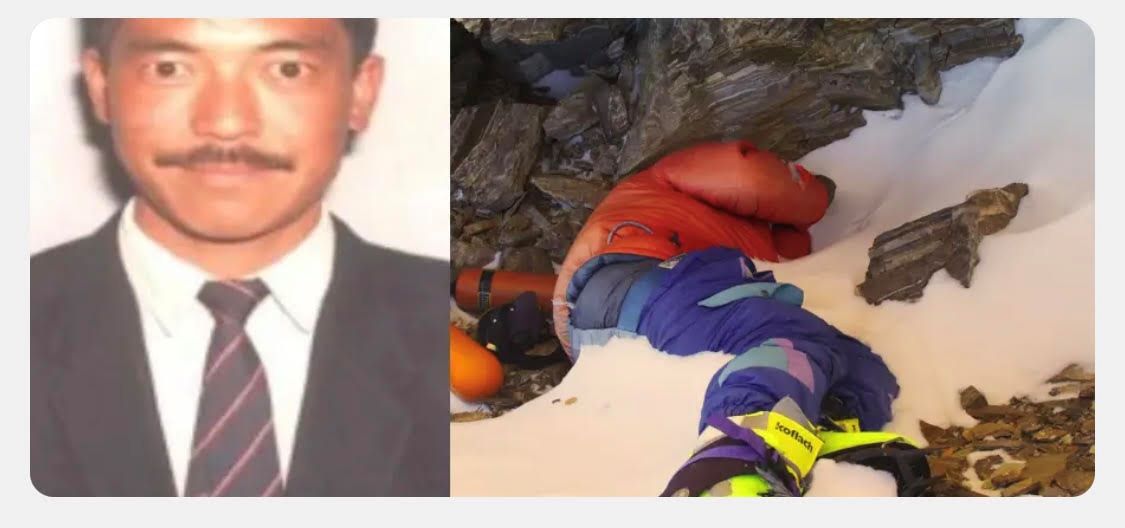
Everest Green Boots is the nickname given to climber Dorje Morup, whose frozen body has remained on Mount Everest's Northeast Ridge Route for three decades.
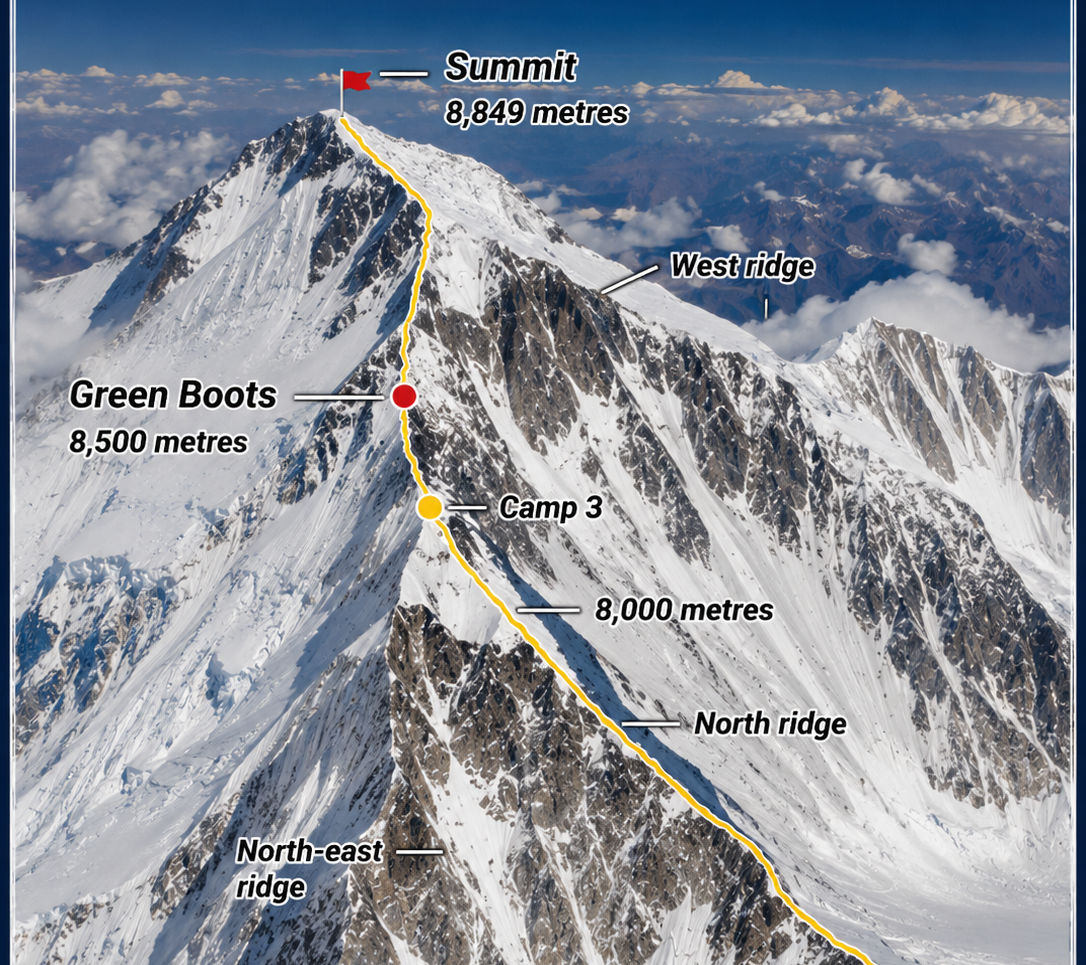
The nickname originated from the climber's bright lime-green mountaineering boots, which stood out against the snow and rock on the route to Everest. Positioned in a small limestone alcove at approximately 8,500 meters (27,900 feet), the body became a well-known reference point for climbers ascending Everest from the Tibetan side.
Unlike official landmarks, Green Boots became an informal waypoint simply because nearly every expedition following the northern route passed the location. For many climbers, seeing the body served as a stark reminder of Everest's extreme environment and the consequences of even small mistakes at high altitude.
Furthermore, Green Boots was part of an Indo-Tibetan Border Police expedition caught in a catastrophic blizzard during their summit push in May 1996. He took shelter in a small rocky alcove to wait out the freezing conditions but succumbed to extreme hypothermia and lack of oxygen in the Death Zone.
Who Was The Green Boots on Everest?
For many years, the identity of Everest Green Boots was one of mountaineering's greatest mysteries, but it has recently been solved.
Following DNA analysis conducted by the Indo-Tibetan Border Police (ITBP), Indian authorities confirmed in 2026 that the remains belong to Lance Naik Dorje Morup, a member of the ITBP expedition that attempted Mount Everest in May 1996. The identification corrected decades of uncertainty surrounding one of Everest's most famous landmarks.
For years, many books, documentaries, and websites identified Green Boots as Head Constable Tsewang Paljor. While that theory became widely accepted, the recent DNA findings demonstrated that the remains are actually those of Dorje Morup, another climber from the same expedition who disappeared during the fatal storm.
The confirmation not only resolves a long-standing historical question but also offers closure to Morup's family after nearly thirty years, and Indian authorities issued a tender to assemble an expert team of Sherpas to recover Morup and bring his remains home.
Everest Green Boots
1996 Mount Everest Disaster
The story of Everest Green Boots is inseparable from the tragic events of 10–11 May 1996, one of the darkest chapters in Everest's climbing history.
During the climbing season, a six-member Indo-Tibetan Border Police (ITBP) expedition attempted the summit via Everest's Northeast Ridge.
As weather conditions deteriorated, three members of the team chose to descend while Subedar Tsewang Smanla, Lance Naik Dorje Morup, and Head Constable Tsewang Paljor continued toward the summit.
The three climbers successfully reached the top of Mount Everest but became trapped during their descent as a violent blizzard swept across the mountain, and sadly none of them survived. Eight climbers from other international expeditions perished in the same storm, making it one of the deadliest disasters in Everest's history at the time.
Why Did Green Boots Become So Famous?
More than hundreds of climbers have lost their lives on Mount Everest; Green Boots became one of the mountain's most recognized symbols for several reasons.
Here are some reasons why the Green Boots became so famous:
Its Location: The body rested inside a small limestone cave directly beside the Northeast Ridge Route, meaning almost every climber approaching Everest from Tibet passed the site.
The Distinctive Boots: The climber's bright green mountaineering boots made the location immediately recognizable, leading to the nickname Green Boots.
A Navigation Reference: Over time, expedition leaders began using Green Boots as an informal landmark while describing progress toward the summit. Climbers often measured their ascent by notable locations along the route, and the cave naturally became one of those reference points.
Global Media Attention: As Everest gained worldwide popularity through books, documentaries, and online media, Green Boots became one of the most discussed stories associated with the mountain, similar to Sleeping Beauty of Mount Everest mountaineer Francys Arsentiev.
Where are the Green Boots Located?
On the Northeast Ridge Route of Mount Everest from Tibet, the Green Boots rested at a height of about 8,500 meters (27,900 feet) above sea level.
The site is deep within the notorious Death Zone, where the amount of oxygen in the atmosphere is only about one-third of what it is at sea level.
Because the cave itself provided little wind protection, climbers would naturally stop there for a short while before moving on to the summit.
Green Boots became one of the most well-known reference points for Everest because practically every expedition on the northern route passed through this area.
Furthermore, the climbers from Tibet were much more likely to come across the cave than those coming from Nepal via the South Col Route.
Everest Green Boots Location On the way to Everest Expedition
Is Green Boots Still on Mount Everest in 2026?
Whether or not Everest Green Boots can still be seen is one of the most common questions. Thousands of climbers passed the body in the limestone cave.
In order to keep the remains on the mountain and reduce public exposure, expedition reports from around 2014 state that they were taken from their conspicuous location, most likely by a Chinese expedition or the China Tibet Mountaineering Association.
A new chapter of the Green Boots story began in 2026. The Indo-Tibetan Border Police declared their intention to retrieve Dorje Morup's remains after his DNA was identified. Because the body is located on the Tibetan side of Everest, the proposed mission requires permission from Chinese authorities, favorable weather, and highly skilled high-altitude specialists. If successful, it would conclude one of mountaineering's most enduring tales and bring Morup home almost thirty years after his passing.
Why Are Bodies Still Left on Everest?
Bringing bodies of climbers down from Everest's Death Zone is still extremely risky, even though recovery efforts are becoming more widespread.
Rescue teams must deal with extremely cold temperatures, unstable terrain, avalanche hazards, and extreme exhaustion above 8,000 meters, where oxygen levels are only around one-third of those at sea level. Every operation depends on skilled Sherpa climbers and specialized high-altitude teams operating on foot because helicopters are unable to recover bodies from these elevations.
The planned recovery of Dorje Morup emphasizes both the emotional importance of reuniting climbers with their families and the enormous risks such missions pose to those carrying them out. Every recovery must carefully weigh humanitarian concerns against the safety of the recovery team.
These operations are also extremely expensive, often costing tens of thousands of dollars, and necessitate extensive planning, specialized equipment, good weather, and government approval, depending on which side of Everest the body is on.
In Conclusion
The story of Everest Green Boots is much more than just a frozen body on the world's highest mountain. It is a powerful reminder of the extraordinary challenges, difficult decisions, and human sacrifices that characterize high-altitude mountaineering.
With the recent identification of Lance Naik Dorje Morup, one of Everest's most enduring mysteries has finally been solved. The focus has shifted from speculation to remembrance, honoring a climber who died while attempting one of mountaineering's greatest feats. At the same time, India's planned recovery mission emphasizes both the emotional significance of returning climbers and the enormous risks faced by those tasked with carrying out such operations.
For trekkers visiting the Everest region, Green Boots serves as a sobering reminder that the Himalayas are not only breathtakingly beautiful but also demanding of humility, preparation, and respect. Whether your goal is Everest Base Camp or the summit, the mountain rewards perseverance, sound judgment, and respect for the people whose stories have shaped Everest's remarkable history.
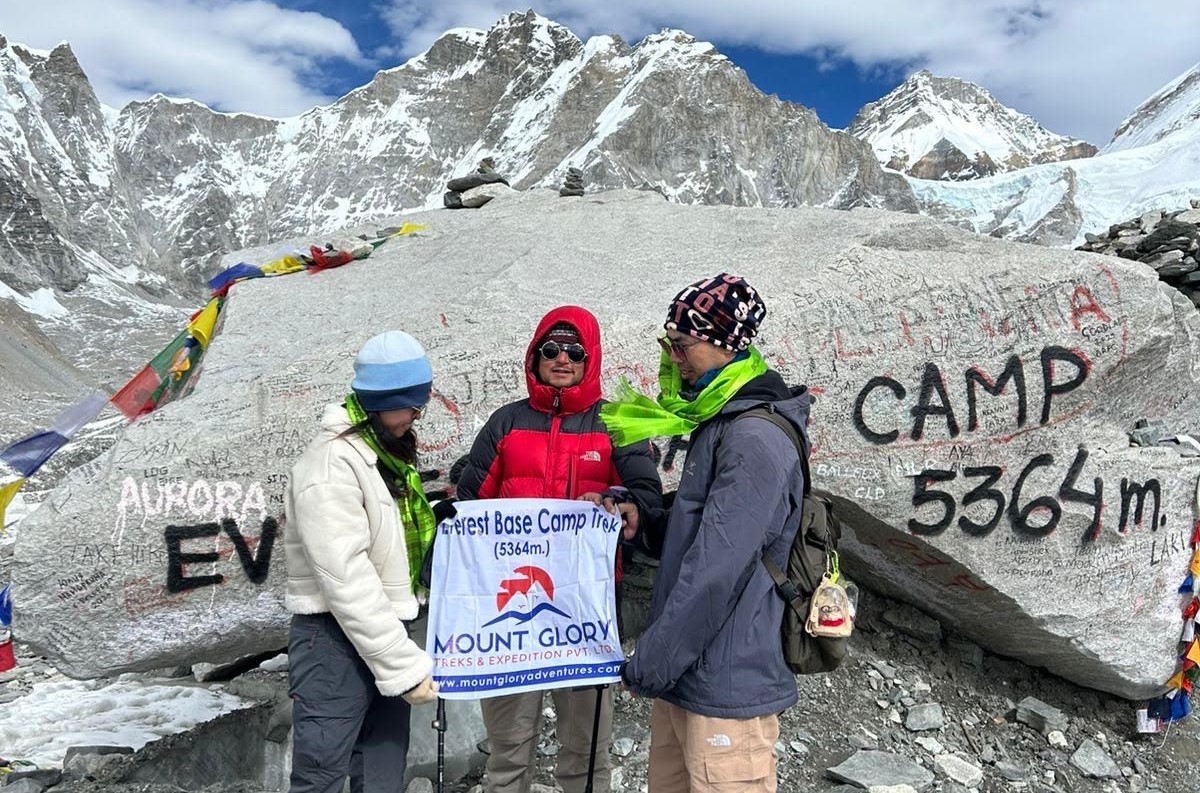
Base Camp of Mount Everest 5364m : Mount Glory Treks Team
Frequently Asked Questions
1: Who was Everest Green Boots? Everest Green Boots is the nickname given to a climber whose frozen body became one of Mount Everest's most recognized landmarks because of the bright green mountaineering boots he wore. For many years, his identity remained a mystery, but recent reports have identified him as Lance Naik Dorje Morup of the Indo-Tibetan Border Police (ITBP), who lost his life during the tragic 1996 Everest disaster.
2: Why is the climber known as Green Boots? The climber's characteristic lime-green boots, which were easily noticeable to onlookers, gave rise to the moniker. For decades, climbers did not know who he was, so they started calling the place "Green Boots." The name eventually rose to prominence as one of the most popular terms in the history of Everest climbing.
3: Where was Green Boots located on Mount Everest? Green Boots was located at around 8,500 meters (27,900 feet) on Everest's Northeast Ridge Route from Tibet, inside a small limestone cave below the First Step. The site lies deep within the Death Zone, an area where extremely low oxygen levels make climbing and survival significantly more difficult. Because nearly every climber using the northern route passed this location, it became an unofficial waypoint during summit attempts.
4: Is Green Boots still on Mount Everest? The body is no longer visible where it once was. According to reports, it was removed from public view sometime around 2014, and current events show that Indian authorities are attempting to retrieve the remains after the identification was verified. Any recovery operation, however, is contingent upon the weather, official authorization, and the high-altitude recovery team's safety.
5: Why are bodies often left on Mount Everest? Many climbers who lose their lives above 8,000 meters remain on the mountain because recovery operations are extremely dangerous and technically challenging. Rescue teams must work in freezing temperatures, steep terrain, and dangerously low oxygen levels, where even experienced climbers face significant risks. In many cases, protecting the lives of rescuers becomes the highest priority, making recovery impossible or unsafe.
6: Can Everest Base Camp trekkers see Green Boots? No. Visitors trekking to Everest Base Camp will not encounter Green Boots. The body was located thousands of meters higher on the Northeast Ridge climbing route, which is only accessed by climbers attempting to summit Mount Everest from the Tibetan side. Trekkers follow a completely different route that remains well below the technical climbing sections.
7: Why did Green Boots become so famous? Green Boots became famous because the body remained visible beside one of Everest's busiest summit routes for many years, making it a landmark recognized by generations of climbers. Beyond its location, the story gained worldwide attention through books, documentaries, and expedition accounts, eventually becoming one of the most discussed topics in Everest's mountaineering history.
8: What does the story of Everest Green Boots teach us? The story is a powerful reminder that Mount Everest demands respect, preparation, and good decision-making. It highlights the importance of proper acclimatization, understanding personal limits, and recognizing that reaching the summit is only half the journey. For many climbers and trekkers, Green Boots symbolizes both the beauty of Everest and the responsibility that comes with exploring such an extreme environment.
9: Is the Death Zone on Mount Everest really that dangerous? Yes. The Death Zone, which begins above 8,000 meters (26,247 feet), is considered the most dangerous part of Mount Everest. Oxygen levels are dramatically lower than at sea level, making every step physically demanding while increasing the risk of altitude sickness, frostbite, exhaustion, and impaired judgment. Spending extended time at this altitude can quickly become life-threatening, even for experienced mountaineers.
10: Can ordinary travelers experience Everest without climbing the summit? Yes, most visitors explore the Everest region by joining the Everest Base Camp Trek, one of the world's most famous trekking adventures. This journey allows travelers to experience breathtaking Himalayan landscapes, Sherpa culture, ancient monasteries, and spectacular views of Mount Everest without the technical challenges and extreme risks involved in a summit expedition. In order to ensure a hassle-free, safe, and memorable trek in Nepal, Mount Glory Treks provides expertly guided Everest Base Camp Treks, luxurious Everest experiences, and personalized Himalayan adventures with knowledgeable local guides, meticulously planned itineraries, and committed support from arrival to departure.
Born and raised in the Mountainous village of Gorkha Nepal. Mr. Pandey is a successful tour leader and a very active social worker contributing a lot to the welfare of society. Mr, Pandey belongs to a very humble background and has started his career as a junior staff in a much-reputed company in Nepal. Mr. Pandey's family background is engaged in the tourism sector for an extended period. After spending many years in research and the drawbacks of tourism development.
Due to his great passion and enthusiasm for the trekking and tourism sector, he started his tour career with many expert teams. He intends to bring revolution to the tourism sector by offering luxurious services and accommodations to travelers at a minimum price. With the Motto of Travellers, satisfaction is my passion. He has been helping many travelers with traveling.

 based on 228 reviews




.webp)