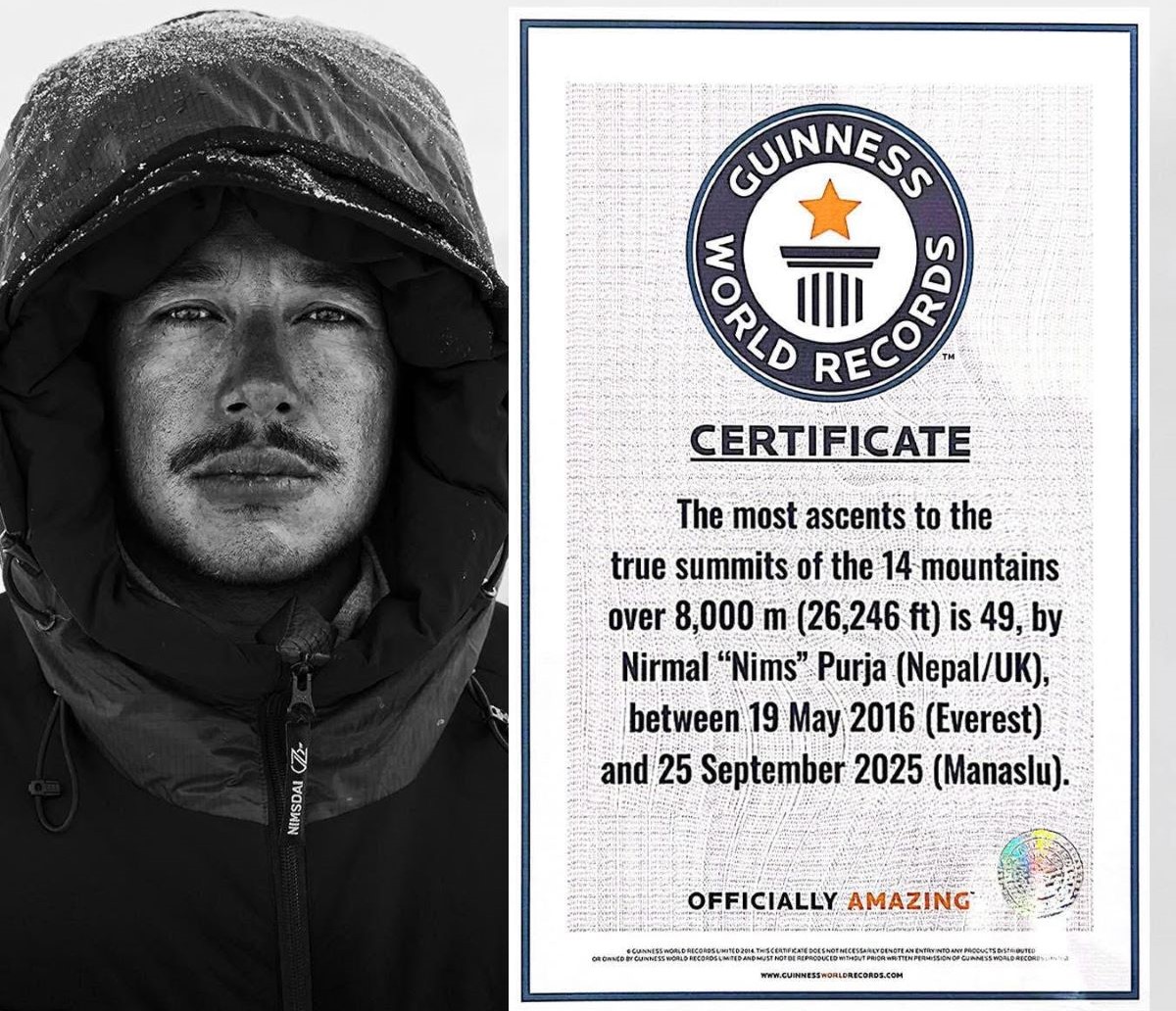
14 Highest Mountain Peaks Record By Nirmal Purja " NIMSDAI "
The world of mountaineering has always been shaped by people who are willing to go beyond what seems possible. Some climb for records, some for exploration, and some simply because they feel drawn towards the highest places on Earth.
Nirmal Purja "NIMS Dai " became one of the most recognized names in modern mountaineering because he combined extraordinary ambition, military discipline, and an unmatched belief in pushing human limits.
His story, however, is not only about reaching the summits of the world's highest mountains. It is also about the journey of a boy from Nepal who became a Gurkha soldier, served in one of the world's most respected special forces units, and later changed the way the world viewed Nepali climbers in Himalayan expeditions.
In recent years, Nirmal Purja became a global symbol of determination after completing one of the most ambitious challenges in climbing history: ascending all 14 of the world's peaks above 8,000 meters in just six months and six days. A feat that once seemed almost impossible, he achieved it through careful planning, relentless training, and a mindset shaped by years of military service.
Through the Netflix documentary 14 Peaks: Nothing Is Impossible, his accomplishments gained international recognition and inspired millions of people outside the climbing community.
Beneath the documentary, though, was a more complex tale of tenacity, teamwork, and the sometimes disregarded contribution of Nepali climbers who have long supported Himalayan expeditions.
The mountaineering world was recently shaken by the tragic news of Nirmal Purja's death during a Broad Peak expedition in Pakistan. The loss marked the end of an extraordinary chapter in Himalayan climbing, but his influence extends far beyond a single expedition. His name remains connected with some of the most remarkable achievements in modern mountaineering.
Nirmal Purja's journey from Nepal's mountains to the world's highest summits must be examined in order to comprehend why he became such a significant figure.
Before becoming one of the most famous mountaineers in the world, Nirmal Purja began his life far away from international recognition and record-breaking climbs.
Nirmal Purja (NIMSDAI) was born on 25 July 1983 in Dana village of Myagdi District, Gandaki Province, Nepal, a small mountain settlement located near the Dhaulagiri region.
Although he was born in the Himalayan landscape, his childhood was not spent chasing mountain dreams or imagining world records. His early years were shaped by a simple rural lifestyle, limited resources, and the challenges faced by many families living in remote Nepal.
His family later moved from Myagdi to Chitwan, where he spent much of his childhood and received his education. Growing up, life was not easy. Nims came from a modest background, and his family's struggles played a major role in developing the resilience and determination that would later define his career. His father had served as a Gurkha soldier, and his older brothers also followed the same path, which influenced his own ambition from a young age.
Being a Gurkha was a dream for Nims, not just a career decision. The Gurkhas have a long and respected history of military service, and joining the British Army's Brigade of Gurkhas is considered one of the most challenging achievements for young Nepalis. It requires exceptional physical fitness, mental strength, discipline, and determination.
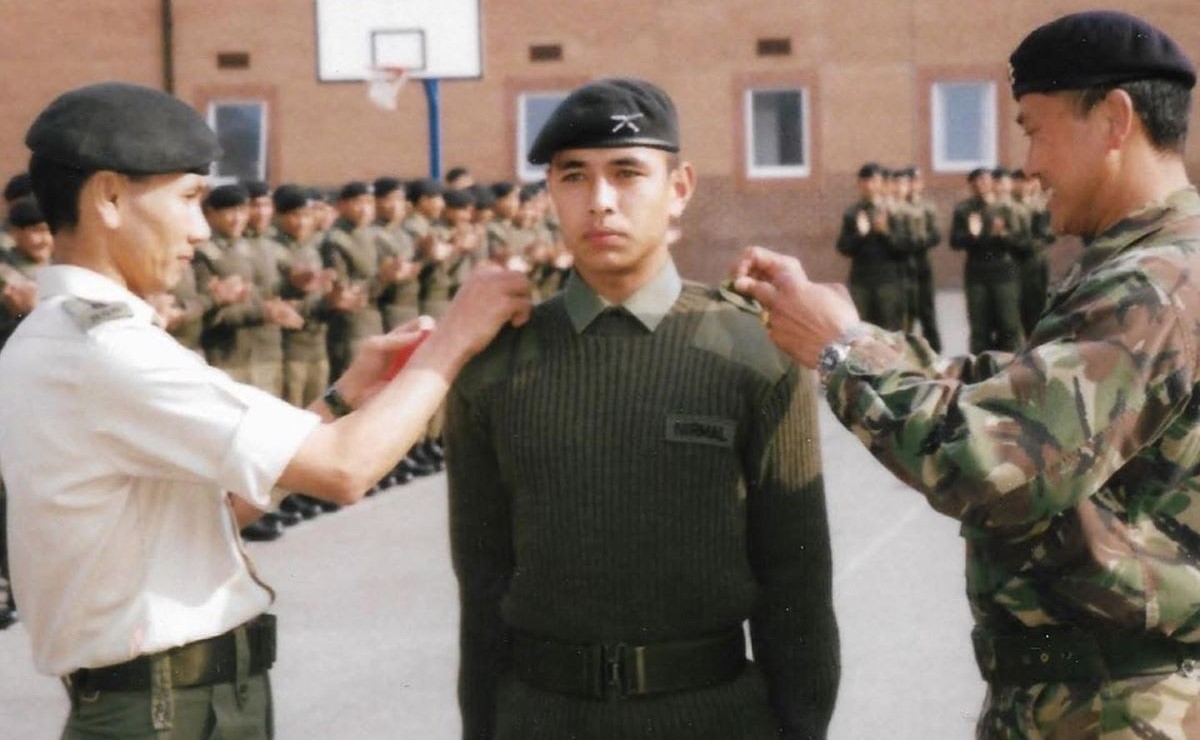
In 2003, at the age of 18, Purja achieved that dream and joined the Brigade of Gurkhas. This decision became the foundation for everything that followed. The discipline and training he gained during his military years later became essential when he entered the unpredictable and demanding world of high-altitude mountaineering.
Interestingly, mountaineering was not always his main ambition. Unlike many climbers who grow up dreaming of standing on Himalayan summits, Nims first built his identity as a soldier. His military experience had a big impact on his climbing style, which was centered on planning, cooperation, taking calculated risks, and maintaining composure under pressure.
That combination of a difficult childhood, military discipline, and an unbreakable mindset eventually created the foundation for the mountaineer the world would later know as Nims Dai.
Joined the Brigade of Gurkhas (British Army): 2003, at the age of 18
Military Career: Training Shaped a World-Class Mountaineer
Before his name became synonymous with record-breaking Himalayan expeditions, Nirmal Purja "Nims Dai" had already built an extraordinary career in the military. Long before standing on the summits of the world's highest mountains, he was learning resilience, leadership, and discipline in one of the most demanding professions imaginable.
In 2003, at the age of 20, Purja joined the Brigade of Gurkhas, an elite infantry unit of the British Army renowned for its courage, professionalism, and rigorous selection process. For generations, serving as a Gurkha has been a source of pride for many Nepali families, but earning that opportunity requires exceptional physical fitness, mental strength, and unwavering determination.
Military life demanded far more than physical endurance. It required quick decision-making, absolute trust in teammates, and the ability to remain composed under intense pressure. Those qualities would later become invaluable on mountains where a single decision can determine the outcome of an entire expedition.
Six years later, in 2009, Purja reached another remarkable milestone by becoming the first Gurkha ever accepted into the United Kingdom's Special Boat Service (SBS), one of the world's most respected special forces units. The SBS is known for its exceptionally demanding selection process, with only a small percentage of candidates successfully completing the training.
Serving in the SBS meant operating in some of the most challenging environments imaginable. Missions demanded precision, adaptability, and the ability to perform under extreme physical and mental stress. Looking back at his mountaineering career, it's easy to see how those years influenced his approach to climbing. Careful planning, calculated risk-taking, and an unwavering focus became defining characteristics of every major expedition he later led.
Despite a successful military career, Purja found himself increasingly drawn to the mountains. Climbing had begun as a personal passion, but it quickly grew into something much bigger. After serving in the military, he began to see mountaineering as a new mission that would test the same traits that had characterized his years as a soldier, rather than as a pastime.
Leaving the military was not an easy decision. Walking away from a respected position in the SBS meant giving up stability for an uncertain future in professional mountaineering. Yet that decision proved to be a turning point. Within a few years, the former special forces operator would attempt a challenge that many experienced climbers considered impossible, forever changing both his own career and the history of Himalayan mountaineering.
Project Possible: Mountaineering History
Purja gained valuable experience in high-altitude expeditions and had already climbed several of the world's highest peaks by the time he left the military. Nevertheless, he felt that the boundaries of Himalayan mountaineering had become overly restrictive, despite his rising stature in the climbing community.
Climbing all 14 mountains higher than 8,000 meters was regarded for decades as the pinnacle of achievement. The majority of mountaineers worked toward that objective for many years, sometimes even decades. Prior to Purja's attempt, the fastest known completion time was nearly eight years, a record that many thought would stand for a very long time.
He intended to climb all fourteen peaks in a single climbing season rather than treating each mountain as a separate expedition. Many seasoned climbers doubted the idea's viability because it was so ambitious. The logistical and financial obstacles were just as difficult as the physical demands.
Turning that vision into reality required more than determination. Funding the project became one of the biggest obstacles. Purja reportedly mortgaged his own house in order to maintain the dream and relied on friends, sponsors, and supporters who shared his vision. He was willing to take the significant personal risk. Iconically, He gave the expedition the name Project Possible, reflecting his conviction that there are boundaries that should be pushed.
The ascent of Annapurna I, one of the most hazardous 8,000-meter peaks in the world, marked the official start of the mission on April 23, 2019. Purja and his team moved quickly between mountains, meticulously arranging permits, transportation, weather windows, and logistics throughout Nepal, India, Pakistan, and China, rather than slowing down after each ascent.
In a matter of months, he completed all 14 of the world's eight-thousand-meter peaks, including Dhaulagiri, Kanchenjunga, Everest, Lhotse, Makalu, Nanga Parbat, Gasherbrum I, Gasherbrum II, Broad Peak, Shishapangma, K2, Cho Oyu, Manaslu, and Annapurna.
After standing atop Shishapangma in Tibet on October 29, 2019, Purja finished the last mountain in Project Possible. It had only taken six months and six days to complete the task, shattering the previous record by over seven years and rewriting one of mountaineering's most renowned accomplishments.
Project Possible represented something much more than speed, even though the record itself garnered international attention.
Purja frequently praised his Nepali teammates' professionalism and strength throughout the expedition. Sherpas and other Nepali climbers have been essential to Himalayan expeditions for many generations, but they frequently don't get the same credit as their foreign clients. By putting Nepali climbers at the center of one of the greatest achievements in contemporary mountaineering, Project Possible helped change that narrative.
One of the expedition's photos became especially famous. Purja took pictures of a long line of climbers waiting close to the summit of Mount Everest. The image swiftly went viral, drawing attention to the mounting problem of overcrowding on Everest and igniting a global conversation about permits, safety, and responsible mountain tourism.
Purja went from being a reputable climber to a worldwide celebrity thanks to Project Possible. More significantly, it disproved long-held beliefs about what was possible in high-altitude mountaineering and encouraged a new generation of climbers, especially in Nepal, to think that they too could push the boundaries of the sport.
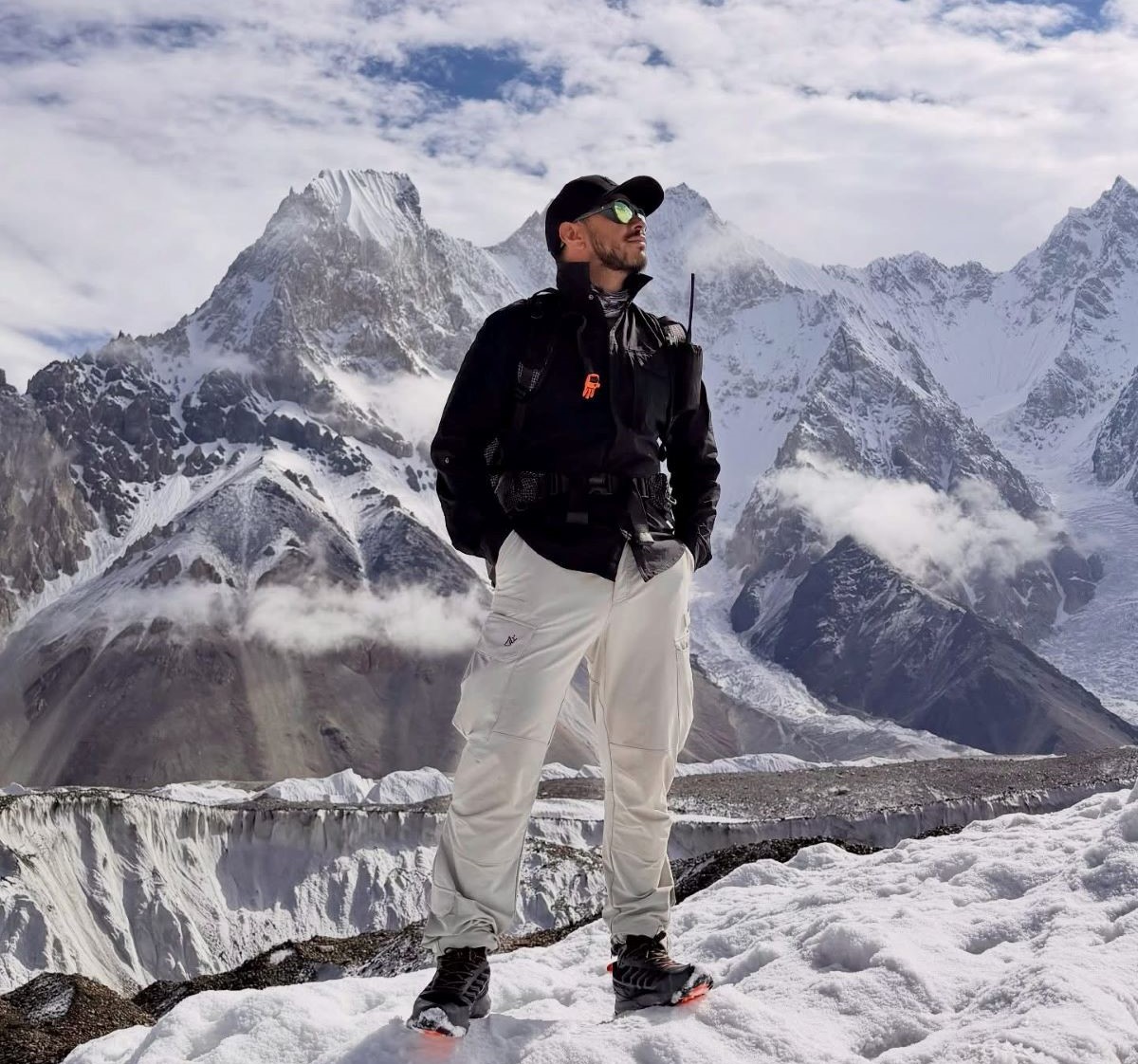
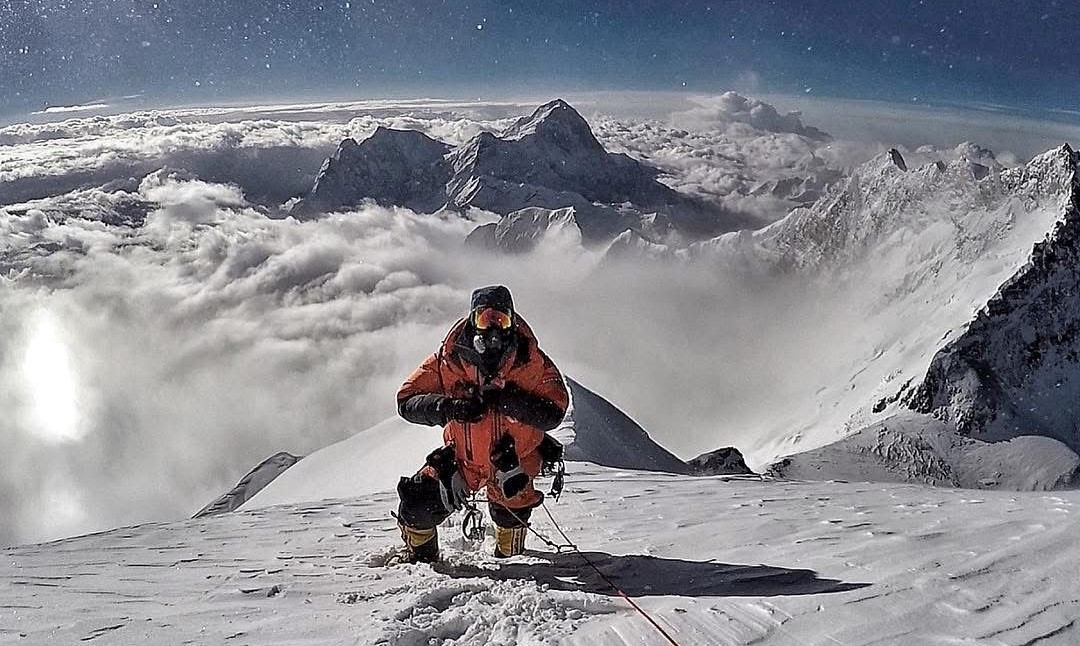
NIMS DAI Standing Infront of Everest Mountain Range During his Everest Expedition
Beyond Project Possible
Climbing all 14 of the world's 8,000-meter peaks would have been the pinnacle of a lifetime for many mountaineers. It felt less like the finish line and more like the start of a new chapter for Nirmal Purja.
Despite receiving interviews, honors, sponsorships, and international recognition as a result of Project Possible, he continued to approach the mountains in the same manner. Records had never seemed to be the ultimate objective. If anything, they served as evidence that people's accepted boundaries could occasionally be pushed much farther.
The winter of 2021 put that mentality to the test once more. For many years, K2 (8,611 m) was the only 8,000-meter mountain that was never climbed in the winter. K2 is already regarded as one of the world's most technically challenging mountains, in contrast to Everest. Many climbers thought a winter ascent might be impossible for years due to hurricane-force winds, temperatures that can drop below -50°C (-58°F), deep snow, and ongoing avalanche danger.
Nims saw another opportunity to challenge that belief. Instead of assembling a global team focused on individual achievement, he assembled a group composed solely of climbers from Nepal.
It was a decision that carried enormous significance. Nepali mountaineers have long assisted foreign expeditions in reaching the highest peaks in the world, frequently serving in the background as high-altitude experts, guides, and rope fixers. Although the general public seldom acknowledged their skill, the climbing community held them in high regard.
On January 16, 2021, that was altered. The team stopped climbing just below the summit of K2. They waited for each member to catch up rather than competing to be the first on top. Before completing the last steps to the summit as a team, they stood together in the bitter cold, joined arms, and sang Nepal's national anthem.
It turned into one of the iconic pictures of contemporary Himalayan mountaineering.
Reaching the summit of K2 in the winter was not the only accomplishment. The goal was to demonstrate to the world what Nepali climbers could achieve when they were in charge of an expedition on their own terms. While climbers worldwide acknowledged it as one of the greatest accomplishments in high-altitude mountaineering, many Nepalis saw it as a historic moment of pride.
The Netflix documentary 14 Peaks: Nothing Is Impossible made Purja's story even more widely known outside of the mountains. The film, which was released in 2021, focused on the difficulties associated with Project Possible and gave viewers a closer look at the emotional, financial, and physical demands of trying something that many experts thought was impossible.
Millions of people learned about Himalayan climbing from the documentary, but it also presented an alternative viewpoint. It provided Nepali climbers, whose abilities had frequently been disregarded despite their decades of contribution to Himalayan expeditions, with much-needed visibility.
Later, Purja wrote more about his experiences in his book Beyond Possible, in which he discussed resilience, leadership, and the mindset that got him through some of the most trying times in his professional life. Around the same time, his expedition company, Elite Exped, continued to train and hire seasoned Nepali mountain experts while guiding climbers on significant peaks throughout Pakistan and Nepal.
In retrospect, it's challenging to distinguish Purja's individual accomplishments from his broader influence on Nepal's mountaineering community. Not only did he shatter records, but he also contributed to a shift in discourse.
Nepali climbers were increasingly acknowledged by international media as elite mountaineers who could lead top-tier expeditions and set their own records, rather than just as support personnel.
By then, he was well-known outside of the Himalayas. But even with all of his accomplishments, he still felt most at home in the mountains. They had molded his career, pushed him to the edge, and provided him with moments that motivated millions.
Few could have predicted that his incredible journey would end on one of those mountains.
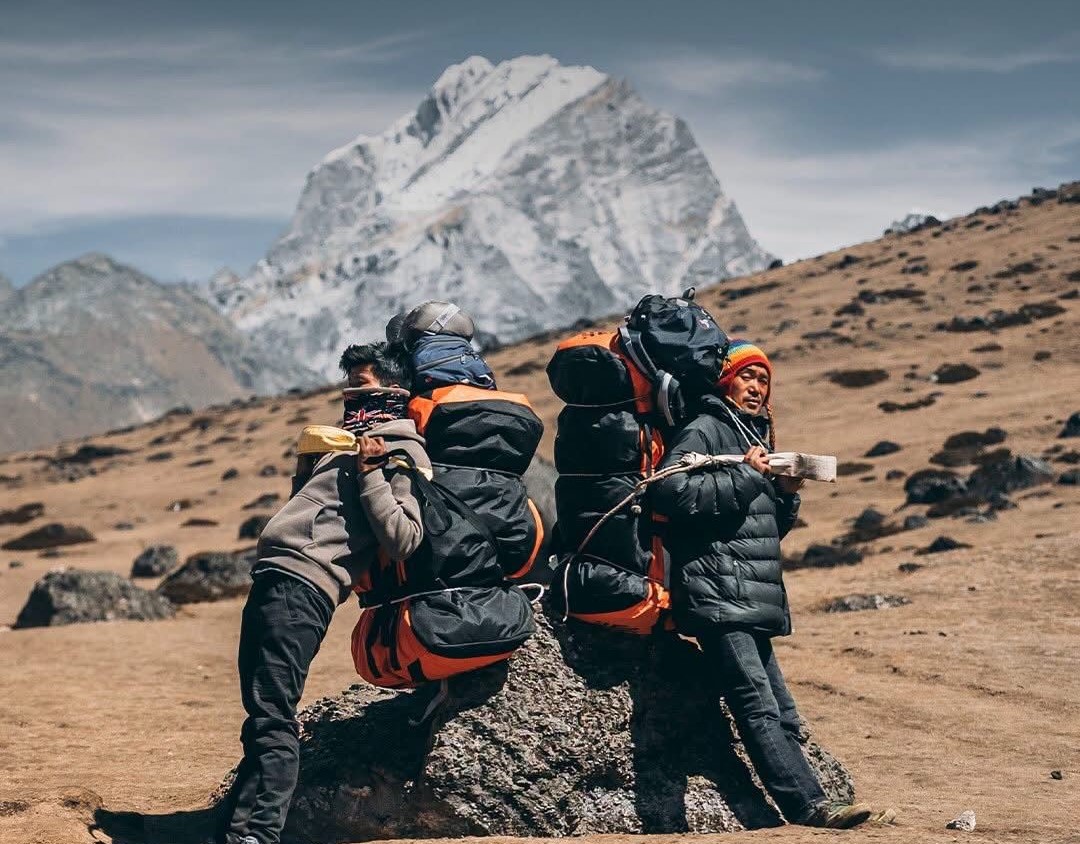
Porters in Everest: NIMS DAI Foundation Builds Porter House in the Everest Region
The Final Expedition: Broad Peak and the Tragedy
Nirmal Purja never left the mountains, even after the record books were rewritten. He continued to lead trips through the Himalayas and Karakoram through Elite Exped in the years after Project Possible, coaching climbers and taking on new challenges.
2026 climbing season in Pakistan was no different. The twelfth-highest mountain in the world, Broad Peak (8,051 m), was one of the team's goals. Despite being frequently eclipsed by nearby K2, Broad Peak is known for its complicated topography, quickly shifting weather patterns, avalanche-prone slopes, and lengthy summit ridge. Even in favorable circumstances, experienced climbers must exercise constant caution on this mountain.
A catastrophe occurred high on the mountain on July 30, 2026, while several expeditions were attempting to reach the summit.
An avalanche swept across the route between Camps 2 and 3, engulfing a group of climbers from various international expeditions. Purja was among them, leading an Elite Exped team up the mountain. According to early reports from base camp, the avalanche struck without warning, leaving little time for those on the route to react.
Rescue efforts began as soon as the weather and conditions permitted, but they quickly became one of the most difficult operations in the Karakoram in recent memory.
The search involved helicopters, drones, local high-altitude rescuers, and Pakistani authorities. However, the unstable snow, ongoing avalanche risk, strong winds, and high altitude severely limited what rescuers could do. Drone footage found bodies in a number of locations that could not be recovered right away because the terrain was deemed too hazardous for rescue personnel.
In comparison to some other significant climbing regions, officials also pointed out that Pakistan's mountain rescue capabilities are still limited, especially when it comes to long-line helicopter recovery at extremely high altitudes.
The initial optimism waned as search efforts persisted.
It was one of the deadliest mountaineering disasters on Broad Peak in recent memory, as authorities confirmed in the days that followed that all ten climbers trapped in the avalanche had perished. The victims represented a number of nations, illustrating the global scope of contemporary Himalayan expeditions and the dangers that bring climbers from all backgrounds together.
Moreover, Governments, other mountaineers, military colleagues, expedition companies, and thousands of people whose lives had been impacted by Purja's accomplishments sent tributes. Members of the British military community also commemorated his outstanding service as a former Gurkha and Special Boat Service operator, while Nepali leaders honored him as one of the nation's greatest mountaineers.
Many in the climbing community considered how drastically he had altered the perception of Nepali climbers, not only as superb high-altitude guides but also as expedition leaders who could accomplish feats that many had previously thought were unattainable.
Purja frequently discussed planning, cooperation, and reverence for the mountains throughout his career. Above 8,000 meters, no amount of experience, physical prowess, or meticulous preparation can completely eliminate every risk. Mountains have always required humility, and Broad Peak was another reminder that even the most skilled climbers are susceptible to uncontrollable forces.
Although his final expedition ended in tragedy, the legacy he left behind cannot be measured by a single mountain or a single day. His influence continues through the climbers he inspired, the barriers he broke for Nepal's mountaineering community, and the belief that extraordinary goals are sometimes achieved by those willing to question what the world considers impossible.
A Legacy Beyond the Mountains
Nirmal Purja's legacy is measured by far more than climbing records. While his achievements, such as Project Possible and the historic first winter ascent of K2 by an all-Nepali team, rewrote mountaineering history, his greatest contribution was changing the world's perception of Nepali climbers.
For generations, Nepali mountaineers played critical roles in Himalayan expeditions but received little international recognition. Purja's leadership, global media presence, and remarkable accomplishments helped bring that expertise to the forefront, demonstrating that Nepali climbers were not only world-class guides but also expedition leaders capable of setting historic records.
His influence extended far beyond the climbing community, with the Netflix documentary 14 Peaks: Nothing Is Impossible, his memoir Beyond Possible, and his work with Elite Exped inspiring countless people to dream bigger and push their own limits.
Despite his tragic death on Broad Peak in July 2026, his legacy continues to shape modern mountaineering. His story is ultimately about courage, resilience, and the unwavering belief that the impossible is frequently just a challenge waiting to be tackled.
Everest - where Nimsdai turned Project Possible into history
Frequently Asked Questions
1: Who was Nirmal "Nims" Purja? Nirmal " Nims Dai " Purja MBE was a Nepalese-born mountaineer, former British Army Gurkha, and Special Boat Service (SBS) operator who became one of the most influential climbers of his generation. He gained worldwide recognition after climbing all 14 of the world's 8,000-meter peaks in just six months and six days in 2019, before going on to co-lead the historic first winter ascent of K2 by an all-Nepali team.
2: When and where was Nims Purja born? Nirmal Purja was born on 25 July 1983 in Dana, a small village in Myagdi District, Gandaki Province, Nepal. When he was around four years old, his family moved to Chitwan, where he spent much of his childhood. Growing up in a financially modest household, he has often spoken about the hardships his family faced and how those early experiences shaped his determination.
3: Who are Nims Purja's parents and siblings? Purja was born into a family with a strong military tradition. His father served as a Gurkha soldier, while his mother came from a farming background. He also had three older brothers, all of whom joined the Gurkhas before him. Their military careers inspired him to pursue the same path, eventually leading him to the British Army and later the UK's elite Special Boat Service.
4: Was Nims Purja married? Who is his wife? Yes. Nirmal Purja was married to Suchi Purja, the daughter of a former Gurkha soldier. Although she largely stayed away from the spotlight, Suchi played a significant role behind the scenes throughout her husband's climbing career. She helped with expedition planning, fundraising, logistics, media work, and business operations, and also appeared in the Netflix documentary 14 Peaks: Nothing Is Impossible. The couple lived in Hampshire, England, for several years while Purja continued leading expeditions around the world.
NIMSDAI Wife and Daughter
5: Did Nims Purja have children? Yes. Nirmal and Suchi Purja had a daughter named Himani Purja. Unlike her father, Himani has been kept almost entirely out of the public eye, as the family chose to maintain a high level of privacy regarding their personal life despite Purja's international fame.
6: What is Nims Purja's ethnicity and religion? Nirmal Purja belonged to the Magar community, one of Nepal's largest Indigenous ethnic groups. Although many people mistakenly assumed he was Sherpa because of his mountaineering achievements, he was not. He was raised in a Hindu family, a part of his identity that he occasionally spoke about in interviews and his memoir.
7: What was Nims Purja's educational background? Although Purja is best known for his military and mountaineering career, he also invested in higher education. After his military service, he completed a postgraduate diploma in Security and Risk Management at Loughborough University in England. In recognition of his remarkable achievements and public service, the university later awarded him an Honorary Doctorate in 2023.
8: What was Nims Purja's net worth? There is no official public figure for Nirmal Purja's net worth. While numerous websites provide estimates, none have been confirmed by Purja, his family, or his company. His income came from a variety of sources, including guiding high-altitude expeditions for Elite Exped, sponsorship agreements, public speaking, book royalties from Beyond Possible, documentary projects like Netflix's 14 Peaks, and other commercial partnerships. Any specific net worth figure should be regarded as speculative rather than factual.
9: Why was Nirmal Purja called "Nimsdai"? "Nims" is a shortened form of Nirmal, while "Dai" is a respectful Nepali word meaning "older brother." Friends, fellow climbers, and members of the mountaineering community affectionately began calling him "Nimsdai," and the nickname eventually became recognised around the world alongside his climbing achievements.
10: What awards and honours did Nims Purja receive? Nirmal Purja received numerous honours during his career. He was appointed Member of the Order of the British Empire (MBE) for his outstanding service and achievements, earned multiple Guinness World Records for his climbing accomplishments, and was awarded an Honorary Doctorate from Loughborough University in 2023. Beyond these formal recognitions, many regard his greatest achievement as changing the global perception of Nepali climbers by demonstrating that they could lead some of the world's most ambitious mountaineering expeditions.
11: How old was Nims Purja when he died? Purja was 43 years old when he died in the Broad Peak avalanche on July 30, 2026, only a few days after his birthday.
12: What company did Nims Purja own? Purja founded Elite Exped, a Nepal-based expedition company that specializes in high-altitude climbs in the Himalayas and Karakoram. The company became well-known for organizing expeditions to peaks such as Everest, K2, Manaslu, Annapurna, and other 8,000-meter peaks, while promoting experienced Nepali climbers as expedition leaders.
Born and raised in the Mountainous village of Gorkha Nepal. Mr. Pandey is a successful tour leader and a very active social worker contributing a lot to the welfare of society. Mr, Pandey belongs to a very humble background and has started his career as a junior staff in a much-reputed company in Nepal. Mr. Pandey's family background is engaged in the tourism sector for an extended period. After spending many years in research and the drawbacks of tourism development.
Due to his great passion and enthusiasm for the trekking and tourism sector, he started his tour career with many expert teams. He intends to bring revolution to the tourism sector by offering luxurious services and accommodations to travelers at a minimum price. With the Motto of Travellers, satisfaction is my passion. He has been helping many travelers with traveling.

 based on 228 reviews