Geographical Location of Kailash
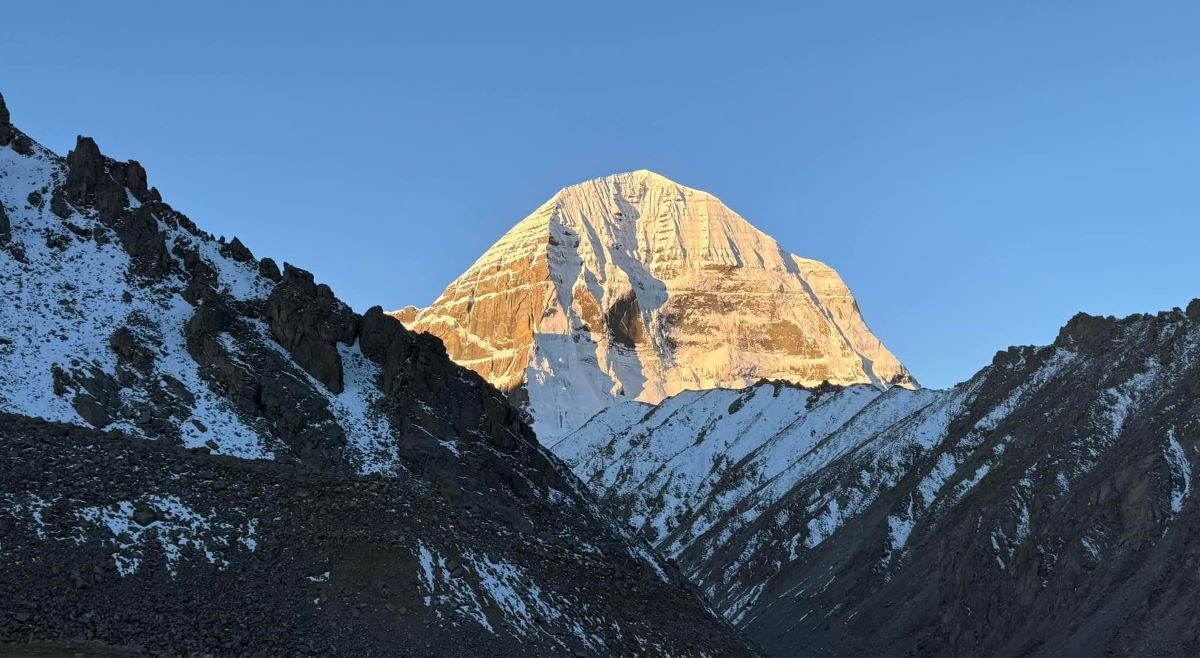
Mount Kailash is situated in the isolated Ngari Prefecture of China's Tibet Autonomous Region, which is renowned for its expansive high-altitude plains and striking mountain scenery. One of the world's most remote pilgrimage sites, this area is tucked away deep within the western Tibetan Plateau.
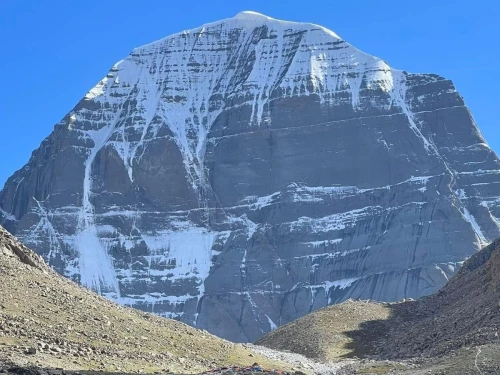
With an impressive elevation of 6,638 metres (21,778 feet), Mount Kailash is a formidable sight. Because of its symmetrical shape and unclimbed status, it is still unique even though it is not the highest peak in the world.
Lhasa and Shigatse in Tibet are the closest cities to Mount Kailash, for those who would like a geographical reference. Approximately 1,400 kilometres separate it from Lhasa.
Mount Kailash gives the region a distinct geological and aesthetic identity because it is part of the Gangdise Range (Transhimalaya), a mountain system that is geographically separate from the main Himalayan range to the south.
Two lakes with spiritual significance surround Mount Kailash and are a crucial component of the pilgrimage route. The purity and spiritual significance of Lake Manasarovar, a pure freshwater lake, are highly regarded in the traditions of Buddhism, Jainism, Hinduism, and Bon. Lake Rakshastal is a saltwater lake close by that gives depth to the sacred landscape and is frequently connected to potent mythological tales and opposing energies.
Due to the region's average elevation of 4,500 metres, visitors should prepare for adequate acclimatisation. Travelling in this region necessitates careful planning due to the altitude and remoteness, which makes guided Kailash Yatra routes particularly crucial for comfort and safety.
Cultural and Spiritual Significance of Mount Kailash
Mount Kailash has a unique spiritual significance that transcends its actual location. It is considered to be a potent spiritual axis where devotion, mythology, and faith converge. For Hindu pilgrims, the mountain symbolises Lord Shiva's cosmic home, a place of divine stillness and meditation rather than victory.
It is regarded as Mount Kailasha in Tibetan Buddhism, and it is connected to enlightened energy and profound spiritual symbolism that is connected to wisdom and compassion.
The fact that Mount Kailash is simultaneously revered by several different religions is what really sets it apart. While adherents of the ancient Bon religion see the area as the epicentre of spiritual power and creation, Jain adherents identify it with spiritual liberation.
This mutual respect has influenced centuries of pilgrimage customs and practices that still exist today. The idea that the Kailash Parikrama, the journey around the mountain, is an act of devotion rather than accomplishment is reinforced by the fact that Mount Kailash is still unclimbed and legally protected from ascent out of profound respect for these beliefs.
Mount Kailash continues to be one of the most revered and symbolically potent mountains on Earth because of its spiritual restraint.
Best Time to Visit Mount Kailash Kora Trek
Since the area's extreme altitude and remote location only permit a brief travel window each year, scheduling the Mount Kailash Mansarovar Yatra at the ideal time is essential. The best time of year is usually from May to September, when pilgrims can access the area, and temperatures are tolerable.
May and June are often considered the most comfortable months for the Kailash Mansarovar Yatra. The trails surrounding Mount Kailash are stable, the daytime temperatures stay mild, and the skies are typically clear, providing unobstructed views of Lake Manasarovar and the revered mountain. For pilgrims looking for a good mix of stable weather and fewer crowds, these months are perfect.
The pilgrimage season peaks in July and August. This period sees a peak in spiritual activity, particularly around significant religious holidays, which fosters a rich cultural environment. Even though there isn't much rainfall on the Tibetan Plateau itself, sporadic monsoon effects in nearby areas can cause short-term travel delays, which is why guided logistics are so helpful.
Many seasoned tourists prefer September because of its clear, post-monsoon air. As the number of pilgrims gradually declines, the atmosphere becomes more serene, the skies are at their clearest, and the visibility of the mountains is superb.
In general, it is not advised to travel between November and March. Road closures, freezing temperatures, and a lot of snow make access very dangerous and challenging during the winter. The yatra is essentially put on hold until spring returns because the majority of official routes are still closed, and there aren't many lodging options.
Selecting the appropriate time of year guarantees a more significant and spiritually satisfying Mount Kailash experience in addition to a safer trip.
How to Reach Mount Kailash
The majority of pilgrims opt to travel with an experienced tour operator because Mount Kailash's remote location and stringent travel regulations necessitate careful planning.
Mount Glory Treks operates the 12 Days Mount Kailash Mansarovar Yatra directly from Nepal, making the journey accessible and well-managed for pilgrims from around the world.
From Nepal
Most people agree that Nepal is the simplest and most effective way to get to Mount Kailash. Kathmandu, a major international hub with excellent air connections from Asia, Europe, the USA, and beyond, is where most pilgrims first arrive. The entire Kailash Yatra logistics, including permits, transportation, lodging, and acclimatisation planning, are organised from Kathmandu.
The route from Kathmandu to Nepalgunj, Simikot, and Hilsa is among the most well-liked routes. This route, which combines short drives and picturesque flights, leads pilgrims gradually into Tibet through the Hilsa border before continuing on towards Mount Kailash and Lake Manasarovar. For foreign travellers, the Nepal route is particularly appropriate because it offers improved altitude adjustment, more flexible scheduling, and easier permit coordination.
From India
Pilgrims usually follow government-regulated routes when departing from India. While the Nathu La Pass route from Sikkim provides a road-based option via Gangtok into Tibet, the Lipulekh Pass route from Uttarakhand is a traditional path managed through Dharchula and Gunji. These trips typically have set schedules and start in big cities like Delhi or Kolkata. Indian routes are less flexible and require more formalities than the Nepal option, despite their cultural significance.
From the USA and Other International Countries
The first international destination for pilgrims from the USA, Europe, Australia, and other countries is typically Kathmandu or Delhi. Since it eliminates the need for numerous internal transfers and provides professionally managed entry into Tibet, the Nepal route is the most convenient option from there.
We welcome pilgrims from all over the world, regardless of their nationality, and oversee the entire journey from Nepal, ensuring that all required permits, border controls, acclimatisation days, and on-the-ground support are taken care of.
The most practical and cosy option for anyone seeking a logistically simple yet spiritually meaningful Kailash Yatra is still the Kailash Mansarovar Yatra through Nepal.
Practical Tips & Considerations for Kailash Mansarovar Yatra
Since visiting Mount Kailash is a once-in-a-lifetime pilgrimage that occurs in a remote, high-altitude area, being well-prepared is crucial to a safe and easy trip.
Knowing these necessities ahead of time, from paperwork to health planning, enables pilgrims to concentrate on the spiritual journey rather than the details.
Permits & Visas
Several official documents, such as a current Chinese visa and specific Tibet travel permits, are needed to enter Mount Kailash. These permits need to be obtained prior to entering the area and are subject to strict regulations.
Most pilgrims depend on seasoned tour operators to handle all paperwork, border formalities, and coordination with local authorities because approvals are time-sensitive and procedures are subject to change.
Acclimatisation
The Kailash region is situated at very high elevations, with long stretches exceeding 4,500 metres. For the body to adjust to lower oxygen levels, it must appropriately acclimatise. Well-designed itineraries include rest days, gradual altitude gain, and controlled pacing to reduce the risk of altitude-related illnesses and improve overall comfort during the yatra.
Health & Safety
Long road trips, rough terrain, chilly temperatures, and subpar lodging conditions are all things pilgrims should be ready for. It is highly advised to have high-altitude travel insurance, necessary prescription drugs, and suitable clothing with you. An additional degree of safety is added during the trip by the availability of oxygen support and trained personnel at many organised yatras.
In Conclusion
Mount Kailash is unique as a destination not only because of its location but also because of what it stands for. The trip is set deep within the Tibetan Plateau and requires careful planning due to the terrain, altitude, and complicated travel regulations.
When these difficulties are effectively managed, the yatra turns into a profoundly fulfilling experience that is personally transforming, culturally significant, and spiritually enlightening.
Because of this, many pilgrims decide to go with seasoned experts who are intimately familiar with the area. From permits and cross-border logistics to acclimatisation planning and on-ground safety, Mount Glory Treks provides fully supported Mount Kailash Mansarovar Yatra programmes. Whether you are coming from Nepal, India, or other countries like the USA, we make a difficult pilgrimage easy and enjoyable so you can concentrate fully on the spiritual significance of Mount Kailash.
Frequently Asked Questions
1: Where exactly is Mount Kailash located?
Mount Kailash is situated on the western Tibetan Plateau in the Ngari Prefecture of China's Tibet Autonomous Region. It belongs to the Gangdise (Transhimalaya) mountain range rather than the main Himalayan range and is located close to the revered Lake Manasarovar.
2: Which country does Mount Kailash belong to?
Geographically, Mount Kailash is in Tibet, which is governed by the People's Republic of China. Because of its sensitive and remote location, travel to the area is subject to special permits and regulated entry.
3: Why is Mount Kailash considered sacred?
For many religions, Mount Kailash has profound spiritual significance. In Buddhism, it is referred to as Mount Kailasha; in Hinduism, it is considered the home of Lord Shiva; and in Jainism and Bon traditions, it is also considered a hallowed spiritual site.
4: Can Mount Kailash be climbed?
No, it is strictly forbidden to climb Mount Kailash. Because of its religious significance, the mountain is protected, and climbing it is viewed as an affront to the beliefs of Bon, Buddhist, Jain, and Hindu adherents.
5: What is the best time to visit Mount Kailash?
May through September are the ideal months for the Mount Kailash Mansarovar Yatra because of the generally stable weather and easily accessible routes. These months provide safer travel conditions, more manageable temperatures, and clearer skies.
6: How can international travellers reach Mount Kailash?
Before continuing their journey, the majority of foreign pilgrims take flights to Delhi or Kathmandu. Particularly for tourists from the USA, Europe, and other nations, the Nepal route via Kathmandu is thought to be the most practical and adaptable choice.
7: Is travelling to Mount Kailash difficult?
High altitude, long driving days, and remote terrain make the trip logistically and physically taxing. However, the yatra is doable for the majority of healthy pilgrims with a carefully thought-out itinerary, adequate acclimatisation, and knowledgeable guides.
8: Do I need permits to visit Mount Kailash?
Yes, tourists need a number of permits, including special Tibet travel permits and a Chinese visa. To prevent issues, these documents need to be organised beforehand and are typically managed by authorised tour operators.
9: Is altitude sickness a concern during the Kailash Yatra?
Altitude sickness is a common concern because a large portion of the journey occurs above 4,500 metres. The risk is considerably decreased by proper acclimatisation, hydration, gradual pacing, and medical assistance.
10: Why choose Nepal for the Mount Kailash Yatra?
Nepal provides more flexible routes into Tibet, better acclimatisation opportunities, easier international access, and more efficient permit processing. Because it makes travel easier and more comfortable overall, many pilgrims choose to begin their journey in Kathmandu.

 based on 228 reviews