What are the Permits Required for the Everest Base Camp Trek?
As previously stated, the standard EBC trek beginning in Lukla requires two mandatory permits, both of which are legally required to enter and trek within the Khumbu region; without these permits, you will be unable to enter the region.
Sagarmatha National Park Entry Permit
In order to enter the Sagarmatha National Park, a UNESCO World Heritage Site that strictly protects Mount Everest, 8848.86m and the surrounding Himalayan ecosystem, visitors must have this permit.
Additionally, the permits support park management, trail upkeep, wildlife protection, and environmental conservation within the national park.
Just before you cross the national park boundary, the Monjo checkpoint verifies your Sagarmatha National Park entry permit. Additionally, the permit is required for everyone, regardless of whether they are trekking independently, with a guide, or through an agency. It is valid for the entire time you are in the national park.
Cost: NPR 3,000 per person, or roughly USD 23–25
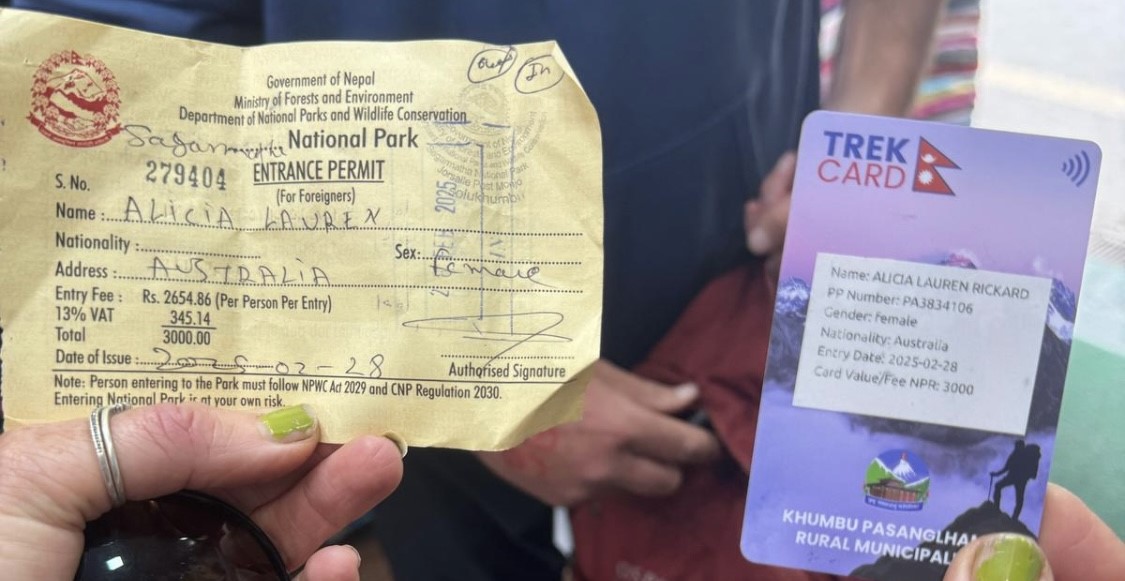
Khumbu Pasang Lhamu Rural Municipality Permit
Trekking in the Khumbu region, and particularly in the Pasang Lhamu Rural Municipality, requires this local government permit. Following the removal of the TIMS card for trekking in the Everest region, it was introduced.
The local infrastructure, trail maintenance, schools, health services, and community development in villages like Namche Bazaar, Khumjung, Pangboche, and Dingboche are all directly supported by the money received from this permit.
Remember that these two permits are necessary for every trek in the Everest region, not just the standard trek, but also other treks, such as our well-liked luxury EBC trek package with helicopter return.
Cost: NPR 2,000 per person, or roughly USD 15–17
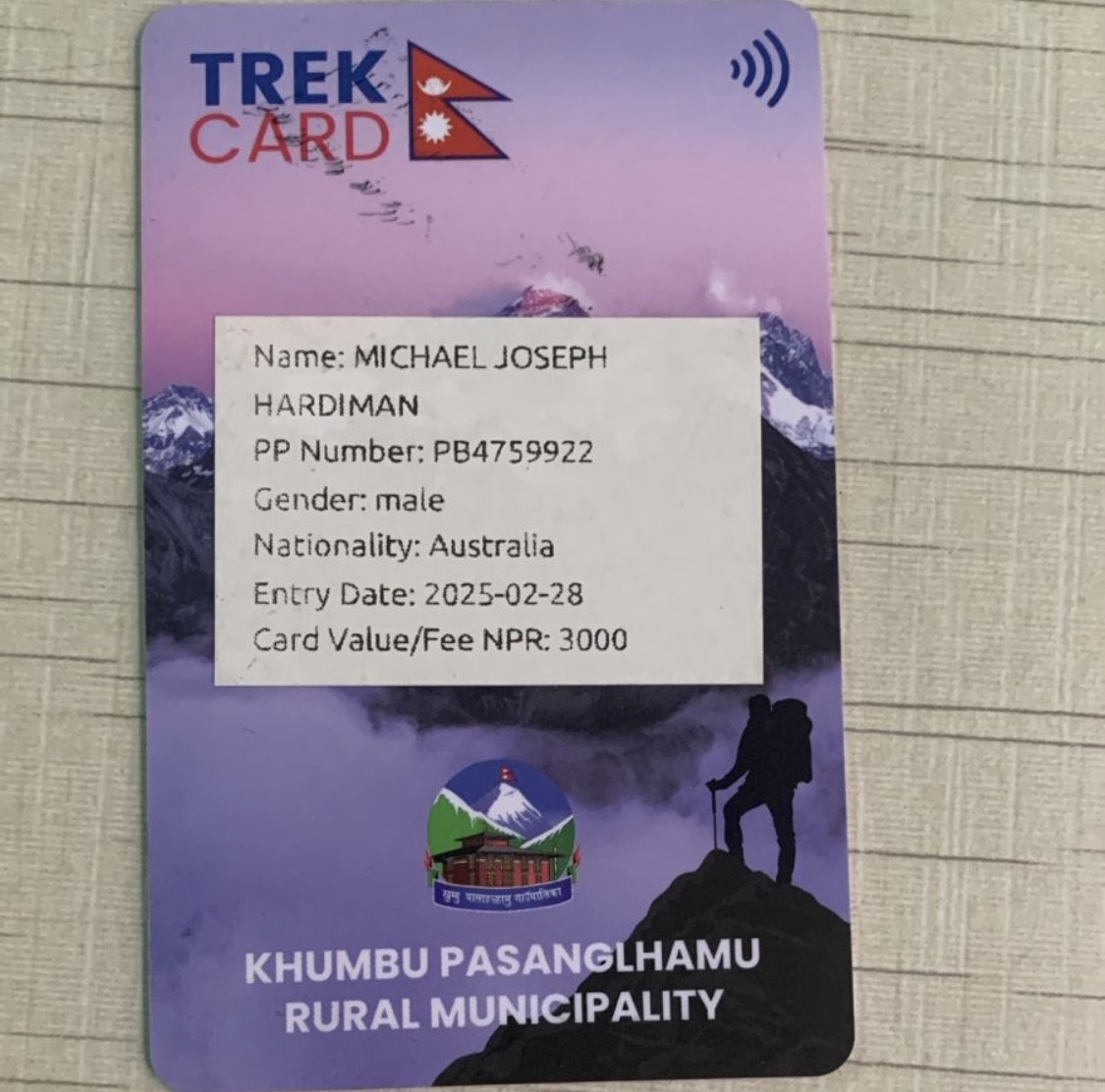
Where to Obtain Everest Base Camp Trek Permits?
When prepared appropriately, the process is simple for trekkers travelling to Everest Base Camp, as the necessary permits can be obtained at multiple official locations along the route.
In order to prevent delays once the trek starts, the Sagarmatha National Park Entry Permit is typically obtained in Kathmandu from the Nepal Tourism Board prior to flying to Lukla.
The Khumbu Pasang Lhamu Rural Municipality Permit, which is unique to trekking in the Khumbu Valley, is typically granted in Lukla upon arrival in the Everest region.
At Monjo, the primary entry point into Sagarmatha National Park, both permits are subsequently examined by officials to confirm that all hikers are legally permitted to proceed along the EBC trail.
Many hikers prefer to arrange their permits through a licensed trekking agency in order to keep the focus on trekking rather than paperwork. This ensures that everything is prepared ahead of time and lets them enjoy the journey with peace of mind from the first step.
Documents Required for EBC Trek Permits
Trekkers need to bring a few necessary documents in order to obtain official permits before beginning the trek. These guarantee seamless checkpoint processing and authorised entry into the Everest region.
Valid Passport
Authorities use your passport to record your permit and confirm your identity, so it must be valid for a sufficient amount of time.
Nepal Entry Visa
All foreign hikers must have a valid Nepal visa. Together with your passport, permit officials will examine your visa.
Passport-Size Photos
Carrying one or two recent passport-sized photos is advised, though it's not always required, as they might be needed when issuing a permit.
Trekking Itinerary Details
Your comprehensive itinerary, including daily stages and scheduled stops, is typically managed by a trekking agency if you make your reservation through them. By doing this, you can be sure that the permits you receive match the route of your walk.
Permit Management with Mount Glory Treks
As part of our trekking package, we expertly arrange all required Everest Base Camp Trek permits. Trekkers won't have to worry about paperwork, checkpoint procedures, or unexpected changes to permit requirements as a result.
You can concentrate fully on acclimatisation, safety, and taking in the stunning Himalayan scenery along the trail from Lukla to EBC and Kala Patthar now that all permits have been obtained.
To accommodate various schedules and tastes, Mount Glory Treks also provides a variety of Everest Base Camp trekking options. With appropriate acclimatisation days and professional assistance, the 14-day Everest Base Camp Trek offers a traditional EBC experience for those seeking a more leisurely trek.
We also have a variety of other customised EBC trek itineraries, ranging from short to long, for hikers with limited time who still want a full EBC adventure.
Frequently Asked Questions
1: Do I need a TIMS card for the Everest Base Camp Trek?
No, the standard Everest Base Camp Trek from Lukla does not require the Trekkers’ Information Management System (TIMS) card. Only the Sagarmatha National Park Permit and the Khumbu Pasang Lhamu Rural Municipality Permit, which cover safe monitoring and legal access, are now required for trekkers.
2: What permits are mandatory for the Everest Base Camp Trek?
The Khumbu Pasang Lhamu Rural Municipality Permit and the Sagarmatha National Park Entry Permit are required for the standard EBC trek that begins in Lukla. Legal trekking, environmental preservation, and aiding local communities along the Khumbu trail all depend on these permits.
3: Where can I obtain Everest Base Camp Trek permits?
Permits can be obtained locally at the checkpoints in Lukla and Monjo or in Kathmandu at the Nepal Tourism Board. To avoid delays and paperwork problems, many hikers choose to set up permits through a licensed trekking company like Mount Glory Adventures.
4: What documents do I need for EBC permits?
A valid passport, a Nepal entry visa, and sometimes passport-sized photos are required. Your comprehensive itinerary is typically taken care of if you are trekking with a registered agency, guaranteeing that permits match your intended route.
5: Can permits be arranged through a trekking agency?
Yes, all permit arrangements are handled by organisations like Mount Glory Treks as part of the trek package. This guarantees adherence to regional laws and frees you up to concentrate on acclimatisation, safety, and taking pleasure in the Himalayan journey.
6: Are permits checked along the Everest Base Camp trail?
At official checkpoints like Monjo, permits are indeed examined. Throughout the trek, it is crucial to carry original permits because those who do not may be denied entry or fined.
7: Do permits cover the full trek duration?
Yes, your permits for Khumbu Pasang Lhamu Rural Municipality and Sagarmatha National Park are good for the whole time you're in the Everest region, from Lukla to Everest Base Camp and back.
8: Is it necessary to carry extra permits for side trips like Kala Patthar or Gokyo Ri?
If you follow the regular Lukla–EBC–Kala Patthar route, no additional permits are needed. Your trekking agency can set up separate conservation area permits if necessary for side trips to other locations like Gokyo or Three Passes.
9: Can I get EBC permits in advance online?
Permits are currently granted at entry points such as Lukla or in Kathmandu. Booking through a trekking agency guarantees that all permits are prepared before your arrival, preventing delays and making the trek hassle-free, even though online pre-application is not standard.
10: Why are Everest Base Camp permits important?
In addition to being necessary by law, permits promote local community development, trail upkeep, and environmental preservation. Proper permits also ensure trekker safety, enable high-altitude visitor monitoring, and contribute to the Everest region's long-term viability for future hikers.

 based on 228 reviews



.webp)